China has called time on hidden door handles on cars from next year as safety concerns mount regarding the pop-out features that were popularlised by Elon Musk’s Tesla electric vehicle brand.
The handles, which are designed to be minimalist to both improve the aesthetic and aerodynamics of new cars, have come under significant criticism from drivers and road safety groups in recent years.
Motorists frequently complain that they freeze shut during winter and won’t open. But more concerning is that they’ve been found to lose operation when involved in a crash, making it difficult for emergency services to reach passengers inside stricken vehicles.
The new rules could prompt car makers globally to rethink vehicle designs, having faced mounting pressure to reconsider concealed handles since they’ve become increasingly common after the arrival of Musk’s first mass-market car, the Tesla Model S, in 2012.
Other brands including Audi, Jaguar Land Rover and Renault also use pop-out handles on some of their models.
With China increasing its power within the automotive sphere, analysts believe the new safety standard it has set could snowball across global markets.
The new rules, which were announced by the Ministry of Industry and Information Technology on Monday, will take effect from 1 January 2027, and require door handles fitted to new models to have both interior and exterior mechanical releases.
Chinese car models already approved for launch will have an additional two years to redesign their vehicles to be compliant with the new rules, the ministry said.
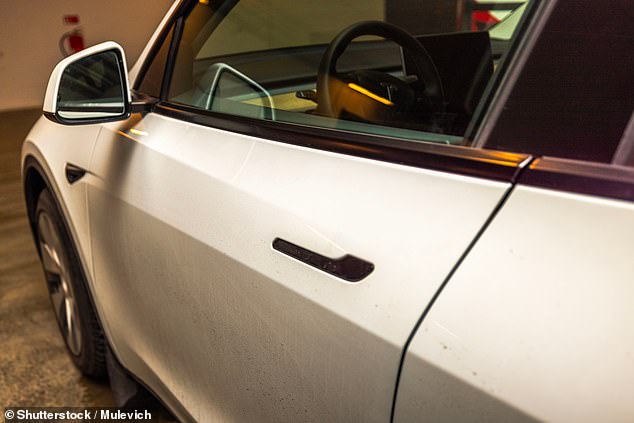
China has banned hidden door handles on new cars from next year as safety concerns mount regarding the pop-out features that were popularlised by Elon Musk’s Tesla electric vehicle brand
The new regulations will apply to all vehicles but will mostly impact EVs, which are commonly designed with hidden handles, and will ‘improve the level of automotive safety design’, the ministry added.
Safety concerns have escalated in China recently over sleek, aerodynamic car doors that reduce drag but are prone failing after a collision has taken place.
One high-profile incident occurred in October, when rescuers were shown failing to open the doors of a burning Xiaomi electric vehicle in the southwestern city of Chengdu.
The driver, reported to be under the influence of alcohol, died in the crash.
Electronic – or ‘flush’ – door handles were originally popularised by Tesla.
The US EV maker has used the gadgets on all of its mass-market models, including the recently-discontinued Model X SUV and the current Model 3 and Model Y, which are among the most-bought new EVs in the UK.
JLR has also installed the handles on models including the Jaguar F-Type, Range Rover and Range Rover Velar.
Renault uses the features on some of its latest electric cars, including the Megane and Scenic E-Tech.
Audi has also rolled out pop-out handles across models in its range.
And they too have become popular choices among Chinese EV brands, which typically prioritise high-tech gadgets over driving performance to attract customers.
According to China Daily, pop-out door handles appear on approximately six in ten of China’s best-selling electric and plug-in hybrid cars on the market today.
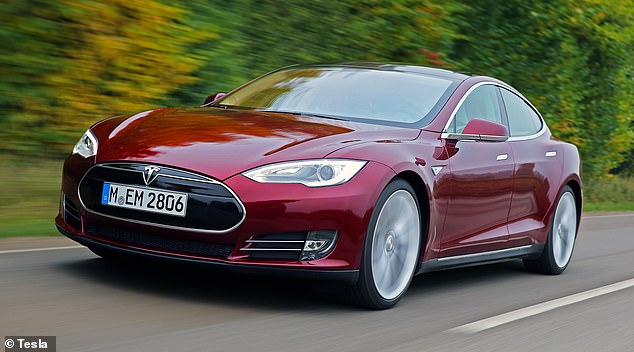
Hidden ‘pop-out’ handles became popular after debuting on Elon Musk’s Tesla Model S in 2012
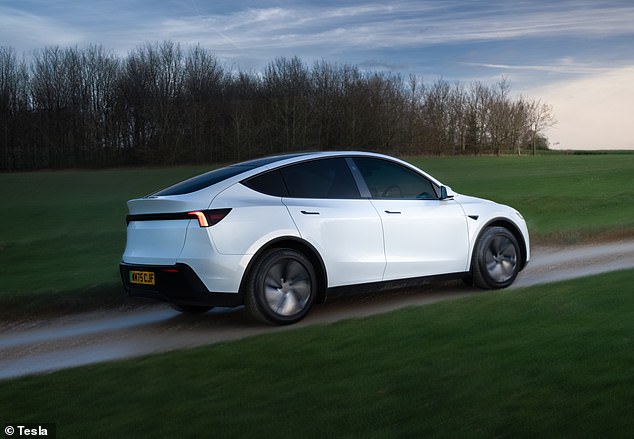
Even the latest Tesla cars – like the Model Y pictured – use the flush door handles, which electronically pop out when an owner unlocks the doors
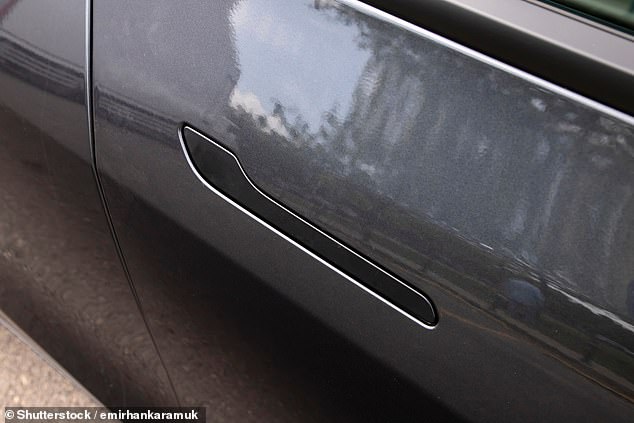
Folding into the body of the car, such door handles provide a slight boost to efficiency by reducing drag while the vehicle is in motion
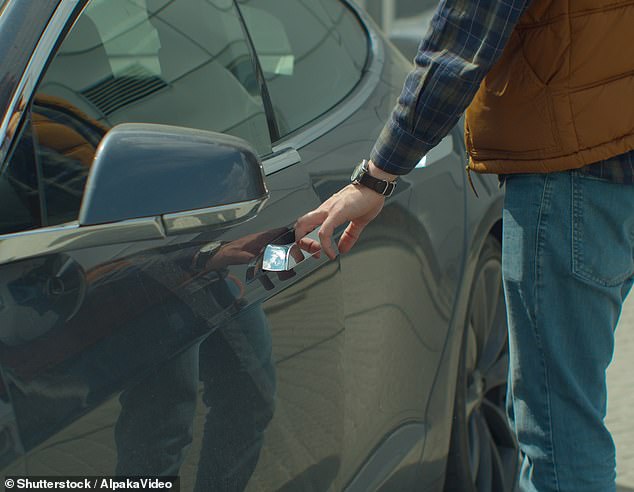
Motorists frequently complain that they often freeze shut during winter and won’t open. But more concerning is that they’ve been found to lose operation when involved in a crash, making it difficult for emergency services to reach passengers inside stricken vehicle
Folding into the body of the car, such door handles provide a slight boost to efficiency by reducing drag while the vehicle is in motion.
However, owners of UK motors that use the features often complain around this time of year that they need to defrost their handles to gain access when temperatures drop below freezing.
Repair costs when the handles fail electronically and stop working can also be extremely expensive compared to the replacement of a traditional grab handle release.
Banning the handles is part of a pattern in which ‘China is increasingly acting as a rule-setter rather than a rule-taker in EV and intelligent vehicle regulation,’ Bill Russo, founder of Shanghai-based consultancy Automobility, told AFP.
He pointed to areas including battery safety standards and remote updating as other examples of this.
Russo said he expects the new door regulations to be ‘echoed’ abroad, particularly in Europe, ‘as Chinese vehicles and platforms increasingly set the baseline for global EV design’.
The new rules stipulate that all doors except the tailgate ‘shall be equipped with a mechanical release exterior door handle’.
Other rules will improve the visibility of interior handles, including by requiring permanent graphic markings, the ministry said.
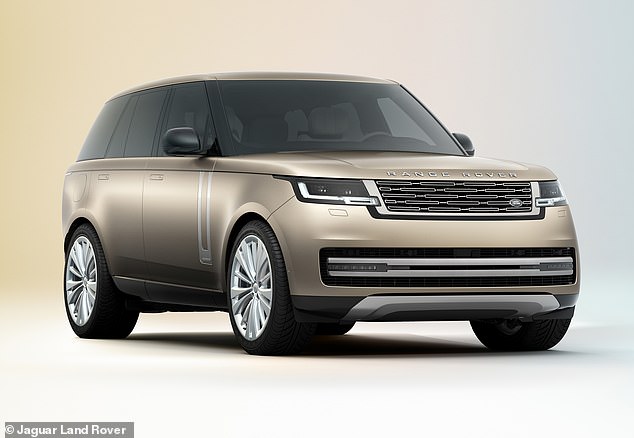
The latest £100,000 Range Rover features flush door handles that pop out when the vehicle is unlocked
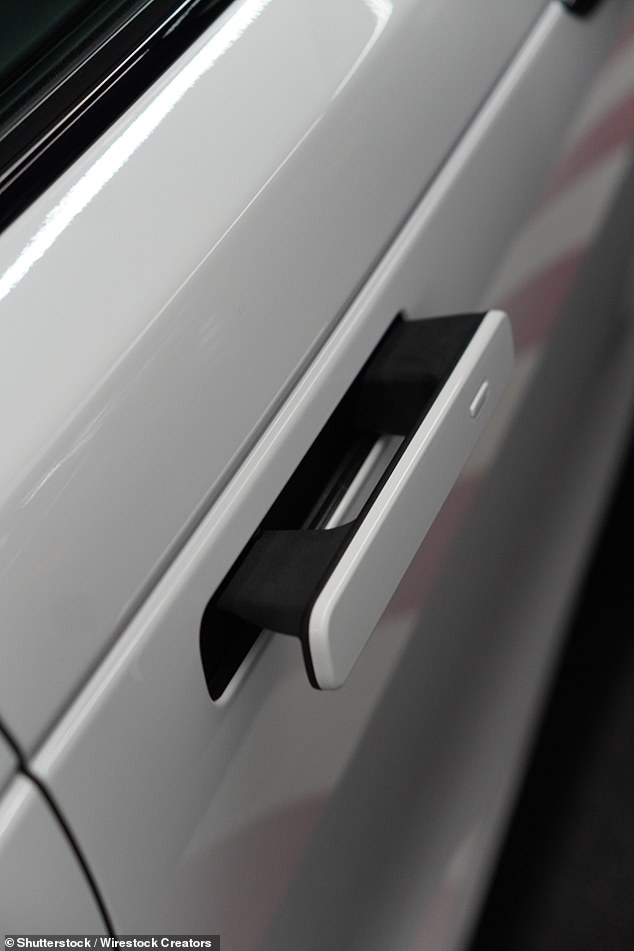
The Range Rover’s concealed door handles pop out when a vehicle is unlocked to provide what looks like a conventional grab handle. When the car starts moving or the owner locks the doors, the handle recesses into the bodywork almost entirely out of sight
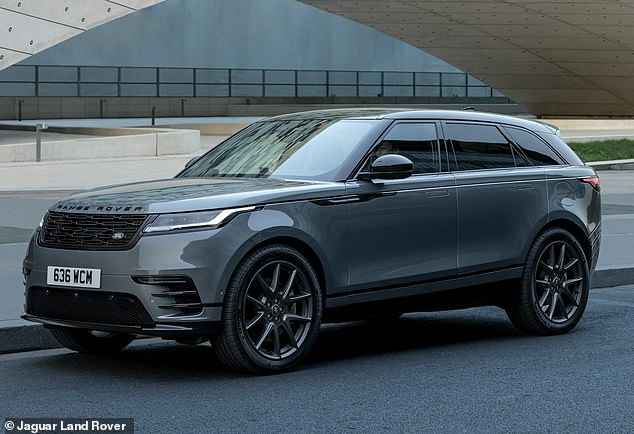
Jaguar Land Rover has been deploying hidden door handles across its vehicle range for years, including the F-Type sports car and the Velar luxury SUV
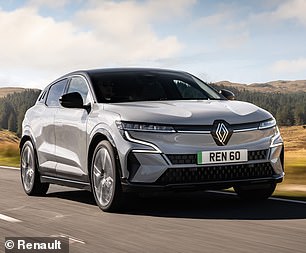
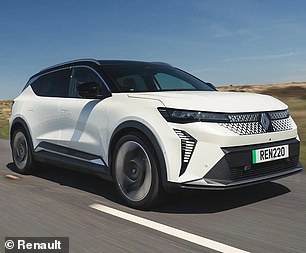
Renault uses the flush door handles that pop out electronically on some of its new electric models, including the Megane (left) and Scenic E-Tech (right)
Tesla’s door handles are already under investigation in the US by safety regulators. Authorities in Europe are considering their own rules.
In November, the US National Highway Traffic Safety Administration (NHTSA) opened a probe focused on Tesla’s electric-powered door handles, responding to reports that they suddenly stopped working, leaving children trapped inside cars.
The NHTSA said it had received nine complaints about the handles in Tesla’s 2021 Model Y cars, the company’s volume seller, which in 2023 became the world’s most-bought new motor across all fuel types.
In four of the cases, the car owners resorted to breaking the window to resolve the issue.
In September, Tesla had said it would redesign the way to open its car doors in an emergency after various reports of drivers and passengers being trapped in the EVs.
An investigation by Bloomberg that month exposed around 140 incidents of people being trapped in their Teslas due to problems with the door handles, including several that resulted in serious injuries.
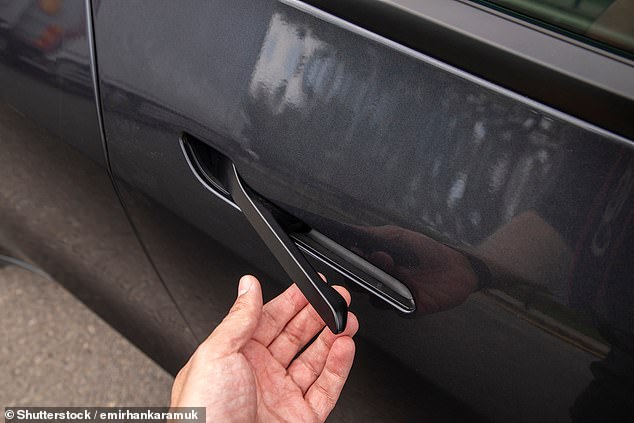
Tesla’s door handles are already under investigation in the US by safety regulators. Authorities in Europe are considering their own rules
China is the world’s largest EV market, and its dozens of brands have growing operations abroad.
Statistics published last month showed that Chinese firm BYD last year sold more EVs than Tesla, overtaking the US industry pioneer in the annual category for the first time.
China’s status as the world’s largest passenger vehicle market means the country is ‘informally’ setting global standards, Tu Le, founder of Sino Auto Insights, told AFP.
The new rules on door handles mean that ‘for companies like Tesla, Kia and other legacy automakers that sell their vehicles in multiple regions, they’ll need to decide whether to make the change to the China product only or implement it globally,’ Le said.
‘It’s likely a pain for quite a few automakers since some of them have global designs that will need to be reconciled,’ he added.