It is a portrait of a serial killer that sends a chill down the spine.
When detectives arrived at HMP Long Lartin in Worcestershire to arrest Steve Wright for the murder of 17-year-old Victoria Hall, the Suffolk Strangler greeted them with a knowing smile.
He made no show of surprise at his sudden arrest 22 years after the teenager’s murder in September 1999.
Instead, Wright merely smirked as he was asked to pose for a new mugshot in his grubby prison-issue blue vest.
The 67-year-old has doubtless spent decades laughing at the law as blundering officers wasted £2million prosecuting the wrong man for Victoria’s murder based on a few specks of soil, instead of focusing on the predator living just half a mile away, who would go on to become one of Britain’s most notorious serial killers.
After Wright finally confessed to being a killer for the first time yesterday, many will now be left wondering how many more secrets he continues to hide.
Dubbed the Suffolk Strangler, in 2006 he embarked on an unprecedented rate of killing not even matched by Harold Shipman, Fred West or Yorkshire Ripper Peter Sutcliffe.
In a six-week frenzy Wright, a former steward on the QE2 ocean liner, stalked Ipswich’s red-light district, murdering Gemma Adams, 25, Tania Nicol, 19, Anneli Alderton, 24, Paula Clennell, 24 and Annette Nicholls, 29, until he was arrested just before Christmas.
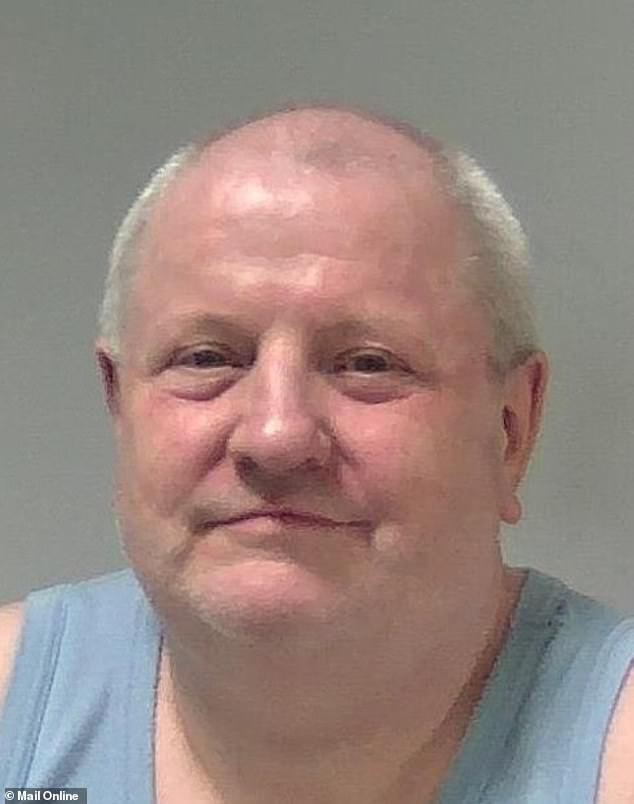
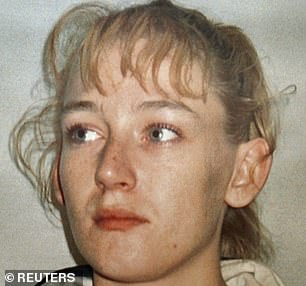
Steve Wright, the Suffolk Strangler, smirks in a mugshot after his arrest for Victoria Hall’s murder
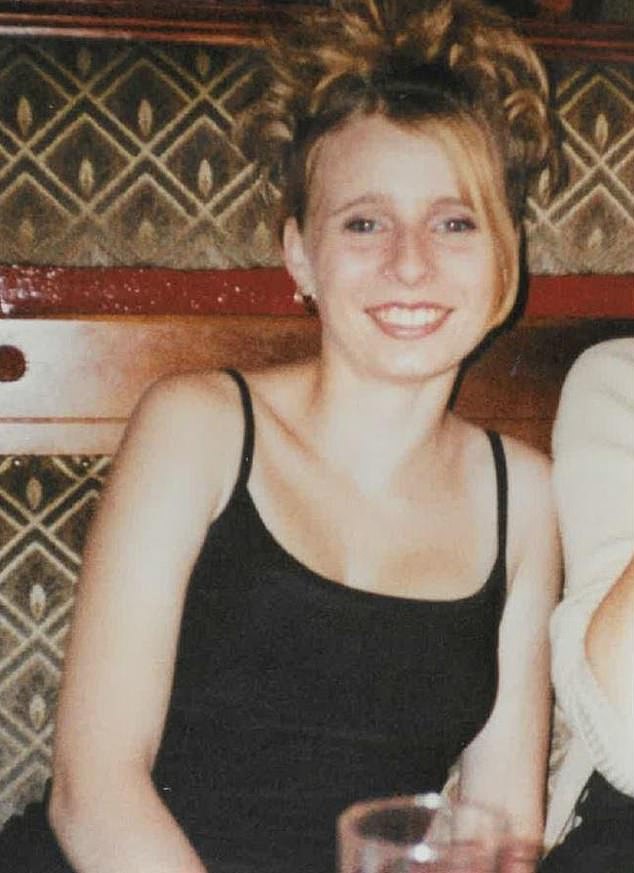
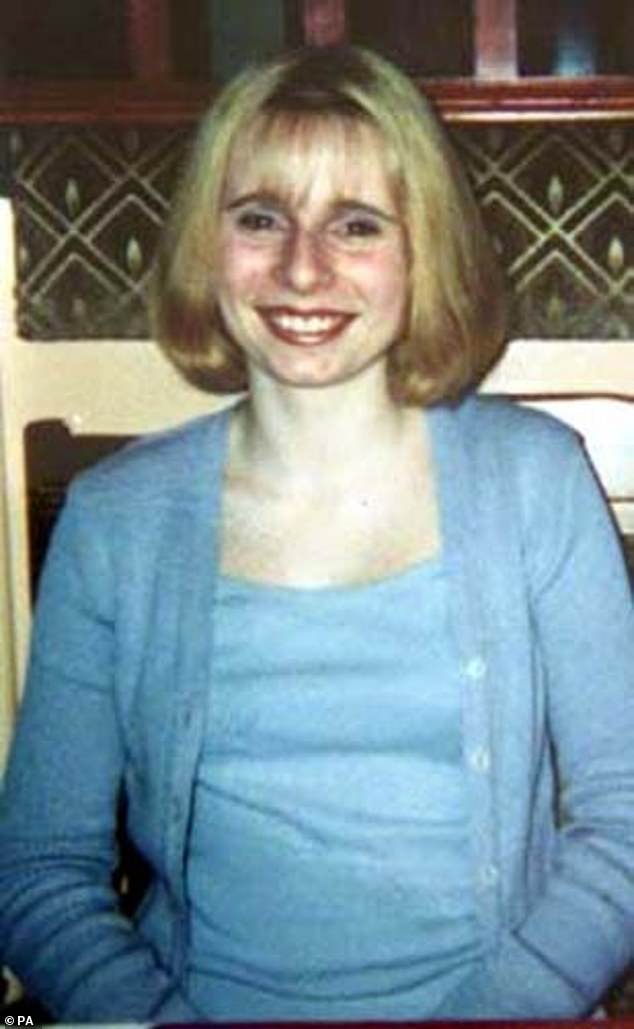
Miss Hall vanished on her way home from a nightclub in September 1999
Despite overwhelming forensic evidence linking him to the bodies of the sex workers found in near identical positions dumped in a stream and woodland, Wright denied any responsibility, even going to the Court of Appeal to protest his innocence in 2009.
Yesterday that mask had slipped.
Stumbling in the dock of the Old Bailey, the balding, overweight pensioner struggled to stand, gripping on to the reinforced glass as he pleaded guilty to the kidnap and murder of Victoria – seven years before he found notoriety as the Suffolk Strangler and just 24 hours after a failed bid to abduct another local woman, 22-year-old Emily Doherty.
The shock confession on the first day of a month-long trial will inevitably raise questions about how many more lives Wright claimed in the intervening years.
Ever since he was sentenced to a whole-life tariff for the five murders in 2008 there have been questions about other unsolved killings, with Wright being linked to high-profile cases including the disappearance of Suzy Lamplugh, with whom he had worked on the QE2.
The biggest question of all is why police overlooked the former forklift driver as a suspect in Victoria’s murder in the first place.
Wright should have been at the top of the list, after part of his car registration was provided to police by the woman he had attempted to abduct 24 hours earlier.
In a hearing just a few weeks ago ahead of his trial for the murder, Mr Justice Joel Bennathan revealed the details provided by Ms Doherty matched Wright and ‘very few others’.
Yet he was never interviewed, arrested or even classified as an official suspect because bungling officers were focused on prosecuting the wrong man.
Local businessman Adrian Bradshaw was at the same nightclub as Victoria before she vanished on her way home in the early hours on September 19.
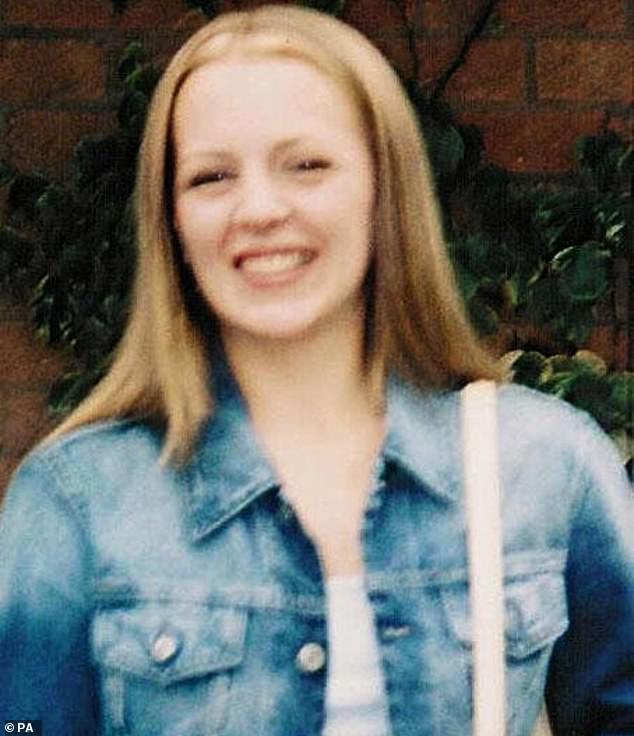
Gemma Adams, then 25, pictured, was one of the victims of Wright’s murder spree in Ipswich’s red-light district in 2006
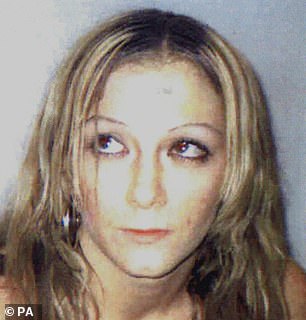
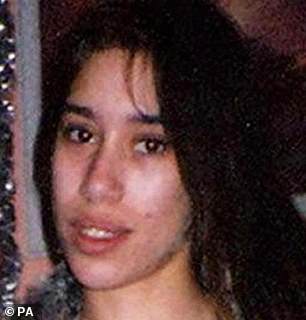
Anneli Alderton, pictured left, and Tania Nicol, right, were sex workers also killed in the attacks
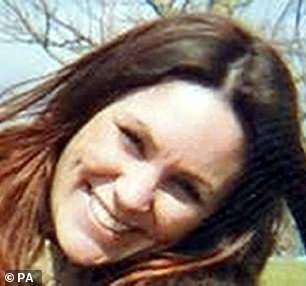
In a six-week frenzy in 2006, former QE2 steward Wright went on the rampage, also killing Annette Nicholls, pictured left, and Paula Clennell, right
The disappearance of the 17-year-old, who had been diligently studying for A-levels in English, sociology and business studies, and did not drink or smoke, was wildly out of character.
Her father Graham described his daughter as a ‘fun-loving teenager who liked to go out in the evenings’, adding: ‘She was an intelligent girl who was working hard, hopefully to go to university’.
He had expected Victoria to get a taxi home that night, but she did not have enough money.
Instead, Victoria and her best friend Gemma Algar stopped to buy chips before walking the two miles from Bandbox nightclub to their homes in Trimley St Mary. The pair went their separate ways around 2.30am, just 300 yards from Victoria’s home.
As she walked home, Gemma heard a scream, but she thought someone was ‘messing around’. Residents also heard ‘horrifying screams’, the sound of a ‘throaty exhaust’ and a car screeching away.
At 8.20am, Victoria’s parents raised the alarm when they discovered she was not in her bedroom. Five days later, her body was found by a dogwalker in a ditch 25 miles away in Creeting St Peter.
The teenager was found naked in a stream, the same body of water in which Wright would later dump two of the women he murdered in 2006.
A post-mortem examination revealed that she had been asphyxiated, but not sexually assaulted, a pattern he would repeat in later murders.
At the time of Victoria’s killing, Wright was living just half a mile away from her home in Trimley St Mary. But detectives fixated on Mr Bradshaw after locals pointed out his Porsche had a noisy exhaust.
The 27-year-old, who owned a local newspaper, had been at the same nightclub that night before taking a taxi with friends to his home on the same estate as Victoria.
Police seized on differing accounts about where he got out of the taxi, at 2.30am, near a roundabout where Victoria was last seen.
But while Mr Bradshaw’s recollection may have been hazy – having drunk at least ten pints of beer as well as vodka that evening – he was adamant that he had nothing to do with the murder, telling officers: ‘I have just been incredibly unlucky being in the wrong place at the wrong time.’
He was arrested in May 2000 and charged months later after forensic scientists found ten grains of mud on the accelerator pedal of his 1982 Porsche 944, which Britain’s then leading soil expert, Professor Kenneth Pye, claimed was of ‘remarkable’ similarity to the material in the ditch.
But at trial the circumstantial case collapsed when a geologist revealed the sample could have come from anywhere in East Anglia.
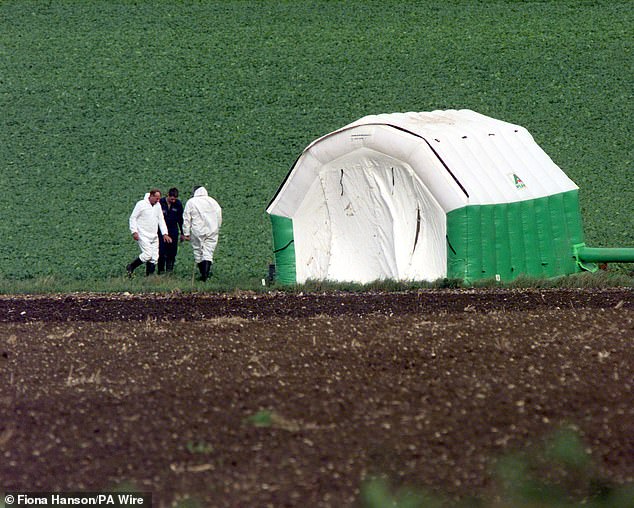
Her body was found in a ditch 25 miles from where she lived
Victoria’s body was found five days later 25 miles away
A jury of five women and seven men took barely 90 minutes to acquit after being told the evidence was so thin a guilty verdict would be a miscarriage of justice.
Mr Bradshaw, now a marketing consultant and publisher who owns 12 monthly magazines, spent almost a year in jail awaiting trial.
Following his acquittal in November 2001, he described being wrongly accused as ‘probably the most difficult moment of my life,’ adding: ‘The police spent £2million on this inquiry and it took a jury of 12 normal people to acquit me in a little over an hour. I think that speaks for itself.’
Yesterday a friend of the businessman described the botched police investigation as a ‘crime’, claiming detectives were desperate to ‘pin it on somebody’ after launching the biggest manhunt in the force’s history.
He said: ‘The real crime is the police investigation. They were just clutching at straws.
‘There was a load of other people convicted on that kind of soil evidence. It was an absolute farce. None of the timeline added up anyway.
‘I think the judge realised there was nothing there, but they had to carry on with the proceedings because they had to pin it on somebody.’
Mr Bradshaw received no compensation for his ordeal and now believes police should be focusing on trying to prove that Wright carried out other murders, his friend said, adding: ‘Everywhere he has gone there is somebody (missing or dead).’
The officer responsible for the botched case, Detective Superintendent Roy Lambert, refused to accept the verdict, saying at the time: ‘I am very, very disappointed with the verdict.
‘We have been investigating this for over two years and I believe we have looked down every avenue for the person who did this.’
But in reality, officers had failed to investigate vital evidence.
Just 24 hours before Victoria’s murder, Emily Doherty gave police that description of Wright, his car and part of the number plate after narrowly escaping his clutches.
She was walking down Picketts Road in Felixstowe in the early hours of September 18 when she encountered a man standing by a car. He appeared to be urinating.
She hurried past but became increasingly nervous as he started following her.
Ms Doherty crouched down to the ground in an attempt to hide, but Wright spotted her.
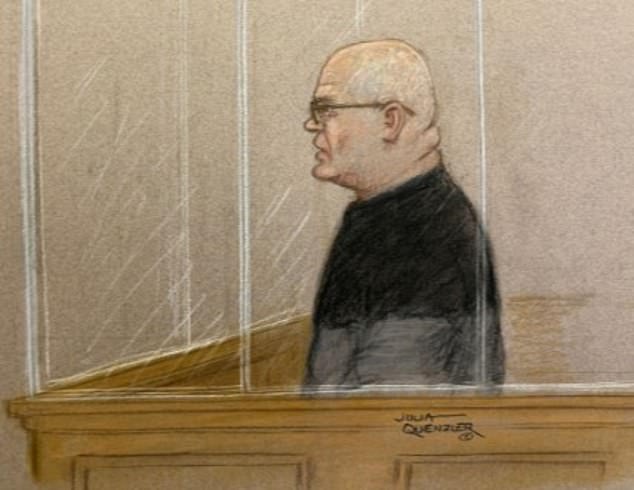
Wright pictured in a court drawing on Monday. It is the first time that one of Britain’s most notorious killers has admitted responsibility for any of his crimes
As he came closer, calling out ‘all right?’, she fled, seeking refuge in a nearby garden and grabbing a stick for protection. For several minutes, she watched Wright drive past three or four times looking for her.
Terrified, Ms Doherty then knocked on the door of the property and a family took her in and called the police.
She described the man as white, 6ft tall and with a rounded nose, saying there was ‘something about his face that was charming’. Her description matched Wright, as did her recollection of a ‘big, four-door car, possibly a Ford’, which Wright owned at the time.
At Wright’s pre-trial hearing three weeks ago, Mr Justice Joel Bennathan said: ‘The registration number Ms Doherty recalled… those details matched the defendant’s car. It also matched very few others.’
But police failed to act.
One retired detective, Chris Cushnahan, dismissed criticism of the investigation in 2009, claiming Wright was among 12,000 names across the UK thrown up by a partial registration search on the police national computer.
He said: ‘There was no reason to see him. At the time there were thousands of lines of inquiry. There was no evidence to suggest we should have followed it up.’ It is true that on paper, there was little to mark Wright out as a killer. The forklift driver was a member of a local golf club who lived with his girlfriend.
But scratch the surface and all the evidence was there.
Unbeknown to his partner, Wright had been paying strangers for sex for years – an addiction that turned to something much darker while she was on night shifts. And after his conviction for the 2006 murders, an ex-wife, Diane Cole, recalled Wright’s appalling violence.
His beatings started within weeks of their meeting on a cruise on the QE2 in 1984, where she was working as a shop dresser and he a waiter in the ship’s Queen’s Grill restaurant.
During their stormy four-year relationship, he slashed her clothes to pieces and attacked her with a knife when he thought she was with another man.
On another occasion, Wright repeatedly banged her head against a wall for folding bed sheets the wrong way.
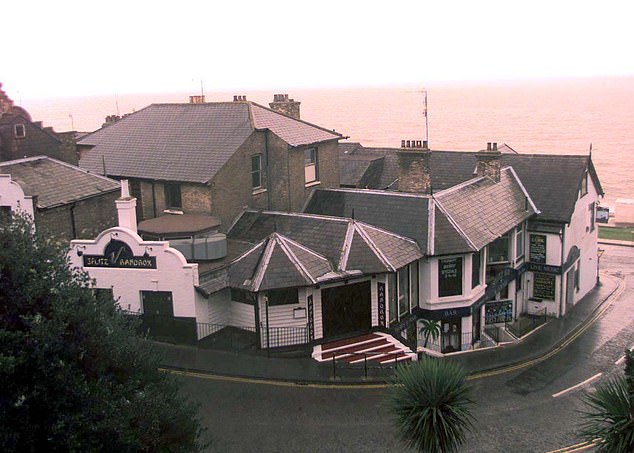
Victoria had been at The Bandbox club in Felixstowe before she disappeared
When the couple took over a pub in Norwich’s red-light district, he locked Diane inside every night while he slept with two mistresses and cruised the area for sex.
When she confronted him at a staff leaving do, Wright punched and kicked her so hard she was knocked unconscious.
Even after Wright’s killing spree, police did not make any connection to Victoria’s murder seven years earlier because she was not a prostitute.
In 2008, Graham Hall told how he and his wife Lorinda had been visited three times by detectives who reassured them there was not a shred of evidence to link Wright to their daughter’s murder.
Mr Hall said: ‘With due respect to the girls that Wright killed, not all the circumstances were the same – they were working girls and that appears to be who he was aiming for.
‘The police have been to see us three times, including this week, and although they say there were some very similar aspects they say there is no connection with Victoria’s death.’
It wasn’t until the 20th anniversary of Victoria’s murder in 2019 that cold-case officers took a fresh look at the evidence.
They traced the vehicle that Ms Doherty had described and further inquiries revealed a man resembling Wright had purchased petrol around the same time.
When police ordered a fresh forensic examination, new techniques revealed a DNA link to Wright for the first time leading to his arrest in prison in July 2021.
The serial killer continued to toy with detectives, entering not guilty pleas in pre-trial hearings while his lawyer tried to pin the blame back on Mr Bradshaw and two other men, suggesting there had been ‘confessions’ to Victoria’s murder which the jury did not hear at Mr Bradshaw’s trial.
But the judge ruled the defence could not introduce the evidence at trial, leaving Wright with little option but to confess in the face of the damning forensic evidence.
Tragically, his confession came too late for Victoria’s mother, who died aged on December 18, weeks before Wright was due to go on trial.
In her last interview, Mrs Hall described decades of pain waiting for the truth: ‘It’s not so much that the person might still be round here. It’s that this person has put us through this. You have got to live with that.
‘You’ve destroyed our lives, not only our daughter’s, and every close family member and her friends. Being near or far doesn’t really come into it, because the hurt and pain is there.’
Yesterday, for the surviving members of Victoria’s long-suffering family, that wait was finally over.