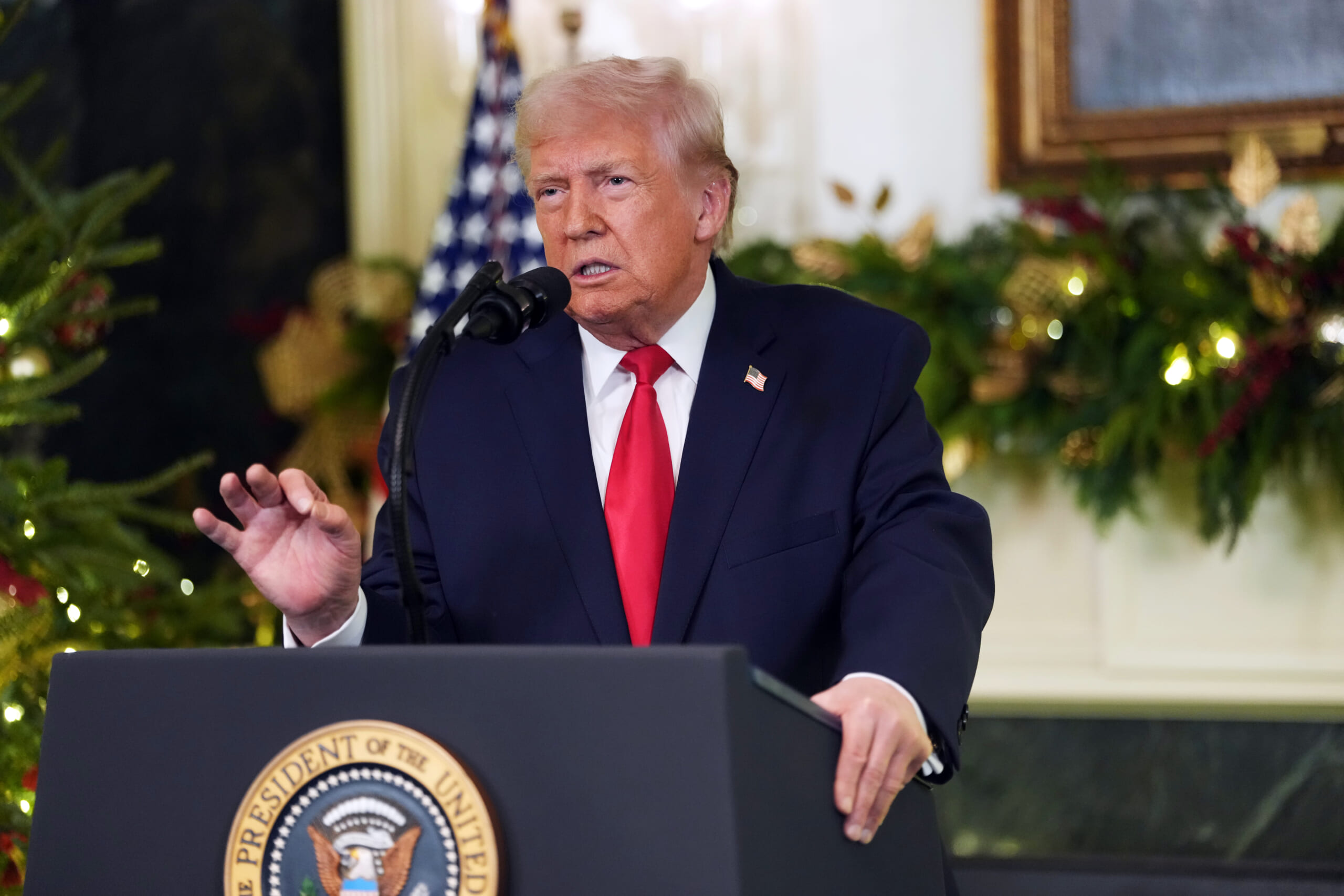
President Donald Trump appears to be enjoying the taste of his devastating victory over Nicolas Maduro in Venezuela; having sampled American dominance in Latin America, he is not content to sit back when more is on the table. On January 11, shortly after the capture of Maduro in the lightning raid on Caracas, Trump dropped a bombshell aimed at Havana:
Cuba lived, for many years, on large amounts of OIL and MONEY from Venezuela. In return, Cuba provided “Security Services” for the last two Venezuelan dictators, BUT NOT ANYMORE! Most of those Cubans are DEAD from last weeks U.S.A. attack, and Venezuela doesn’t need protection anymore from the thugs and extortionists who held them hostage for so many years. Venezuela now has the United States of America, the most powerful military in the World (by far!), to protect them, and protect them we will. THERE WILL BE NO MORE OIL OR MONEY GOING TO CUBA – ZERO! I strongly suggest they make a deal, BEFORE IT IS TOO LATE.
The president is now making good on his social media threats. Trump signed an executive order Thursday directing the secretary of commerce to levy tariffs on any country “that directly or indirectly sells or otherwise provides any oil to Cuba.” The intent of the order is clearly to complete the strangulation of the already precarious Cuban economy—still mired in a deep recession since the Covid pandemic in 2020—which is deeply reliant on oil imports from Venezuela and Mexico to stay afloat.
With the seizure of Maduro, the most intransigent obstacle to an American effort to cut off Cuba has already been removed. In exchange for Cuban doctors, spies, and bodyguards, Maduro helped to prop up the communist government with Venezuela’s vast oil reserves, sending the country about 25,000 barrels of oil per day (bpd) in 2023 and 10,000 bpd in 2024 and 2025. Despite the ongoing Cuban energy crisis, much of the oil provided to Cuba by Maduro was resold by Havana to acquire desperately needed cash for other uses.
Today that oil is instead flowing to Washington to pad the U.S. government’s bank account. Venezuela’s new government under Delcy Rodriguez, operating under the watchful eye of the American armada hovering off the coast of Caracas, is in no state to assist the Cubans in anything more than returning the remains of Maduro’s Cuban bodyguards.
Cuba’s other principal source of oil, Mexico, ended its provision of oil to the island this week. Mexico’s President Claudia Sheinbaum denied that the decision was made as a result of American pressure, but after a spate of high-profile drug crime and with the renegotiation of the U.S.–Mexico–Canada Agreement looming later this year, Sheinbaum must be feeling the necessity of keeping the Trump administration happy. She has been very careful to cooperate fully with the U.S. on a number of Trump’s big priorities during his second term, including cracking down on cartel crime, drug trafficking, and immigration, and has cultivated a good relationship with the president as a result. Mexico avoided most of the tariffs levied by the president early in his term, and with the Mexican economy in a fragile state—the country’s growth has stagnated since 2023—Sheinbaum will not be eager to blow things up with Trump over the last holdout of doctrinaire Marxism in the Western hemisphere.
Without Venezuela and Mexico, Cuba will be reduced to relying on shipments from Russia and a few minor aligned countries in Africa to keep the lights on. The prospects for the future look grim. The electrical grid on the island is collapsing. Rolling blackouts are now a fixture of Cuban life, and most of the country lives without power for more than half of the day. The Cuban government is just as impoverished as the nation and lacks the cash to buy oil on the open market, which is why it has been dependent on oil contributed by regional allies. With those sources now cut off, whether Cuba will be able to maintain the basic infrastructure of modern civilization is now an open question.
Subscribe Today
Get daily emails in your inbox
For its part, the Trump administration has been open in expressing its goal for a change of regime in Havana. Ending communist domination on the island has long been a cherished goal of Secretary of State Marco Rubio, himself of Cuban extraction, and the prospect of forcing out the remnants of the Castro regime was reportedly one of the motives for the U.S. raid on Venezuela. According to the Wall Street Journal, American officials are currently searching for a cooperative counterpart in Havana with which to deal—presumably to play the part Delcy Rodriguez finds herself cast in in Caracas.
American efforts to impose an oil embargo will no doubt make life significantly harder for Cubans in the coming days, but it seems unlikely, on its own, to precipitate the end of the communist regime in the country. Authoritarian regimes are generally very capable of adapting to conditions of poverty; Cuba already went through a period of near-collapse after the fall of the Soviet Union destroyed the basis of the Cuban economy and inaugurated the decade-long Special Period. Even as other competencies fall to the wayside, the government has maintained strict control over the military, law enforcement, and its infamous espionage apparatus, which leaves precious little room for any alternative government or popular uprising to take place even in desperate conditions. Instead, the U.S. may see another influx of Cuban refugees fleeing the island for greener pastures abroad.
If the Trump administration really wants regime change in Cuba, it will likely need to take more aggressive action than simply cutting off the country’s oil. Trump has made clear that the U.S. is making the dominance of the Western Hemisphere a priority of his second term, and Venezuela serves as a proof of concept for what appears to be a new model of low-risk, low-commitment regime-change operations that leverage overwhelming American technological and military dominance to force hostile countries into compliance with U.S. priorities. It would not be very surprising if later this year we see a reprise of last month’s lightning raid on Caracas.