More than 64 Crown courtrooms sit unused every day despite a record backlog of 80,000 cases, analysis reveals.
In another blow to David Lammy‘s plans to tackle the soaring caseload by jettisoning juries, data shows Britain is failing to use the capacity it already has.
From the beginning of last November to the end of January, an average of 64.4 of the 516 Crown courtrooms in England and Wales have sat empty and unused across working days – more than 12 per cent.
This is not counting quieter sitting days during the festive period, including December 23 when 275 courtrooms were unused and January 2, when 347 sat empty.
On Friday, November 7, there were 119 courtrooms not sitting – almost a fifth of the total capacity – analysis of figures compiled by Court Stats shows.
Current projections show Crown Court caseloads will reach 100,000 by 2028 – meaning a suspect charged with an offence today might not appear before a jury until 2030.
There are also more than 360,000 outstanding cases in the magistrates’ courts.
Criminal defence barrister Joanna Hardy-Susskind criticised Mr Lammy’s proposals to scrap jury trials for all but the most serious offences, and asked why the full court capacity was not being used to speed up prosecutions.
‘Could we please open and pay for these closed courtrooms and hold rape trials in them? Instead of restricting jury trial for thousands of people? If not, why not?’ she said.
‘Cut jury trials to save 20 per cent of time? Or just open these courtrooms to utilise an extra 14 per cent capacity? Make it make sense.’
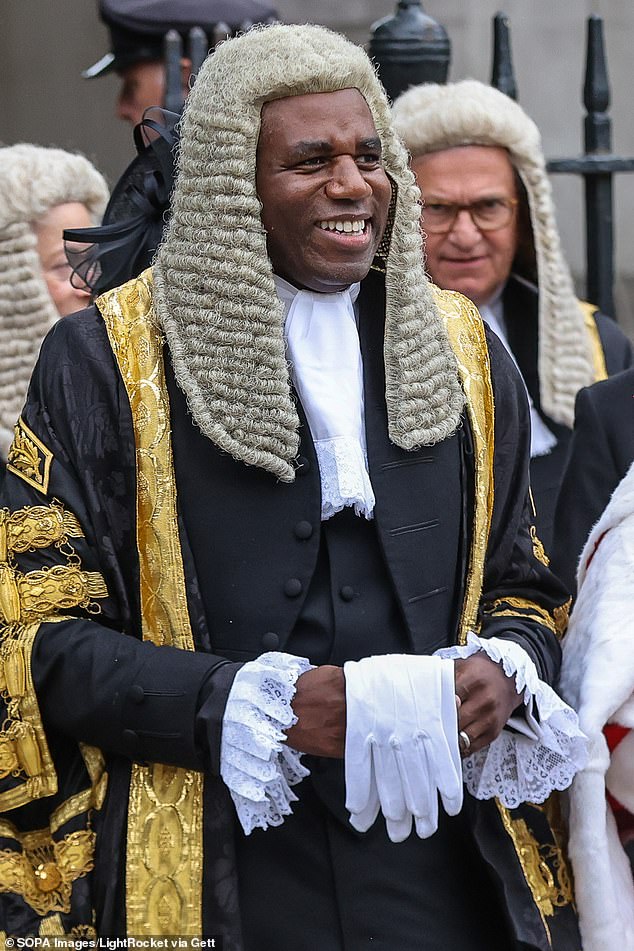
Justice secretary David Lammy has introduced drastic plans to scrap jury trials for crimes that carry a likely sentence of less than three years, creating ‘swift courts’ to tackle the backlog. But critics point out that the justice system is not even using the capacity it has effectively
Roughly 60 per cent of rape victims are said to be withdrawing from prosecutions due to the delays.
Law Society president Mark Evans said the only way to ensure victims received swift and fair justice was reform across the entire criminal justice system.
‘Given the unacceptable delays that victims, witnesses and defendants are facing in our criminal justice system it is alarming that the government chooses to leave so many court rooms empty,’ he said.
‘Underinvestment by successive governments has caused restrictions on sitting days, a chronic shortage of judges, court staff and defence lawyers, and courtrooms in disrepair. Victims, defendants and the wider community are being denied this vital public service.
‘There are also huge delays in the magistrates’ court and proposed restrictions on rights to jury trial will see many cases moved from one under-resourced part of the system to another.
‘The criminal court backlogs are the result of decades of underinvestment in the criminal justice system, with justice spending down 24 per cent since 2007/2008.
‘Ensuring victims and witnesses get swift and fair justice will require sustained funding and reform across the system.’
A Ministry of Justice spokesman said: ‘We are funding Crown Courts to sit at record levels, but that will not mean every courtroom is in constant use as there are many legitimate operational reasons rooms may be unavailable at any given time.
‘Clearing delays in the courts requires combining this record investment with greater efficiency and bold reforms that will help deliver swifter justice for victims.’
There was a record-high allocation of 111,250 Crown Court sitting days this financial year but incoming demand is so high that even sitting at these levels will not reduce the outstanding caseload.
The justice secretary has therefore introduced drastic plans to scrap jury trials for crimes that carry a likely sentence of less than three years, creating ‘swift courts’ to tackle the backlog.
Serious offences including murder and rape will still go before a jury, and volunteer community magistrates will take on more work.