Every three minutes, someone in the UK is diagnosed with dementia. It is not an easy diagnosis to receive for the patient or their loved ones. And fear about the condition, which affects around one million people in the UK, does not help.
‘This can even lead to delays in seeking help in the first place,’ says Jo James, a dementia nurse at Imperial College Healthcare NHS Trust in London.
But the sooner it’s diagnosed, the better in terms of finding the best treatment plans and living as well as possible.
Dementia itself is an umbrella-term, referring to a number of conditions that stop someone’s brain cells in certain areas from working properly.
This can lead to loss of memory, but there can be other symptoms, too, including changes in behaviour and personality and problems with concentration.
‘The conditions driving dementia are progressive, meaning they gradually get worse, going through three stages: early (mild), middle (moderate) and late (severe),’ says Adam Greenstein, a professor of medicine at the University of Manchester.
‘Late dementia is characterised by complete dependence on others for basic activities (e.g. washing, dressing, eating), whereas mild dementia is complete independence in these activities, but there may be difficulty with more technology-focused or complex activities.’
A dementia diagnosis does not mean life must stop: there is evidence that getting treatment, care and support can greatly improve a patient’s quality of life – helping them remain independent and able to do the things that are important to them.

The sooner dementia is diagnosed, the better in terms of finding the best treatment plans and living as well as possible. Pictured: An elderly couple embracing (file image)
More than 90 per cent of people affected by dementia reported benefits from getting a diagnosis, such as being able to plan for the future, as well as receiving practical support, according to a survey carried out by Alzheimer’s Society in 2022.
‘People who adapt to the new reality of having dementia function better than those who deny it and try to live life as they’ve always done,’ says Jo James.
And patients who were in denial about their diagnosis experienced worse quality of life than people who developed strategies to deal with it, reported the Journal of Alzheimer’s Disease last year.
So what steps should be taken after a dementia diagnosis?
Here, in the second part of our unique series on dementia, leading experts provide the vital answers.

Everyone experiences dementia differently. Use this checklist to help you make a note of your symptoms before you talk to your GP.
After the Diagnosis: What next?
Medications
While there’s currently no cure for dementia, there are things that can be done to help manage some of the symptoms and causes. ‘There are established options to help manage the symptoms,’ says Dr Lucio D’Anna, a consultant neurologist at Imperial College London NHS Trust and the private Dementech Neurosciences clinic in London.
For vascular dementia, treatment involves drugs to tackle the underlying cause, such as statins for high cholesterol and drugs for high blood pressure, which can contribute to cognitive decline.
For frontotemporal dementia, antidepressants (e.g. sertraline) may be prescribed to help manage distressing behavioural symptoms, including compulsive behaviours). ‘And a new generation of treatments has emerged that aims to target the underlying biology of Alzheimer’s disease rather than symptoms alone,’ Dr D’Anna says.
The medications that may be offered:
Cholinesterase Inhibitors: The mainstay of treatment for Alzheimer’s, these are also used to treat dementia with Lewy bodies (caused by a build-up of protein clumps) and mixed dementia involving either of these types.

An loving elderly couple. Every three minutes, someone in the UK is diagnosed with dementia. It is not an easy diagnosis to receive for the patient or their loved ones
They tend to be most effective in the early stages of the disease (i.e. for mild symptoms) and work by helping to prevent the breakdown of a chemical messenger called acetylcholine which is important for memory; people with Alzheimer’s have low levels in their brains.
The drugs – e.g. donepezil (brand name Aricept), rivastigmine (Exelon) and galantamine (Reminyl) – are taken orally once or twice a day, or as a patch.
‘Treatment is continued for as long as there is evidence of clinical benefit and the medication is well-tolerated,’ says Dr D’Anna.
‘The benefit varies between individuals. While some people may experience modest improvement or stabilisation of symptoms, others may notice little or no change.’
A 2021 study in the journal Neurology found that patients who started taking cholinesterase inhibitors within three months of diagnosis experienced modest cognitive benefits and a 27 per cent lower risk of death five years later, compared with those who didn’t have the treatment.
Glutamate Receptor Antagonists: The main drug in this class is memantine. It blocks the chemical messenger, glutamate, which people with Alzheimer’s have in excess, damaging neurons, making it harder for them to send messages to each other.
Memantine (brand names Ebixa, Marixino or Valios) is prescribed as a once-a-day pill taken in the evening, as it can be sedating.
‘It’s for those who can’t tolerate cholinesterase inhibitors,’ says Professor Greenstein. ‘It also is more likely to be given in the middle and later stages of Alzheimer’s and dementia with Lewy bodies.

A dementia diagnosis does not mean life must stop: there is evidence that getting treatment, care and support can greatly improve a patient’s quality of life (file photo)
‘It can have significant side-effects such as dizziness and headaches, which can put people off in the early stages.’
Monoclonal Antibodies: This class is the first to address the cause of Alzheimer’s, rather than just treat symptoms. Trials with these drugs show they can slow disease progression.
While approved by the Medicines and Healthcare products Regulatory Agency (MHRA) in 2024 for early-stage Alzheimer’s, neither lecanemab (brand name Leqembi) nor donanemab (Kisunla) are licensed for use in the NHS due to their cost.
They’re given intravenously every fortnight or month, and work by binding to harmful amyloid proteins and marking them, so the immune system clears them.
But Professor Greenstein says the benefits are modest at best. Privately they are available at an estimated annual cost of £20,000.
Non-drug therapies
Do not underestimate the importance of simply helping someone with dementia to remain active and engaged – mentally, physically and socially – says Jo James. ‘A person may need a bit more help as time progresses, but ensuring they still feel needed and have a sense of purpose goes a long way in helping them live well; in some cases it can be more effective than medication.’
A 2024 study in the American Journal of Geriatric Psychiatry found that dementia patients with limited family support suffered significantly more depressive symptoms and social isolation; and the less contact they have, the higher the number of dementia symptoms.

A woman playing chess. Any brain activity that stimulates the brain can ease the symptoms of dementia
Victoria Lyons, a specialist dementia nurse at Dementia UK, adds: ‘Whilst many supportive approaches can be done at home, such as being creative, maintaining routines and connecting with family and friends, there are also numerous therapies and activities which help at various stages of the disease.’
For mild to moderate dementia
Any activity or therapy that stimulates the brain can help build new neural pathways, giving it more ways to work around the areas affected by dementia, says neurologist Dr Lucio D’Anna.
‘This is vital in the early stages of the condition – defined by milder symptoms – when there is greater potential to preserve function and slow progression.’ Options that can help include:
Cognitive stimulation therapy: The only non-drug treatment recommended by the National Institute for Health and Care Excellence (NICE) for mild to moderate dementia, it involves group activities such as games, music or discussion, explains Dr D’Anna.
This approach can have a significant impact on cognition, language, working memory, depression, self-reported quality of life and the severity of dementia, according to a 2024 review of research in the journal Ageing Research Reviews. It is widely available on the NHS, with up to 90 per cent of memory services offering it to patients.
Cognitive behavioural therapy (CBT): A talking therapy to help with anxiety and depression by changing negative thinking and behaviour, says Sarah Butchard, psychology lead for older people’s services at Mersey Care NHS Foundation Trust, Liverpool.

Regular, moderate exercise can improve the symptoms of dementia
‘It helps someone to look at alternative ways of viewing situations,’ she explains. ‘Instead of the person viewing themselves as useless, for instance, it helps them look at themselves as being useful and a valued member of society.’
Results of a 2025 study in the journal Ageing and Mental Health, showed, after 25 sessions, patients with mild Alzheimer’s and signs of depression experienced improvement, even 12 months later.
NHS services are a postcode lottery. Private accredited therapists are listed with the British Association for Behavioural and Cognitive Psychotherapies: babcp.com.
Cognitive rehabilitation: Patients have one-to-one sessions with a practitioner to identify everyday tasks that are important and that they’d like to do more independently.
The practitioner then suggests strategies to enable them to do exactly that, such as using daily planners.
In a 2022 review of studies involving 1,702 people, after 8 to 14 sessions, patients were better able to do these activities.
Improvements were still noticeable three to 12 months post-treatment.
Speech and language therapies: This treatment helps patients with early dementia in finding the right words, as well as coping with communication difficulties associated with dementia. This includes things such as interacting with people and participating in conversations.
In the later stages of dementia, speech and language therapists can also help with swallowing difficulties, which can occur when parts of the brain that co-ordinate muscles responsible for swallowing become damaged.
Kate Fyfe, speech and language therapy lead at Mersey Care NHS Foundation Trust, explains: ‘This could include specific exercises to train the muscles used in swallowing – also changing the consistency of food, or making it smaller and easier to swallow.’
To find a private therapist, visit Association of Speech and Language Therapists in Independent Practice: asltip.com
For severe dementia
At this stage, therapies are increasingly tailored to the person and more about looking after someone’s emotional wellbeing – reducing stress and distress, both of which can accelerate cognitive decline, says Sarah Butchard.
Therapies that can help include:
Reminiscence work: People with dementia often have better memory for the past than anything recent, so this approach uses photographs or music to evoke memories, encouraging them to discuss past experiences and engage in conversation.
Therapy increases cognitive function and quality of life, and eases depression, according to a 2022 analysis of 29 studies, published in the Journal of Psychiatric and Mental Health Nursing.
Art therapy: Useful as a non-verbal way of communicating, this can also help with anxiety and depression; a 12-week programme of art therapy for 50 minutes a week reduced agitated behaviour in dementia patients, the Journal of Nursing Research reported in 2020.
‘People find the creative process very freeing,’ says Sarah Butchard. ‘As the disease progresses it can be difficult to take part in some activities, but with creative therapies such as art, many feel like an equal and are less worried about what people are going to think.’
Music therapy: Recognised in the NICE dementia guidelines as a therapy that can help support wellbeing, music therapy can improve mood and allow people to express themselves and be engaged even in the later stages of the disease. A 2018 review by the Cochrane group found music-based interventions can help reduce depression and behavioural symptoms in dementia.
The sessions are run by a professional music therapist.
Your GP or memory clinic will have more details of therapies in your area; also see local services listed at alzheimers.org.uk.
Why you MUST get legal matters sorted
Inform the DVLA: Just because someone has a diagnosis, it doesn’t mean an end to driving; one in three can continue.
But there is an obligation to inform the Driver and Vehicle Licensing Agency (DVLA). It will send a questionnaire, ask for your medical reports and speak to the doctor before making a decision.
If successful, the licence is usually renewed for another year.
It’s also important to tell the car insurance provider. Failure to do so could invalidate the policy.
Let an employer know: Anyone diagnosed with dementia who wants to keep working should tell their employer. If they work in healthcare, the Armed Forces or have a job that involves operating heavy machinery or driving, this is a legal requirement.
‘Someone with dementia may worry about letting people at work know, but it’s important to know you are protected against discrimination under the Equality Act 2010,’ says Victoria Lyons, a specialist dementia nurse at Dementia UK. In Northern Ireland, the Disability Discrimination Act 1995 works in a similar way.
‘Employers are required to make “reasonable adjustments” to aid you, such as introducing flexible working hours,’ she adds.
Arrange a lasting power of attorney: It’s important to ensure that you or your loved one has set up a lasting power of attorney (LPA), appointing someone they trust (an ‘attorney’) to make decisions on their behalf when they’re no longer able to.
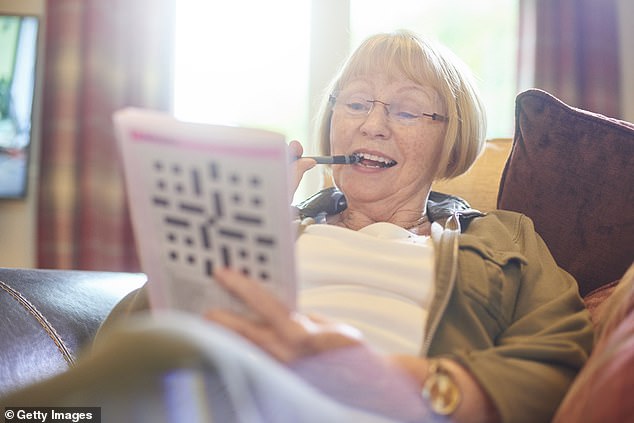
Finding ways to keep your brain active such as completing crosswords is one non-medical way to help prevent dementia
There a two types of LPA, explains Lauren Pates, senior knowledge officer at Alzheimer’s Society: A property and financial affairs LPA, and a health and welfare LPA (so any decisions to do with care or medical treatment). This can be a friend, family member or attorney (although the latter will obviously charge).
If you don’t set up these LPAs and decisions need to be made and the person with dementia is unable to do it, the Court of Protection will appoint someone to do so.
Make a will: Any decisions made on who receives things upon death need to be done when the person with dementia has the mental capacity to say so.
Whilst it can be done without the legal help of a solicitor, if the will is challenged on the basis it was made or updated when the person didn’t have the mental capacity, the solicitor will have proof to show they did.
Apply for benefits: There is financial support available.
For example, attendance allowance (AA) is tax-free and non-means tested, paid to anyone over state pension age (currently 66) who is physically and/or mentally disabled. Dementia falls into this category and it is possible to claim if it means they need supervision or help with personal care.
Call 0800 731 0122, or go to gov.uk, for a form. The rate, paid every four weeks, depends on the level of care needed.
For those under state pension age, there is a personal independence payment (PIP) – also tax-free, non-means tested and paid every four weeks. As well as an assessment form, this will often require a home visit. There are two parts: daily living and mobility.
Other benefits, such as extra pension credit or a council tax reduction, may increase if someone gets these benefits.