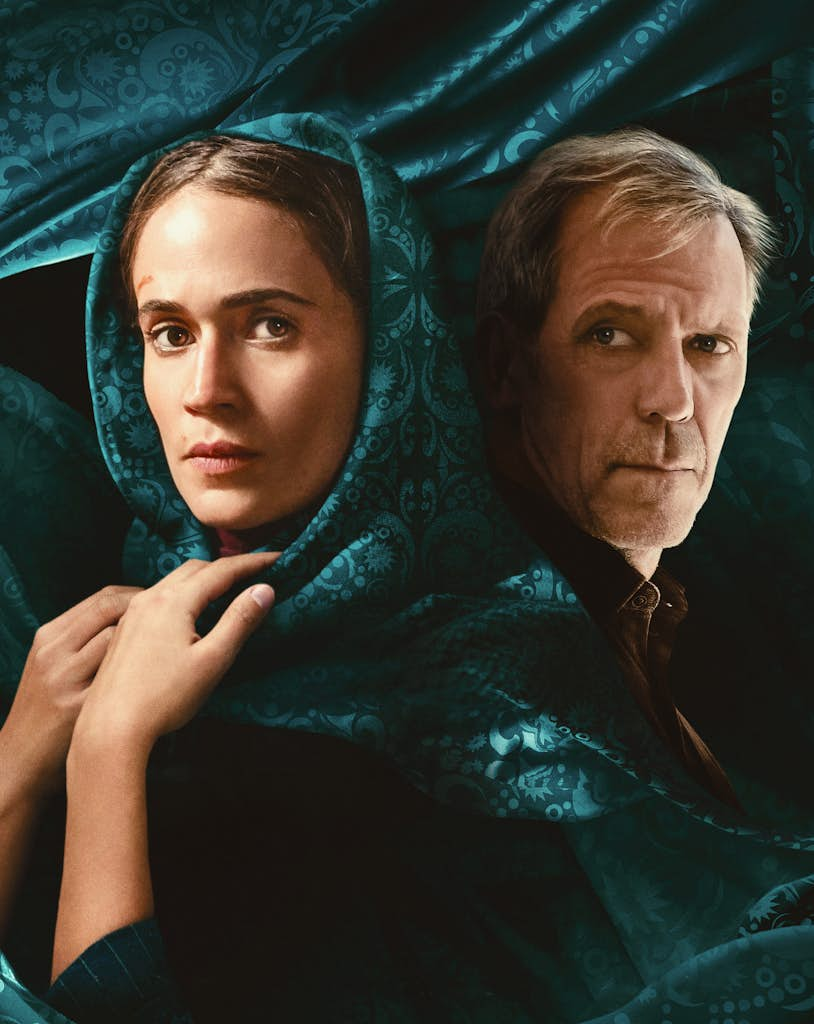
This article is taken from the February 2026 issue of The Critic. To get the full magazine why not subscribe? Get five issues for just £25.
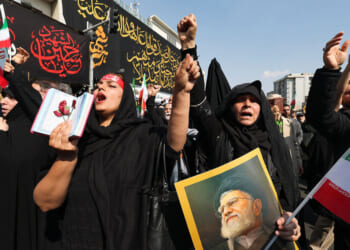
How to review a spy drama set in the Iranian capital when Tehran, if not the whole country, is a bloodbath, where profoundly brave young demonstrators, armed only with their courage and hope, face down a murderous state?
Somewhat ironically, season three of the Israel thriller Tehran was delayed because of the tensions around Gaza war, but is now showing on Apple TV even as the country is in turmoil. As I write in mid-January, regional tension may be about to reach a new level if the United States intervenes to support the uprising. Yet drama, too, can tell a realistic, informative story. Tehran never flinches from portraying the fanaticism and savagery of the Ayatollahs’ regime.
Niv Sultan plays Tamar, an Iranian-born Mossad agent whose undercover mission has gone wrong. In season two, Tamar kills a high-ranking Iranian officer with an exploding mobile telephone — against the express orders of her superiors in Mossad.
Thus now she has two agencies pursuing her: a vengeful Iranian intelligence service, and her former masters in Tel Aviv who send an agent to bring her in.
Tamar kills her pursuer and then hides out at a women’s shelter — but it’s soon clear that she is a very different person from the other cowed and nervous residents. Life on the run means she is endangering everyone at her place of sanctuary.
Meanwhile Hugh Laurie masterfully plays Eric Petersen, a fumbling nuclear inspector who is determined to prove that Iran is, contrary to government denials, producing nuclear weapons. That mission soon goes wrong, and Petersen is arrested.
Laurie and Sultan bring plenty of star quality to this topical, intelligent drama. Three seasons in, and Sultan still moves effortlessly between action girl and smart intelligence officer who knows she is in a whole heap of trouble whilst radiating glamour. Athens does a decent job of standing in for the Iranian capital, from its gritty back streets to long corridors of drab government offices.
Season three of Tehran, like its predecessors, is dark and enthralling viewing. But the real story is playing out in the Iranian capital in real life.
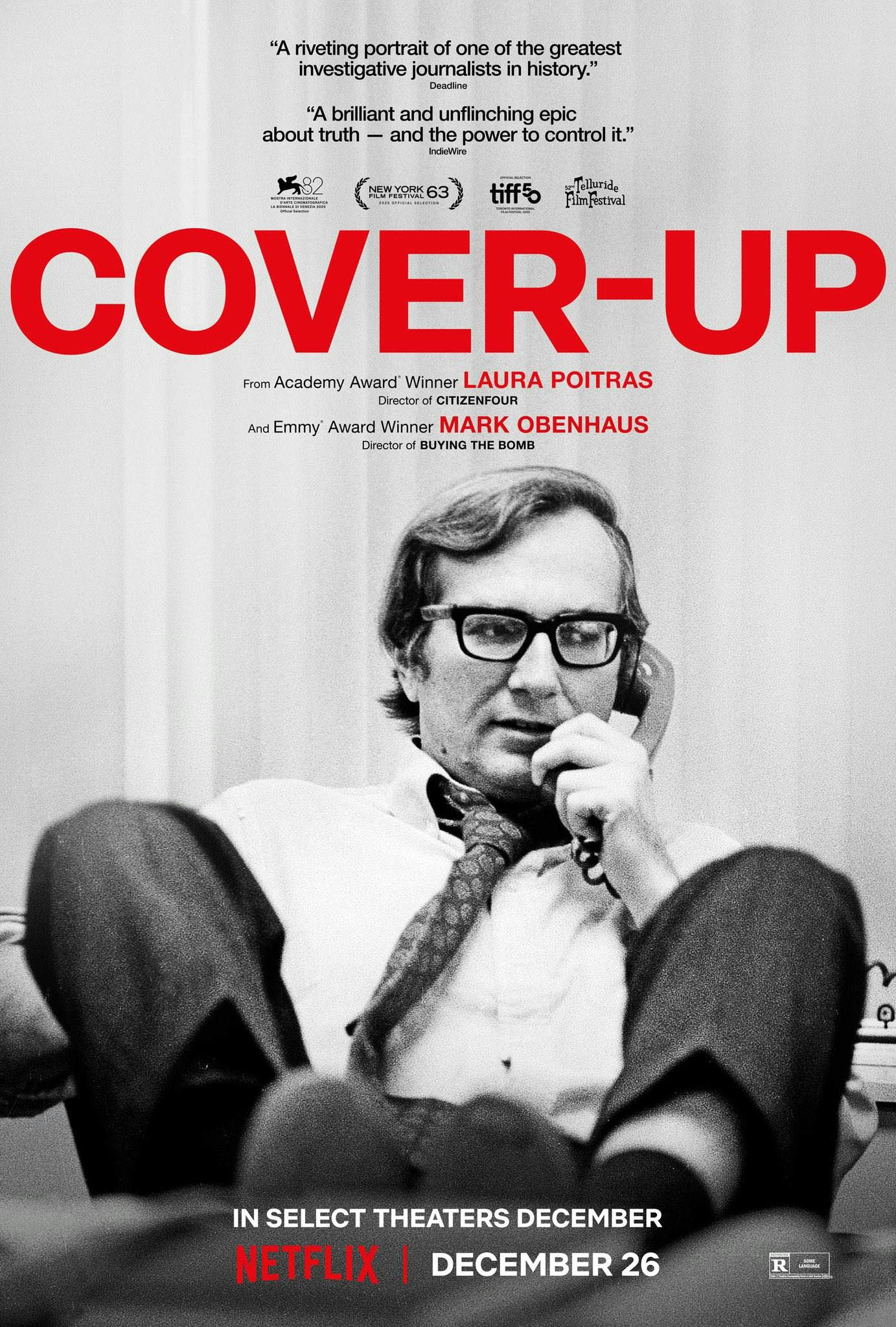
It took the award-winning American filmmaker Laura Poitras twenty years to persuade Seymour Hersh to agree to make a film about his life. Now 88, Hersh is still America’s best-known investigative journalist, famous for breaking the story of the 1968 My Lai massacre in Vietnam.
American soldiers massacred hundreds of civilians, many of them elderly or children. But you don’t have to be a journalist to enjoy Cover-up on Netflix. Hersh’s old-fashioned reporting has exposed numerous scandals — cultivating and meeting sources, jumping airplanes across the country and, most of all, digging and then digging further — and the story makes for gripping viewing.
Poitras weaves archive footage of Vietnam and the shocking My Lai cover-up, the rise of the murderous Pinochet regimes in Chile, and the Watergate scandal together with Hersh’s work and recollections of these episodes. The film also brings his childhood alive, growing up in a Jewish family in Chicago, where he was expected to take over his father’s dry cleaning shop. Thankfully, Hersh had other ideas.
Co-directed by Mark Obenhaus, the film’s reverential tone would sometimes benefit from being a bit more Hersh-like and digging deeper into some of the more questionable episodes of his career.
These include the controversy around his 1991 book The Samson Option, which claimed that Israel not only had nuclear weapons but was prepared to target the Soviet Union as well as its Arab neighbours. Critics also charge that Hersh failed to sufficiently expose the savagery of the Assad regime in Syria as it gassed and slaughtered hundreds of thousands of its own citizens. A brief biography at the start, setting out who Hersh is and why his work matters, would also be useful for non-American viewers.
Such cavils aside, Cover-up shines a light on some of the darkest episodes of modern American and international history, and brings alive the man wielding the torch.
On another note, I have long been a fan of gritty French cop series. I watched and enjoyed eight seasons of Spiral from its launch in 2005 to its finale in 2020 (all 86 episodes are available on StudioCanal via Prime Video). The four seasons of the less well known but highly recommended Braquo, also available on Prime Video, are even more hard core. Whilst the Parisian cops in Spiral bend the law, Team Braquo goes very dark indeed and breaks it repeatedly.
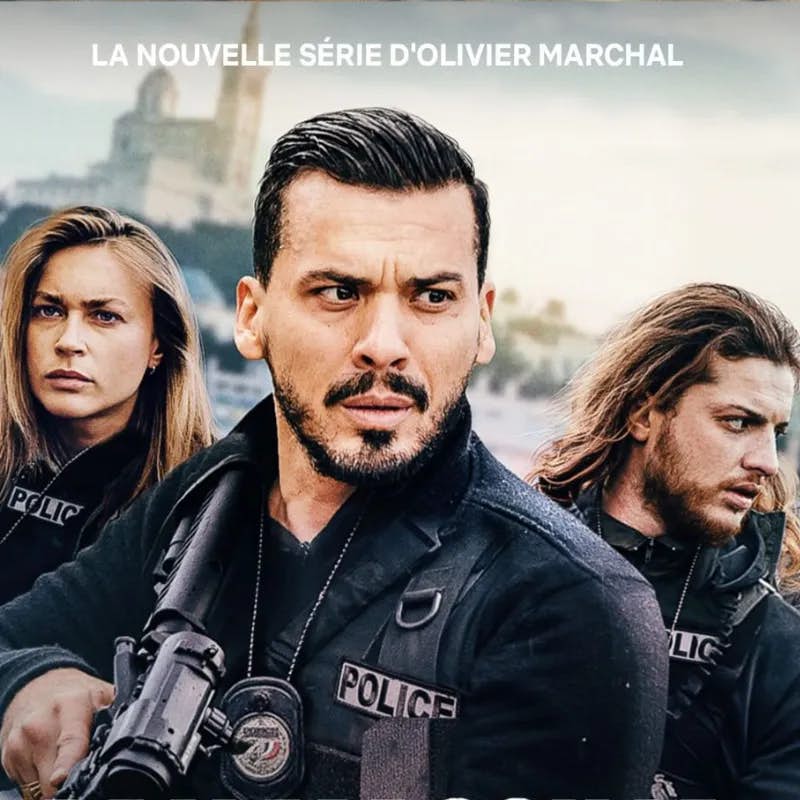
Season two of Blood Coast, now showing on Netflix, unfolds in Marseille but is equally riveting. Directed by Olivier Marchal, himself an ex-cop and creator of Braquo, Blood Coast showcases some familiar but no less watchable themes: the intense loyalty between the cops as they battle the murderous gangs that control the lucrative drug trade; the moral ambiguity and grey areas in which they operate.
As with Spiral and Braquo, it’s the complex character development that helps grip the viewer. The dark side of the French port — its lawless housing estates where life is cheap and luxurious villas funded by cocaine — is vividly portrayed.
Violence alert: some scenes are brutal. But on these gloomy winter evenings, Blood Coast shines the bright light of Mediterranean sunshine into Marseille’s underworld.