BUSTLING with sun-seeking tourists, this holiday destination is known for its luxurious resorts, long stretches of white sand beaches and world-class cuisine.
But vicious gangs are running rampant and developing sick new tactics to conquer the territory, with a massive third of the country now run by 400 separate mobs who carry high-powered rifles and execute enemies with no mercy. As tourists find themselves in the crossfire, The Sun reveals how the violence is spiralling out of control.
As a two-decade-long war against drug cartels thunders on, gangs are becoming more resilient – adopting warfare tactics and powerful arsenals of military-grade weapons.
Undeterred by law, experts fear tourists are increasingly at risk of getting caught up in the violence in Mexico as it spills out into popular holiday resorts.
The bloodshed is so bad that overburdened forensic services are said to be too busy to clear the dead bodies littering the streets by the next morning, often leaving them for hours.
Mexico is also home to the ‘world’s murder capital’, Colima, which was once a hotspot for visiting tourists.
The 330,000-person-strong city has been ripped apart by violent cartel turf wars between the Sinaloa Cartel, the Jalisco New Generation Cartel (CJNG), and Los Zetas, all vying for control of the neighbouring drug port in Manzanillo.
Students, Brits abroad and even federal judges have all been gunned down in crossfire or through suspected assassinations.
The crisis reached a boiling point when the Mexican government rolled out Operation Summer Vacation – deploying 7,000 armed troops to holiday hotspots in a bid to stem the violence.
It is the latest tactic of a government desperately scrambling to counter the sprawling violence strangling the country.
In the first 10 months of 2025, 372,061 British tourists visited Mexico, with the UK being one of the Latin American country’s top European markets.
But more than 30,000 people were killed in violent attacks in Mexico in 2025 alone – a deadly toll that has barely budged since 2018.
Among the victims are Cornish software engineer Ben Corser, 37, who was gunned down while shopping in Colima, and Cornish property mogul Chris Cleave, 54, who was ambushed by shooters in Cancun.
Cleave was reportedly told he’d end up “in a body bag” before he was killed in an execution-style shooting in front of his 14-year-old daughter.
He had been driving his red Audi through the resort of Playa del Carmen near Cancun when he was ambushed by two men who opened fire on a motorbike.
The businessman, who moved to Mexico in 2013, was not involved in drugs. Investigators believe he was killed for standing up to extortion attempts by the cartel.
Issuing a stark warning to tourists, the US State Department reported 115 deaths of US citizens in Mexico between January 2022 and June 2022.
The warning came after the shocking death of Californian mum-of-three Gloria Ambriz, 50, who died when gunmen opened fire on her Ford Platinum pickup as she drove through the Mexican state of Michoacán.
Grim death toll
Criminal network expert at New Lines Institute, Caroline Rose, told The Sun, Mexico is “on a path to paralysis”.
She said: “Mexican cartels have steadily advanced their operational and tactical capacity.
“They are adopting sophisticated weaponry, such as first-person view (FPV) drones, similar to those used in the Ukraine conflict, for targeted attacks, intelligence, surveillance, and reconnaissance.
“We’re even seeing the use of ‘cyber-capabilities’ to monitor law enforcement and recruit new members.
“This indicates cartel networks are adapting to new constraints along the border, governmental crackdowns, and regulations.”
In Sinaloa – a northwestern state facing the Pacific – 17 murders were committed in a single day on August 10, 2025. Once every 85 minutes.
According to Mexican government figures, it was the most violent day of 2025 in Sinaloa, exceeding every other state in the country.
A spate of violence has gripped the state following the surprise arrest of Ismael “El Mayo” Zambada – the godfather of the infamous Sinaloa Cartel – by US forces in El Paso, Texas.
The cartel kingpin pleaded guilty to US drug trafficking charges in August last year.
He was betrayed by a rival, Joaquín Guzmán López, the son of cartel boss Joaquín “El Chapo” Guzmán.
Now, a vicious war between rival factions has been unleashed in the territory.
In the capital, Culiacán, businesses have reduced their hours or shut down completely.
Videos show broad daylight shootouts and groups armed to the teeth patrolling neighbourhoods in armoured monster trucks.
Violent turf battles are on the rise as cartels expand beyond their multi-billion-dollar drug trade, focusing on control over territory.
As of May 2024, cartels gained control of about one-third of Mexico, leaving a trail of death and destruction.
The most powerful are raking in an estimated $20-30 billion (£16-24bn) a year in profits, according to US government figures.
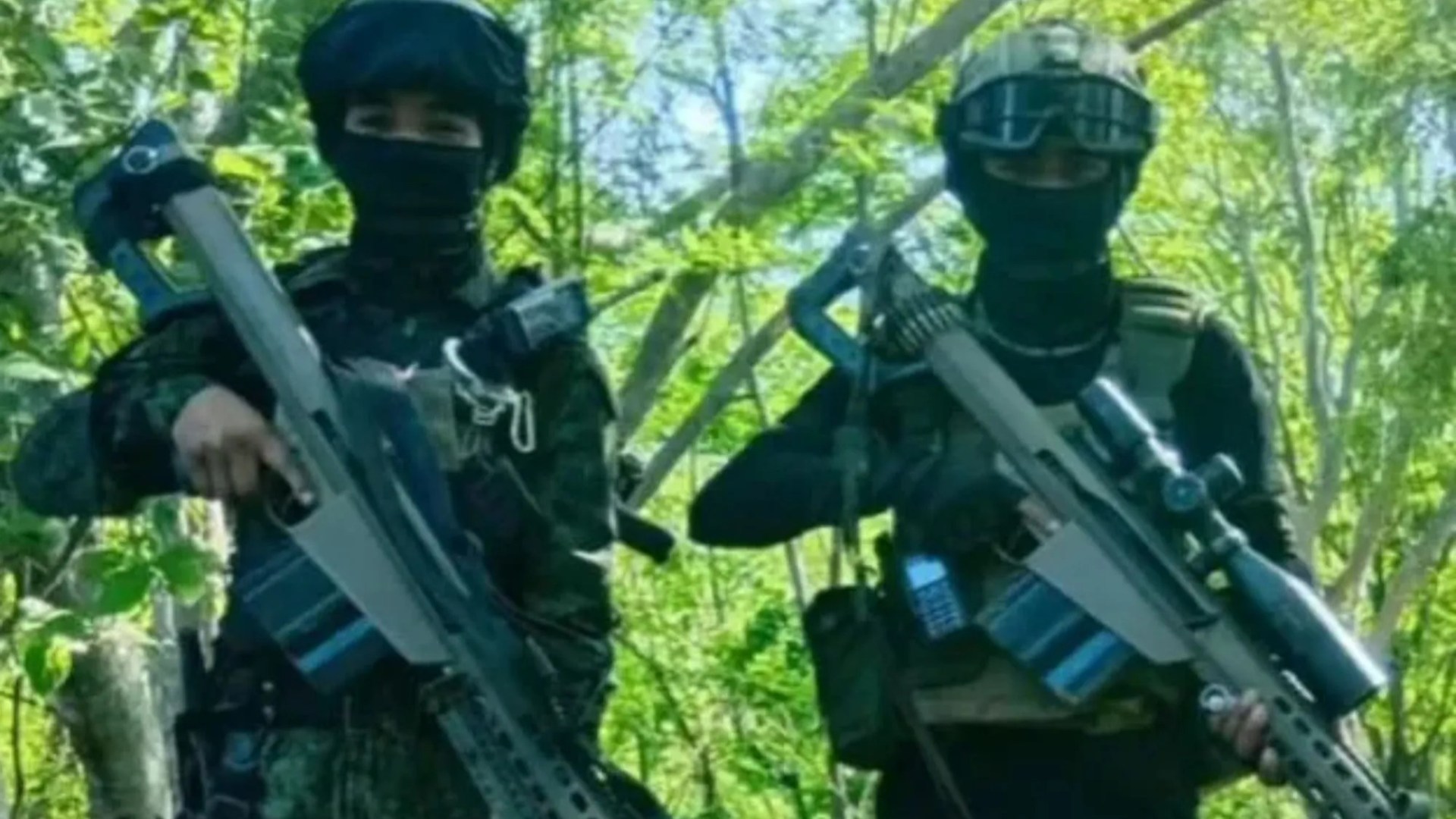
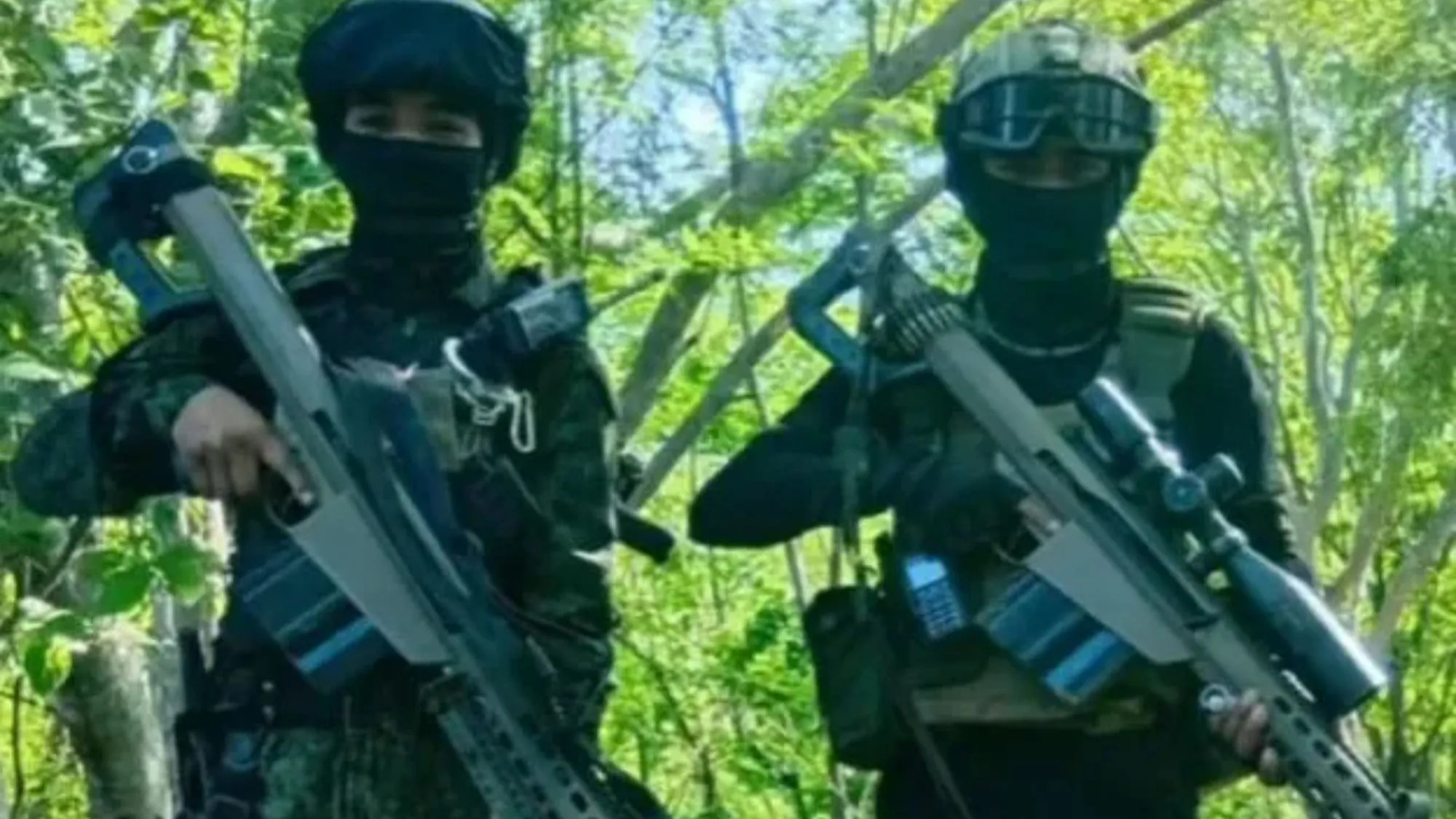
Now operating more like insurgent groups than gangs, cartels are using Improvised Explosive Devices (IED) and drones.
Recent trends also show a shift towards more sophisticated, heavy-duty rifles like the Barrett M82 .50 cal sniper rifle and high-powered “narco-rifles” custom-made using stolen army parts or 3D printing.
In Michoacan, Western Mexico, footage posted on X in August last year shows an IED being dropped from a drone onto a truck as those inside the vehicle flee moments before it explodes.
The drone was reportedly used by the R5 Cartel Unidos (CU) to attack rival members of the Jalisco New Generation (CJNG).
The CJNG, composed of around 90 organisations, is considered one of the most powerful cartels in Mexico.
Its structure signals a transformed criminal landscape, with old cartels splintering into around 400 armed groups.
Director of Organised Crime and Policing Studies at Royal United Services, Cathy Haenlein, told The Sun this creates a “complex threat landscape”.
She said: “Entrenched mafia-style criminal enterprises remain a key feature of the criminal landscape.
“But small organisations are playing a rising part in drug-related violence in Mexico, with a shift towards more localised actors.
“Diversified criminal activities can be more challenging for the government to disrupt, while collusion with private-sector actors and officials is an enduring challenge.”
Undeterred by law, cartels unleash brutal, execution style hits on those who enforce it.
In November last year, Mexican mayor Carlos Manzo was gunned down in front of his family during a Day of the Dead celebration.
Manzo had vowed to crush drug gangs in the heart of Uruapan, Mexico’s second-largest city in the state of Michoacán.
The evolution of cartels is a direct security threat to Mexico, the United States, and regional stability, officials say.
In early 2023, a Sinaloa Cartel base was identified operating just 300 metres outside the US border after gang members shot down a US drone.
Trump’s war on drugs
Donald Trump has set narcoterrorists as one of his administration’s top enemies, threatening land strikes to target drug cartels, which he said “are running Mexico”.
Close to 90 per cent of the cocaine entering the country crosses the US-Mexico land border – most of it entering the state of Texas, US authorities say.
And North America faces a deepening crisis driven by fentanyl and methamphetamine, according to the Organised Crime Index.
The Trump administration has also begun to add militarised zones to the southern border.
Mexican President Claudia Sheinbaum has repeatedly rejected the offer of US support to tackle drug traffickers in her territory, warding off threats of US military action.
Fears of US intervention in Mexico have grown in the days since US special forces launched a surprise attack on Venezuela to capture President Nicolas Maduro.
After designating several Mexican drug cartels as foreign terrorist organisations – including the CJNG and Sinaloa Cartel – Washington has rare powers to strike, detain and kill suspected traffickers without trial.
Last week, Mexico’s security minister said it sent 37 members of Mexican drug cartels to the US.
These included key figures from the Sinaloa Cartel, CJNG and the Northeast Cartel – based in the Mexican border state of Tamaulipas.
It is the third time in less than 12 months that Mexico has handed over detained cartel members to the US, in a bid to offset mounting threats from Trump.
But even snatching top drug lords cannot cripple a trade worth billions of dollars a year, as others emerge to take their place.
Criminal groups are “entrenched, protected and able to operate within state structures”, Ms Haenlein said.
She added: “Criminal networks are increasingly controlling territory, regulating markets, exerting territorial fees on other smugglers and looking to control communities in various ways.”
There has long been evidence that Mexican cartels are involved in the European drug market, but there are new fears these operations are expanding.
New forms of criminal collaboration are emerging, with Mexican cartels bringing drug expertise to European labs.
This cooperation runs in both directions, allowing Mexican and European criminals to spread their reach and activities across continents.
Ms Haenlein said: “We can’t treat this as simply a domestic threat. It is not limited by national borders.”