
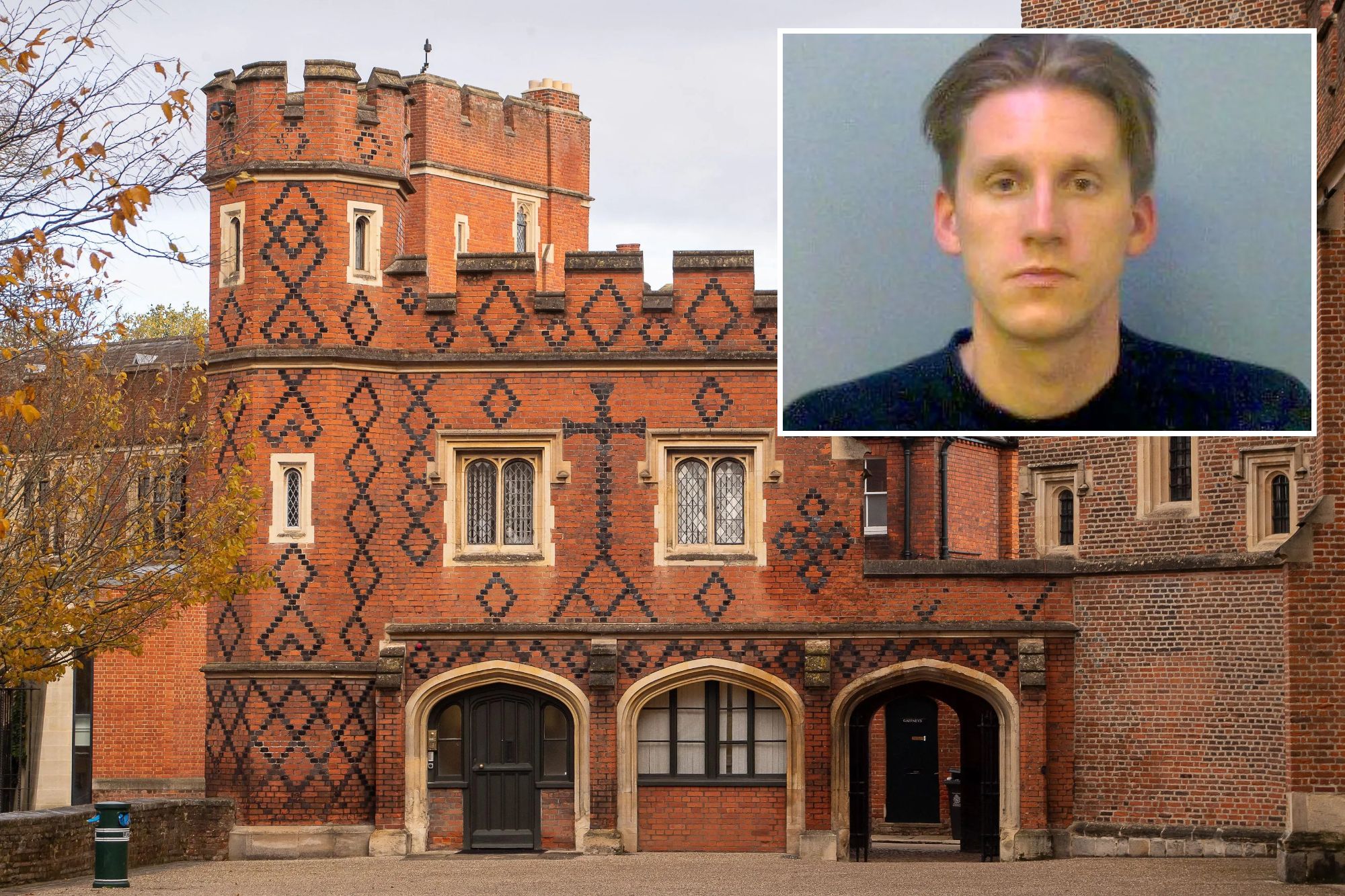
A FORMER Eton College teacher has been jailed after he sexually assaulted a “vulnerable” pupil at the elite boarding school.
Jacob Leland, 37, was known for wrestling pupils at the £63,000 a year school into their beds and showing them sexually explicit videos, the court heard.
The Russian teacher brought the 16-year-old boy to his teacher’s flat, gave him alcohol and abused him in 2012, Reading Crown Court heard.
Leland, from Islington, London, invited the victim and his friends to his accommodation and supplied them with alcohol and cigarettes.
He then asked the boy’s friends to leave so he could give him a birthday present, Leland then kissed the boy and put his hands on his groin.
Leland, aged 23 at the time, told the boy: “How hard I am” the jury were told.


In a later assault, the teacher performed oral sex on the victim during a school trip, a trial heard.
The defendant then ignored the boy causing him to “feel confused and rejected”.
Judge Kirsty Real said: “You were one of the teachers on that trip and therefore responsible for the welfare of the boys, not just as schoolchildren but in circumstances where they were away from the school environment and in an unfamiliar country.”
Eloise Marshall KC, prosecuting, said the defendant used “sophisticated grooming techniques” including giving cigarettes to the teenagers.
She added that Leland was “trusted” by a housemaster of one of the school’s 25 boarding houses to look after the pupils, and abide by the rules of the Berkshire establishment.
The school’s alumni include the likes of actor Eddie Redmayne, George Orwell and former Prime Minister Boris Johnson.
The victim said in a personal statement that the assault has caused him psychological harm including complex post-traumatic stress disorder.
Ms Marshall told the court: “The victim had particular vulnerability, that was known to this defendant and I note the pre-sentence report takes the view he targeted the victim for those reasons. He was able to become close to the victim and exploit the requests by the school to assist the victim.”
The Judge said at today’s sentencing: “The relationship of teacher and student at a school gives rise, undoubtedly, to a significant level of responsibility towards the victim upon which the victim would be entitled to rely.”
“The victim had had a number of significant bereavements and traumas in his own life,” she added.
“As a result, when he joined the school, he was vulnerable and low on confidence.
“I am not sure on the evidence that you were fully aware of the extent of his vulnerability, so as to characterise it as specific targeting.
“Nonetheless, that vulnerability was recognised by you on some level, and was what enabled you to become close to him.”
She added: “For the victim, the psychological effects of what you did to him have been long-lasting and serious.”
Defence barrister, Esther Schutzer-Weissmann told the court that Leland was a “late-developing man who was like a teenager” at the time of the abuse.
She said his actions were “out of character” and a “lamentable lapse of judgment”.
While the Judge accepted Leland’s immaturity furthered by his autism spectrum disorder diagnosis she said this “did not impair your ability to exercise appropriate judgement”.
Ms Real read the defendant’s own words to a probation officer to the court, in which he said he wanted to apologise to the victim for “taking advantage of him in a place where he should have felt safe”.
He continued: “I used him for my own gratification. I have left him with lasting scars.”
Leland was found guilty of three counts of sexual assault on a male on October 14 last year following a trial at Reading Crown Court.
He was sentenced today to three years and three months in prison and will serve half his sentence in custody and the remainder on licence.
The former teacher will be added to the sex offenders register for an indefinite period and will be barred from working with children, the Judge ruled.
Lawyer Rachel Lomas from the Crown Prosecution Service said: “Jacob Leland abused his position of trust to take advantage of a boy who should have been safe in his care.
“Our case centred on the issue of consent.
“At trial we were able to prove that the boy did not agree to take part in the sexual activity, and that Leland had no reasonable grounds to believe that he had.
“With no witnesses to the assaults, it was the strength of the victim’s account that helped secure Leland’s conviction for these offences.”