While successive governments have got us very used to U-turns, ineffective legislation, and sweeping analytical errors, less frequent is the case of an “unusual use of powers”.
Our story starts with the Charity Act 2022, and its provisions regarding “ex gratia payments” — the ability of a charity to alienate assets entrusted to it, should the trustees recognise a moral obligation to do so. This ability is not new, as it was already envisaged for non-statutory charities in the previous iteration of the act, the Charity Act 2011. The new provisions are relaxing the rules for donations of small amounts (under £1,000), but are also meant to include charities created by statute into the fold, extending to them the same permission to make ex gratia payments on moral grounds by applying to the Charity Commission, or in some instances to the Attorney General.
Overall, this seems pretty uncontroversial, as it goes toward solving what has been seen so far as an anomaly: why should statutory charities be barred from making ex gratia payments when non-statutory charities could? And I, in 99.99 per cent of the cases, would agree. The exception comprises just 16 of the more than 171,000 charities registered in the UK: our national museums.
I am not alone in making this exception. Last November, the Parliamentary Under-Secretary of State for Civil Society, Labour MP Stephanie Peacock, signed a statutory instrument explicitly excluding national museums from the commencement of sections 15 and 16 of the Charities Act 2022, which concern ex gratia payments. This exception had already been raised by Lord Parkinson, in his capacity as Arts Minister in the previous government, who had put a stop to those two sections of the act pending a full investigation into the unintended consequences of the new legislation on museum structures. The new statutory instrument, which keeps the exclusion in place, confirms a broad cross-party consensus that national museums cannot be dealt with in broad strokes like all other charities, and that a more surgical approach is needed.
But not everyone is happy. Earlier this month, Christian Bars and Maria Blizinski, co-chairs of ICOM UK (the British branch of a global organisation of museums and museum professionals), wrote a letter to Mrs Peacock, complaining about the exclusion of national museums from the commencement of the provisions. In so doing, ICOM UK follows the criticism raised by London heritage law firm BatesWells, which criticised the delay in the commencement and accused DCMS of the “unusual use of powers”. Mark Abbott and Erica Crump, the legal professionals penning the attack, argue that Mrs Peacock is cherry-picking which parts of the act to apply, thereby frustrating the “will of Parliament” and creating a procedural scandal which represents “concerning overreach by the executive.” In their view, the Law Commission, when drawing their proposed wording for the sort of “master-key” blanket-applying the new rules to statutory and non-statutory charities alike, knew what they were doing and Parliament, passing the Act, has taken the view that national museums are not special.
This naive reading of what is happening is very much in line with the recent tendency to view museums (national or otherwise) as nothing more than glorified storage units — warehouses of “assets” to be managed, used to woo visitors, and, when the political wind shifts, liquidated. It is bolstered by ICOM’s own shifting definitions of what a museum is. Once a body dedicated to the rigours of conservation and scholarship, ICOM has increasingly become a vehicle for museum activism. Its new definition of a museum — heavy on “inclusivity”, “diversity”, and “sustainability” — conspicuously de-emphasises the role of the permanent collection.
Our national museums are the guardians of our collective identity, the physical embodiment of our nation’s memory
Yet, for anyone who understands the role of museums in a nation’s life, there are profound reasons why objects should go in but never come out. It is not an accident of bureaucracy, nor is it a “glitch” in the law that needs fixing. It is the very purpose of the institution. Our national museums are the guardians of our collective identity, the physical embodiment of our nation’s memory, and this must transcend the whims of any single generation. I contend that to challenge the government’s prudent refusal to facilitate the piecemeal dispersal of these collections is an assault on the constitutional foundations of our cultural heritage. Activists and lawyers may well talk of “moral obligations”, but their real goal is to dismantle a principle that has stood for centuries: the inalienability of our national heritage.
I am well aware that my views are not shared by all. Tristram Hunt, former Labour MP and now chair of one of those excluded national museums (the V&A), has always been very vocal about his desire to allow trustees of national institutions to be a law unto themselves, unimpeded by fastidious distinctions and red tape. He maintains that trustees should be allowed to give away an object if they feel a “moral obligation” to do so. This is a dangerously subjective standard to apply to national treasures. Whose morality are we talking about? The morality of a transient board of trustees eager to satisfy the decolonial zeitgeist of Islington’s elites? Surely an institution whose centrality to the national discourse underscores the generous public funding that allows its very existence must be shielded from the risk that passing fads and perceived “moral” obligations may lead to choices regretted a few years down the line. Let’s not forget that those museums hold their property in trust “by the nation, for the nation” not just for the nation of today, but also the people of tomorrow, the public of 2124 and 2524, whose beneficial interest must also be protected when making those choices.
But the challenge raised by Abbott and Crump is not wrong only in matters of cultural principle; it is also incorrect on legal and constitutional grounds. In particular, I see three potential reasons why the good people at DCMS should not lose any sleep over this.
The lawyers argue that the DCMS is “sidestepping Parliament”, but that is totally untrue. The Charities Act 2022 was a general bill, largely concerned with the administrative minutiae of running local trusts. As Lord Parkinson of Whitley Bay noted, the specific, explosive implications of Section 16 for our national heritage were never properly debated or scrutinised during the Bill’s passage. Parliament did not explicitly “will” the dismantling of the national museums’ collections, or it would have done so by repealing the relevant sections in those museums’ founding statutes; it was sleepwalked into a generalistic provision by a technocratic Law Commission that viewed cultural heritage through the dry lens of “trust law efficiency”, and was probably thinking more about other, more common classes of statutory charities, like the NHS trusts or local authorities up and down the country. For the Executive to pause this process when they see an arguably unintended consequence whose magnitude is potentially devastating for an aspect of national life is not an “abuse of power” but the fulfilment of the Minister’s higher duty to protect the national interest.
If we accept the Bates Wells argument, we accept that a general piece of legislation can, by “side-wind”, repeal the specific protections afforded to our most sacred cultural institutions. This would be a constitutional catastrophe. It would mean that the “lock” placed on our national collections by their founding statutes is made of paper, easily torn by any activist lawyer holding a fresh copy of the Charities Act. People like Tristram Hunt may view the “inalienability” clauses of the British Museum Act 1963 or the National Gallery Act 1992 as colonial relics. Yet what they fail to see is that these norms were included precisely to protect the public from the exact kind of ideological volatility we are seeing today. The Lex Specialis status of our national museums exists because we, as a society, recognised that some things are too important to be simply left to the discretion of the “great and the good” of the time, let alone deaccessioned by stealth following a shoddy parliamentary consideration of all the ramifications.
Another contentious aspect of the BatesWells attack is that, according to them, the Government has a duty to bring the statutory scheme into force, without leaving bits of the legislation behind. This may well be true, but nowhere is it said that the government must apply legislation as a monolithic block. Deferments and partial enactments are ordinary practice, and the same act is often brought into force through multiple statutory instruments. Here we have not a question about whether to bring the provisions of the act into force, but when to do so. While ministers cannot say “I will never bring this section into force”, they still have broad discretion over the timing and conditions of commencement. The minister may believe that the infrastructure for national museums to handle the fallout of specific sections of the act is not ready, or that the specific impact on national heritage requires further policy development. If so, they have every right to delay (not cancel) commencement for those specific bodies.
Abbott and Crump cite the Fire Brigades Union 1995 case, where the minister used the statutory instruments to introduce a completely different scheme that made the original Act redundant. In the landmark judgement, the Law Lords (remember them?) found that the minister had a duty to use the discretionary powers granted to him to enact the legislation, and that said discretion did not extend to deciding not to do so altogether. But in this case, the minister is commencing Sections 15 and 16 of the Act for the vast majority of charities. They are not rendering the Act “nugatory”, as claimed by the BatesWells lawyers; they are applying it to 99 per cent of the sector while carving out a tiny, high-stakes exception because of implications that may not have been duly foreseen and accounted for when drafting and discussing the bill in Parliament. Any court would find this is a lawful and reasonable exercise of “graduated commencement” rather than the total “frustration of the Act” of which Mrs Peacock is accused.
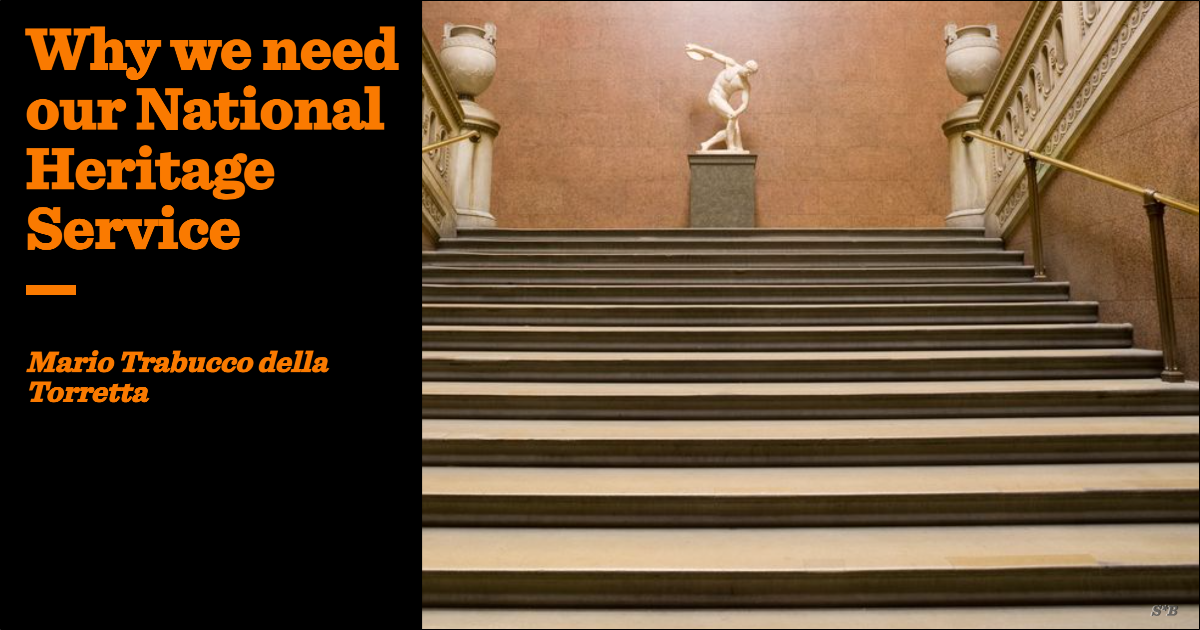
In conclusion, petulant legal challenges such as the one espoused by an ideologically captured body like ICOM seek to turn our museums into transit lounges for objects on their way elsewhere, based on questionable “moral” justifications. DCMS is right to hold the line. The sixteen museums excluded from this commencement order represent the core of our shared intellectual and cultural wealth, our National Heritage Service. When objects enter those museums, they cease to be mere commodities or pieces of property and become a part of the national story. Curators, directors and trustees of those institutions are supposed to be “guardians of national identity” and if they see their job simply as managing the slow dissolution of that identity, they should, in my opinion, resign in shame.
To allow museums to be raided under the guise of “ex gratia” morality would be an act of cultural self-harm from which there is no recovery. Let lawyers and interested actors, here and abroad, shout about “unusual use of powers” by our heritage ministers. I would rather an unusual, but lawful, use of powers that saves our national museums than an allegedly “proper” use of powers that empties them, for if we cannot even maintain the integrity of our collections, we have little chance of preserving the integrity of our nation.
Let’s leave aside the legalistic pseudo-outrage and work together instead to save our NHS (the other one).