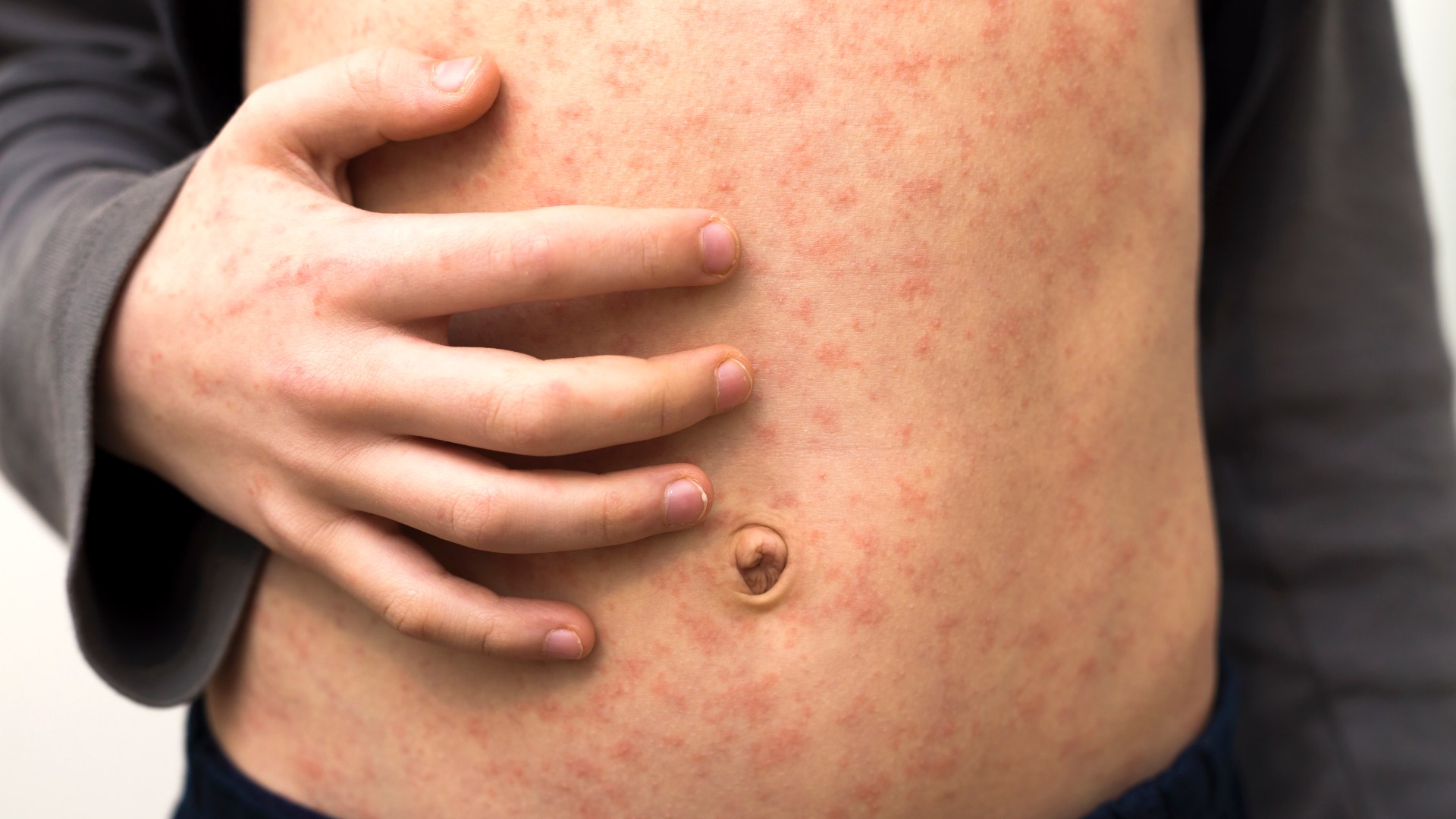
THE UK has been stripped of its measles-free status by the World Health Organisation.
The move follows a surge in cases, with nearly 3,000 infections of what is dubbed “the world’s most infectious disease” recorded in England and Wales in 2024, up from almost 1,000 cases the year before.
The health arm of the United Nations only labels countries “measles-free” if cases are rare, usually imported from abroad, and outbreaks are small and short-lived.
The virus is highly contagious, as it spreads easily when an infected person breathes, coughs or sneezes.
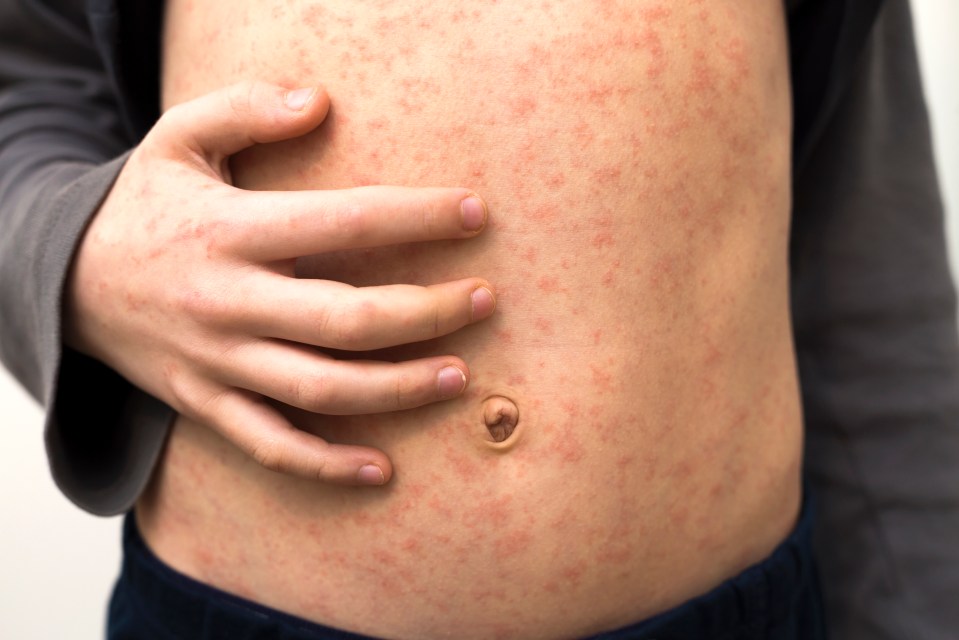
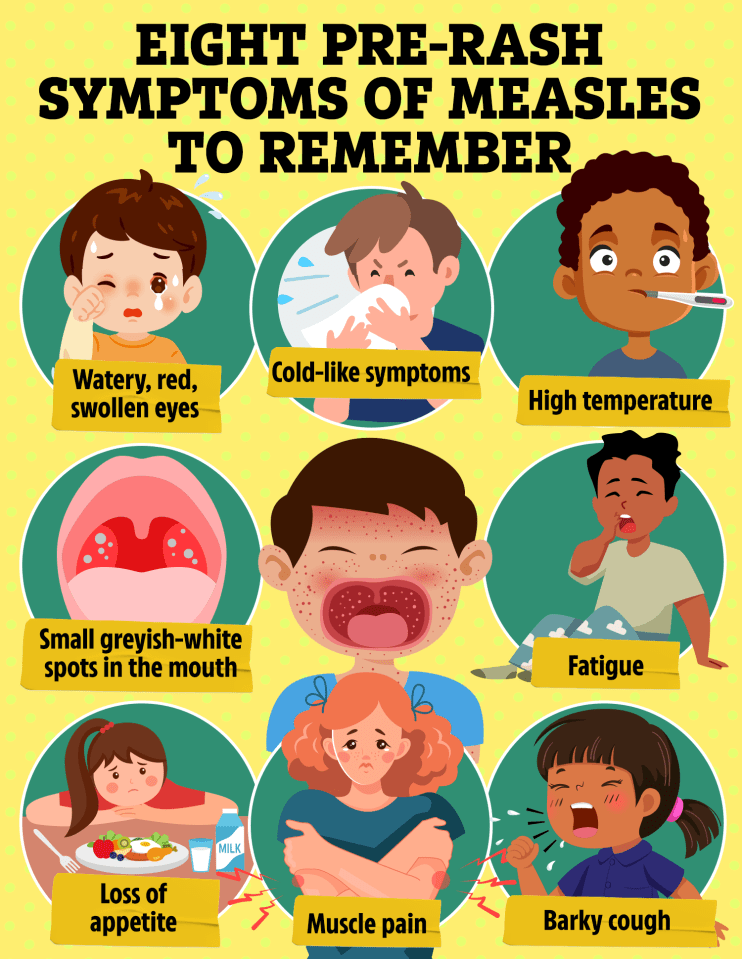
Most people associate measles with a flat, red rash that appears on the face and starts to form blotchy patches.
But this symptom typically doesn’t appear for a good few days after the infection has taken hold.
The illness begins with cold-like symptoms, followed by the rash a few days later.
In rare cases, especially in children with weaker immune sustems , measles can result in serious complications such as blindness, brain swelling and pneumonia, which can prove fatal.
UK health chiefs say the downgrade reflects falling childhood vaccination rates across the UK, specially the measles, mumps and rubella (MMR) jab.
Latest figures from the UK Health Security Agency (UKHSA) show that in 2024/25 just 91.9 per cent of five-year-olds in England had received one dose of the MMR vaccine, unchanged from the previous year and the lowest level since 2010/11.
Coverage for both doses is even lower, with just 83.7 per cent of five-year-olds fully vaccinated, down year-on-year and the lowest level since 2009/10.
To reach herd immunity – which helps to stop outbreaks – uptake of both jabs needs to hit 95 per cent, the WHO says.
Measles was considered eliminated in the UK between 2021 and 2023, but cases have surged again, with 3,681 confirmed infections recorded nationwide in 2024.
A child with measles and other health problems died in intensive care at Alder Hey Children’s Hospital in Liverpool in July last year.
It marked the second death due to an acute measles infection in Britain this decade.
Around 16 other children were treated at the hospital after becoming severely unwell.
In January, health officials announced children in the UK will now be offered the MMRV vaccine, which protects against measles, mumps, rubella and chickenpox.
Dr Vanessa Saliba, consultant epidemiologist at UK Health Security Agency (UKHSA), said: “Infections can return quickly when childhood vaccine uptake falls.
“Measles elimination is only possible if all eligible children receive two MMRV doses before school.
“Older children and adults who missed vaccination must be caught up.
“The NHS is making vaccination easier, including offering the second MMRV dose earlier at a new 18-month appointment to boost uptake and support elimination goals.”
In 2024, an estimated 11 million people were infected with measles, up 7 per cent on the 10.4 million in 2023.
At least 59 countries were struck by large measles outbreaks last year, according to WHO – almost three times the number seen before the pandemic.
And at least 95,000 people – mostly young children – died from the disease.
Expert answers MMR questions
TO help deal with parental concerns, Professor Helen Bedford, a specialist in child public health at University College London, tells you all you need to know about the MMR vaccine.
When is the vaccine given?
The MMR vaccine is part of the NHS Routine Childhood Immunisation Programme.
It’s typically given via a single shot into the muscle of the thigh or the upper arm.
The first dose is offered to children at the age of one (babies younger than this may have some protection from antibodies passed on from their mother, which start to wear off at about 12 months.)
The second dose is then offered to children aged three years and four months before they start school.
To check to see if you or your child have had the recommended two doses of MMR, you can look at their/your Personal Child Health Record, also known as the red book.
If you can’t find the red book, call your GP and ask them for your vaccine records.
You are never too old to catch up with your MMR vaccine.
If you see from your vaccination records that you did not receive two doses as a child, you can book a vaccination appointment.
Is the vaccine safe?
The MMR vaccine is safe and effective at preventing measles, mumps and rubella.
In the UK, we started using the jab in 1988, so we have decades of experience using it.
The jab is made from much-weakened live versions of the three viruses.
This triggers the immune system to produce antibodies that are protective in the face of future exposure.
It takes up to three weeks after having the vaccine to be fully protected.
Like any vaccine, the MMR jab can cause side-effects, which are usually mild and go away very quickly.
This includes rash, high temperature, loss of appetite and a general feeling of being unwell for about two or three days.
There is also a very small chance children can have a severe allergic reaction.
But compared to the complications of measles, there is no contest that vaccination is by far the safest and most effective route to take.
Why was it linked with autism?
In 1998, Andrew Wakefield and his colleagues published a now-discredited paper in medical journal The Lancet.
The paper suggested that the MMR vaccine might be associated with autism and a form of bowel disease.
It led to a sharp decline in vaccination rates.
Even at the time, the research was considered poor.
The Lancet retracted the story in 2010 after Wakefield’s article was found “dishonest” by the General Medical Council.
He was later struck off and subsequently, in 2011, the British Medical Journal declared the story fraudulent.
Does it contain ingredients from pigs?
There are two types of MMR jabs: One with gelatin (animal/pig collagen), and one without it.
For some religious groups, the inclusion of pig products is not acceptable.
Those people should ask for the vaccine without gelatin.