Rachel Reeves‘ choices on higher tax and spending were laid bare in public finance figures today.
Central government receipts soared 8.9 per cent to £94billion in December, with tax income up £4.6billion.
There was also a bumper national insurance haul after the Chancellor’s hike in levies on employers.
But the revenue boost was partly offset by a 3.5 per cent increase in spending, including an extra £2.1billion on welfare – after sharp rises in benefits and the state pension.
Central government outlay on goods and services increased by £2.3billion, with the ONS pointing to pay rises and inflationary pressure.
Overall the Treasury still needed to borrow £11.6billion last month to balance the books, although that was more than a third lower than the same period in 2024 and slightly better than analysts expected.
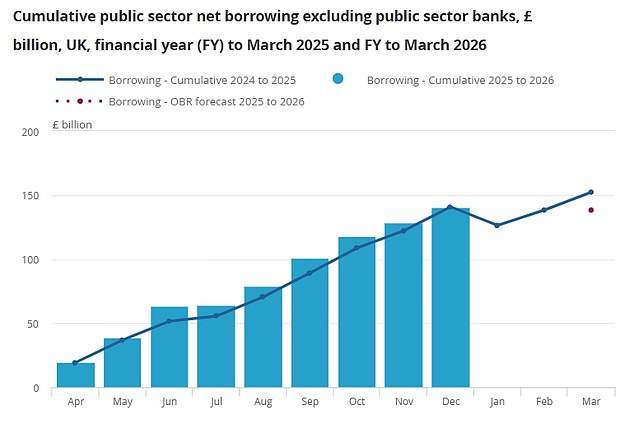
Overall the Treasury still needed to borrow £11.6billion last month to balance the books, although that was more than a third lower than the same period in 2024 and slightly better than analysts expected
Rachel Reeves’ choices on higher tax and spending were laid bare in public finance figures today
Tom Davies of the ONS said: ‘Borrowing in December was substantially down on the same month in 2024, as a result of receipts being up strongly on last year whereas spending is only modestly higher.
‘However, across the first nine months of the financial year as a whole, borrowing was fractionally lower than in the same period in 2024.’
Chief Secretary to the Treasury James Murray said: ‘Last year we doubled our headroom and we are forecast to cut borrowing more than any other G7 country with borrowing set to be the lowest this year since before the pandemic.
‘It cannot be right that £1 in every £10 we spend goes on debt interest – which could be better spent on our nurses, police officers and teachers – that’s why we’re tackling it.
‘We are stabilising the economy, reducing borrowing, rooting out waste in the public sector and making sure that public services deliver value for taxpayers’ money.’
Much of Ms Reeves’ most recent Budget tax raid has yet to take effect.
The December borrowing figure represented the 10th highest for the month since records began in 1993, not adjusted for inflation.
Borrowing over the financial year from April totalled £140.4billion, about £300million lower than the same period in 2024, the ONS said.