Thousands of motorists could have their speeding convictions scrapped because of a speed camera glitch that continued for years.
Transport secretary Heidi Alexander this week ordered an independent review into errors that ‘resulted in a number of people incorrectly facing enforcement action for speeding’.
The Mail revealed last month that more than 36,000 speeding cases have been axed following the discovery of a glitch in variable speed camera systems on smart motorways and some A-roads.
The cases date back to 2021 when the new technology was introduced.
The Department for Transport (DfT) has now confirmed that National Highways, which runs the strategic road network in England, will be investigating cases dating back to 2019 when the ‘upgrade’ of cameras got underway ‘to ensure that everyone who has been impacted is identified’.
Some drivers are thought to have been banned from the roads after being wrongly prosecuted in a small number of cases.
Experts have warned the scandal could cost the taxpayer millions of pounds in compensation.
Hugh Bladon, senior spokesman for the Association of British Drivers, said: ‘When you consider somebody could lose their licence and maybe their job as a result of one of these faulty speed cameras, the implications are incredible.
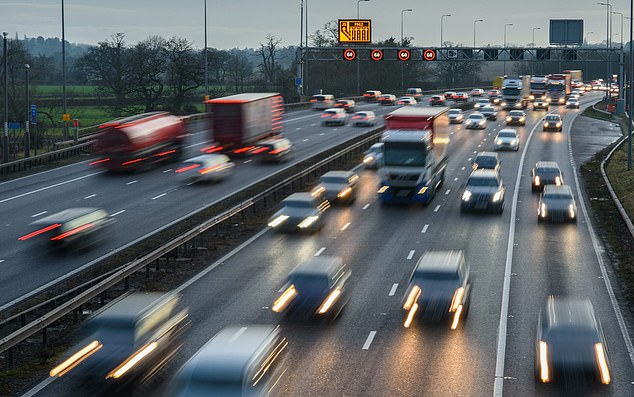
The investigation into faulty speed cameras on smart motorways will now look into penalties as long ago as 2019
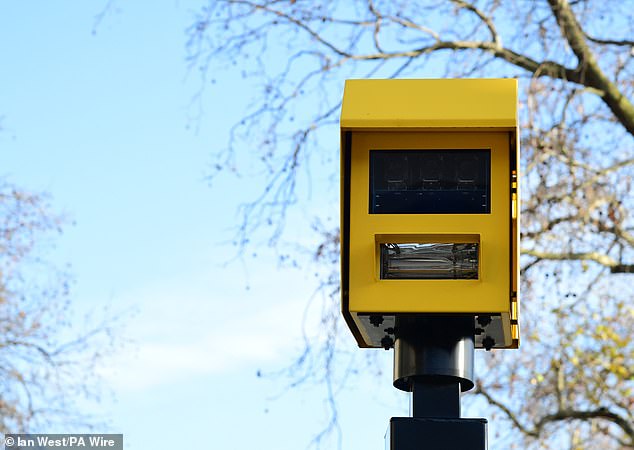
The issue has been caused by a technical glitch which meant that at times there was a delay of a few seconds between gantry signs showing a change in the variable speed limit and the cameras registering the change
‘It’s an awful lot of people who have been unfairly punished for doing something entirely innocent.
‘God knows how the Government is going to sort this compensation. If you are someone who has lost your job as a result of unfairly losing your driving licence, how do you recompense that?
‘The cost to the Government is going to be substantial.
‘And it’s going to be a monumental headache for the Government trying to sort this out, although I suppose it will be up to the drivers affected to step forward and say: This happened to me.
‘We have heard stories of people who have been unfairly punished, and that is justice gone wrong.’
The technical glitch meant that at times there was a delay of a few seconds between gantry signs showing a change in the variable speed limit and the cameras registering the change.
The malfunction meant that some people were wrongly clocked as speeding despite travelling at the speed displayed on the gantry sign.
It only emerged after drivers were able to produce dashcam footage at court showing they were travelling at the correct speed.
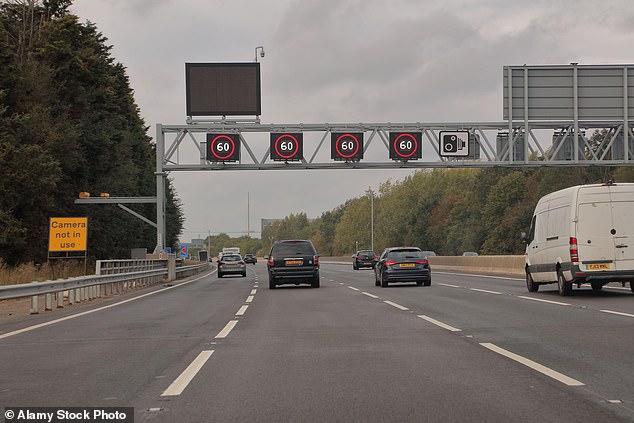
The scandal casts further doubt on the safety of smart motorways, so called because variable speed camera technology manages traffic flow and congestion on particularly busy sections of road
The error at one point led to the police turning off cameras because they could not be relied on as accurate.
It is thought to have affected 154 speed cameras over a four-year period, leading to an estimated two mistakes a day, equal to roughly 0.1 per cent of camera activations.
Philip Somarakis, a leading criminal and regulatory lawyer at Irwin Mitchell said: ‘We welcome the independent review.
‘I’m sure there will be many motorists left feeling extremely frustrated that the issues with variable speed limit enforcement potentially go back even longer than it originally appeared.
‘Moreover, I note the review will specifically consider the circumstances through which technical and operational issues, including, but not limited to, the technical anomaly, are identified and how and when they are escalated within National Highways to the executive and board.
‘This is not an isolated incident involving the enforcement of variable speed limits and it begs the question whether the review will identify other failings.’
The new review will be led by DfT board member Tracey Westell, who has been given a remit to investigate how the malfunction occurred and whether it should have been spotted sooner.
A DfT spokesman said: ‘The travelling public must have confidence that technology on our roads works as intended.
‘An independent review will examine how the anomaly occurred, how it was handled, and what changes are needed to ensure this cannot happen again.’
The decision to review cases back to 2019 means that many more drivers could potentially have their speeding convictions quashed.
Some 2,650 innocent drivers have already been identified. Police have also told 36,000 drivers that their speed awareness courses are being cancelled as a precaution.
National Highways previously apologised for the bungle and said new checks meant nobody would be prosecuted incorrectly.
A spokesman said the cameras are still capable of enforcing the 70mph national speed limit on the affected motorways.
The scandal casts further doubt on the safety of smart motorways, so called because variable speed camera technology manages traffic flow and congestion on particularly busy sections of road.
The Daily Mail has long campaigned for better safety on the controversial roads as studies have shown almost 400 miles of smart motorways in the UK which have no hard shoulder are three times more lethal to break down on than those that retain the safety lane.