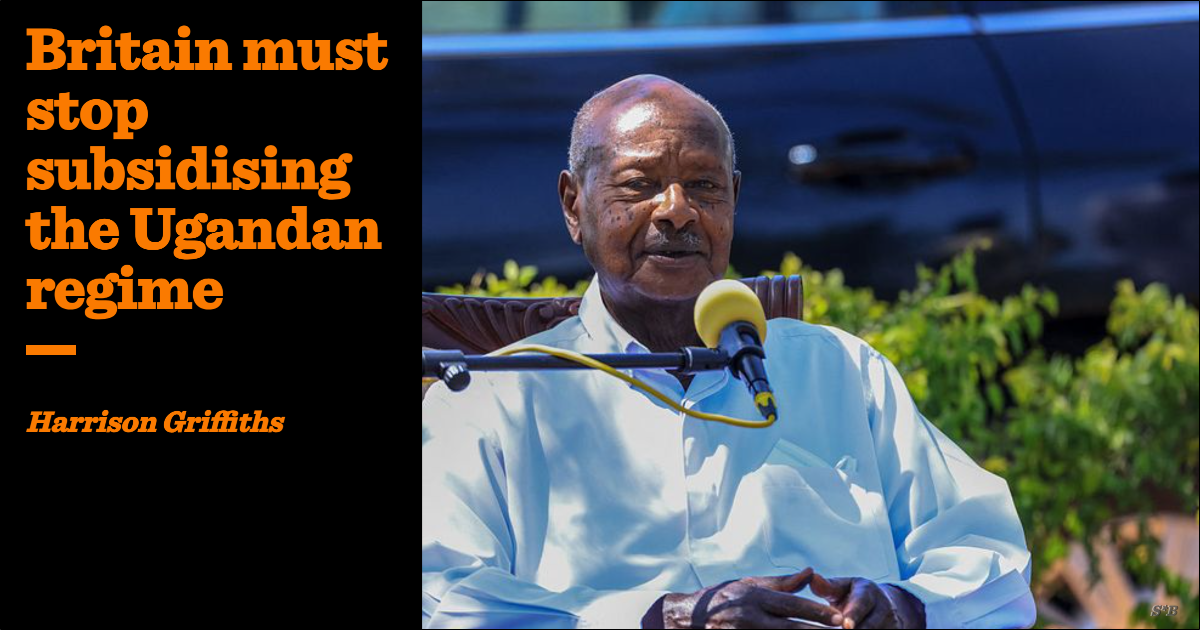
Last week, the Ugandan government staged yet another sham election. In a campaign marred by political violence, polling irregularities, and lawfare aimed at silencing critics, President Yoweri Museveni managed to achieve a whopping 70 per cent of the vote, marking his seventh consecutive victory in a brutal forty-year rule. Throughout that time, his regime has been propped up by billions of dollars in aid from across the world, including Britain.
With Museveni extending his grip on power for another five years, one can only look on those who continue to defy him with admiration. Since his opponent Bobi Wine contested the results, government crackdowns have rapidly escalated.
Wine himself narrowly escaped a raid on his family home on Friday. Opposition protests have been met by brutal shows of force. Reports indicate that live ammunition has been used to disperse gatherings. Echoing recent events in Iran, the government imposed a nationwide internet blackout days before the election and only began slowly rolling it back in the last two days. Wine and his supporters have been accused of terrorism by Museveni, whose son has called for Wine’s death.
This follows a pre-election pattern, in which political and civil society leaders have been arrested on trumped-up charges of electoral fraud and plotting to overthrow the state.
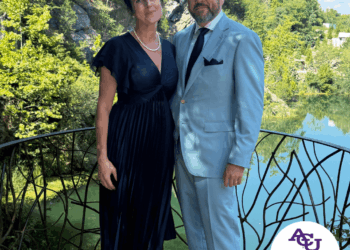
Another such case since the election is that of John Mugabi, a leading campaigner for free markets and human rights in the country. Mugabi stood for election in his home city of Entebbe for the opposition coalition after decades of tireless work to advance economic education, entrepreneurship, gender equality, and, more recently, raise awareness about Ukraine’s struggle in a country where pro-Putin propaganda is widespread.
Mugabi is allegedly in hiding following the arrest of several of his volunteers after the election. His family home is surrounded by Museveni’s security forces, with his wife and kids trapped inside. If the repression was not bad enough, the use of families as hostages shows the abject brutality and disregard for human life at the heart of Uganda’s state.
This unfolding story is just the latest case study into the evil of Uganda’s rulers. Despite this, the British government continues to spend tens of millions of pounds each year on foreign aid to the country. As recently as 2019, annual spending was over £100 million, with just over £1.4 billion spent between 2009 and 2021.
The projected spend in the country this year is set to be just under £47 million. A rough estimate shows that is the equivalent to the annual Income Tax and National Insurance contributions of around 7,500 British employees earning average salaries.
While this is well-intentioned, it effectively subsidises the regime’s failure to create policies and institutions that would make Ugandans more prosperous. In a 2006 paper, Oxford Professor Paul Collier estimated that “around 40 per cent of African military spending is inadvertently financed by aid”. The explanation is that aid effectively frees up money in governments’ budgets to spend on other priorities, which often include the armed forces and internal repression structures.
The effect was perfectly articulated by the renowned developmental economist William Easterly, who warned that although foreign aid results in the occasional unmaintained road or borehole, the practice nearly always means “dictators are left with cash and services to prop themselves up — while punishing their enemies”. Uganda is a perfect example.
Given the chaotic state of geopolitics, Uganda may not be at the top of Britain’s foreign policy agenda. But threatening to drastically reduce aid spending and immediately suspend the 10-15 per cent of funds set to be spent specifically on government programmes are simple solutions which would impose tangible costs on the regime. They would save taxpayers money and reduce our country’s complicity in repression which does not even pass a pragmatic assessment about our national interests.
To make matters simpler, this has already been done while Museveni has been in office. The Coalition Government cut £11 million in aid to the country in 2012 after it was revealed that huge chunks of aid money had been siphoned off by the office of then-Prime Minister Amama Mbabazi. Tony Blair’s government cut £15 million in 2005 over concerns about judicial independence and freedom of the press after the government jailed a leading opposition figure.
Neither corruption nor political authoritarianism have improved much since. The government must turn up the heat on Uganda’s rulers and foreign aid is the first place to look.