Archaeologist Howard Carter has been accused of stealing from Tutankhamun’s tomb after stunning new evidence came to light more than a century after its discovery.
The celebrated British Egyptologist uncovered the 3,300-year-old tomb in the Valley of the Kings in November 1922 in one of history’s greatest archaeological finds.
But Carter, who died in 1939, has faced rumours ever since that he stole treasures before the boy pharaoh’s vault was officially opened – despite a lack of solid proof.
Now, a new Channel 4 documentary has revealed unpublished letters on camera for the first time which appear to confirm Carter did indeed steal from the tomb.
The programme features Egyptian heritage expert Sally El-Sabbahy looking through a note sent to Carter in 1934 by fellow British archaeologist Sir Alan Gardiner.
Philologist Gardiner, who was on the excavation team to translate hieroglyphs, had been given a ‘whm amulet’ by Carter which was used for offerings to the dead.
Carter assured him that the amulet was not from Tutankhamun’s tomb – but Gardiner showed it to Rex Engelbach, who registered artefacts at Cairo’s Egyptian Museum.
Engelbach declared following his inspection that it did in fact come from the tomb because it matched other examples which were all created from the same mould.
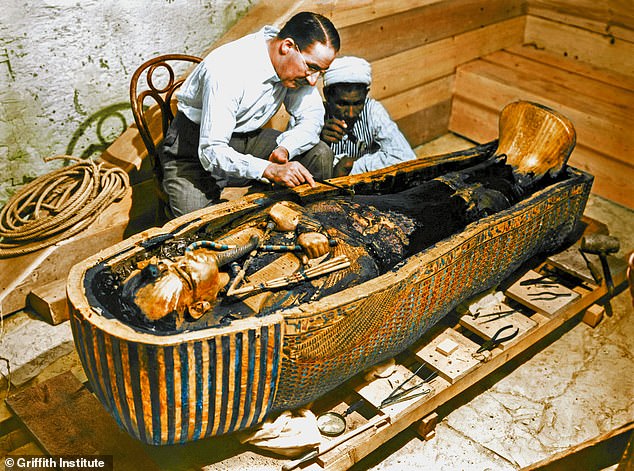
British archaeologist Howard Carter examines Tutankhamun’s tomb after its discovery in 1922
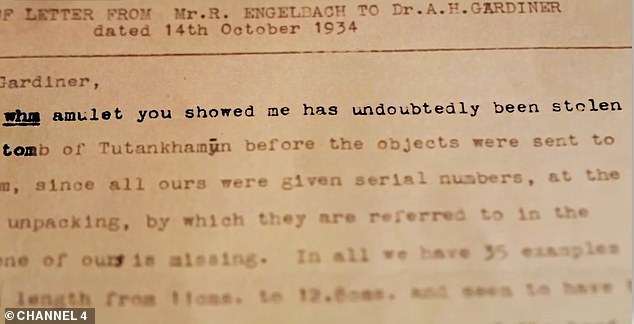
A letter from Rex Engelbach, who registered artefacts at Cairo’s Egyptian Museum, to Howard Carter’s colleague Sir Alan Gardiner is new evidence that a treasure was stolen from the tomb
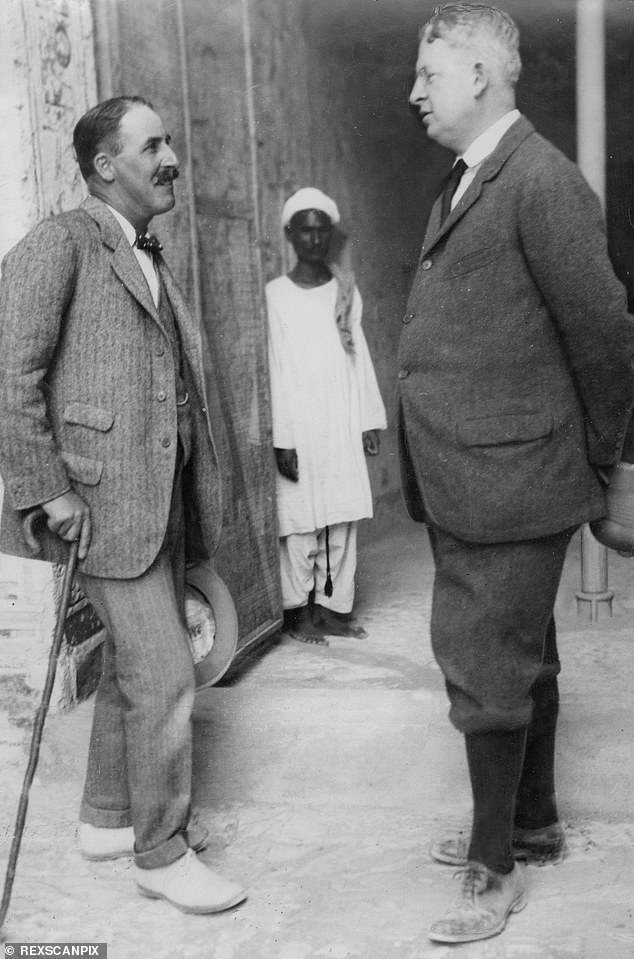
Howard Carter (left) and Sir Alan Gardiner (right), who was part of the tomb’s excavation team
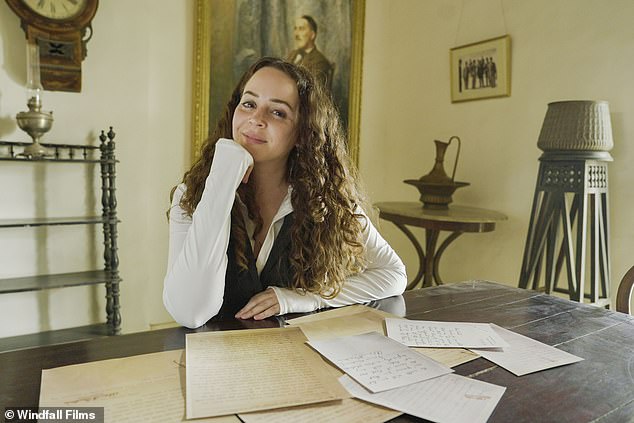
Egyptian heritage expert Sally El-Sabbahy looks through letters in the Channel 4 documentary
Gardiner then wrote to Carter with Engelbach’s conclusion, which said: ‘The whm amulet you showed me has been undoubtedly stolen from the tomb of Tutankhamun.’
Gardiner told Carter: ‘I deeply regret having been placed in so awkward a position’ – but added: ‘I naturally did not tell Engelbach that I obtained the amulet from you.’
The astonishing evidence was presented by El-Sabbahy in the second part of ‘Valley of the Kings: Secret Tomb Revealed‘, which aired on Channel 4 last Saturday.
She said that until just weeks before Carter’s find, a system was in place in Egypt to allow foreign excavators to keep roughly half of their finds.
However, this was changed before the discovery to mean the Egyptian government would be able to keep all historically significant or high-value items, with the foreign teams permitted to take home lesser or duplicate pieces.
El-Sabbahy, who works for the American Research Center in Egypt, told the documentary: ‘I think this was a tough pill to swallow for a very long time and Carter did fight it for a while.
‘There was always a concern from officials that something could be taken without their knowledge, and because of that Carter had to tread very carefully.’
Speaking about the letter, El-Sabbahy added: ‘It’s apparently addressing an amulet that Carter gave to Gardner as a gift. So this letter opens with this really interesting sentence.’
She said it read: ‘The whm amulet that you showed me has undoubtedly stolen from the tomb of Tutankhamun before the objects were sent to the museum.’
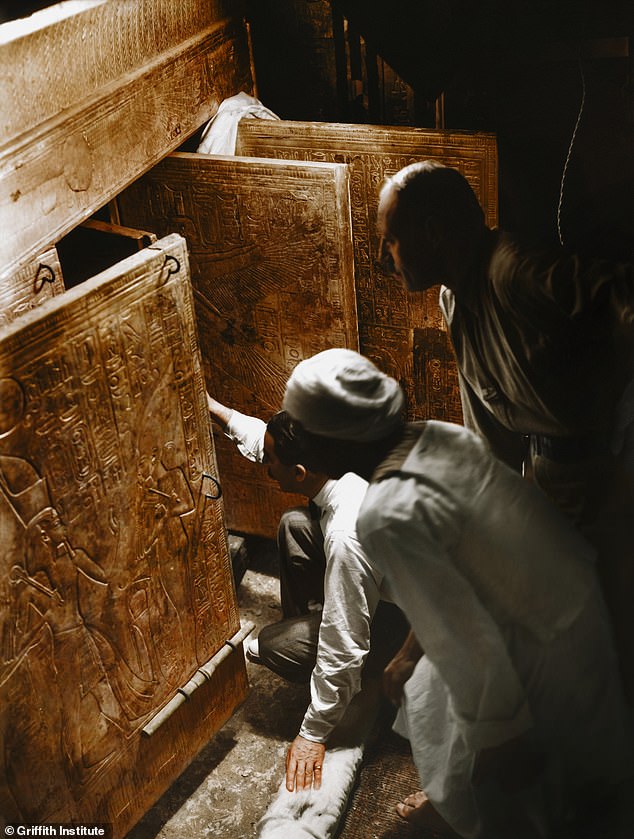
Howard Carter (kneeling) and some of his team looking through open doors of the four gilded shrines towards the quartzite sarcophagus within the tomb of Tutankhamun
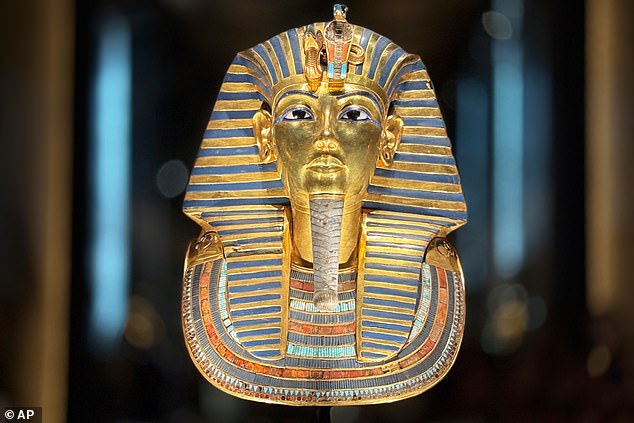
The golden burial mask of King Tutankhamun, displayed at the Grand Egyptian Museum in Giza
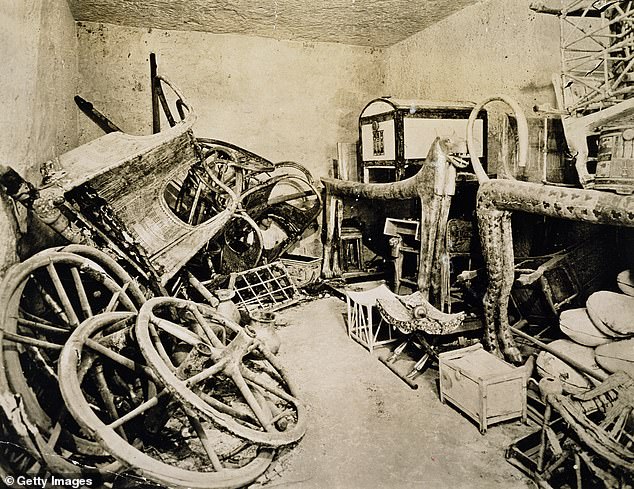
The antechamber of the Tutankhamun’s tomb following its discovery in November 1922
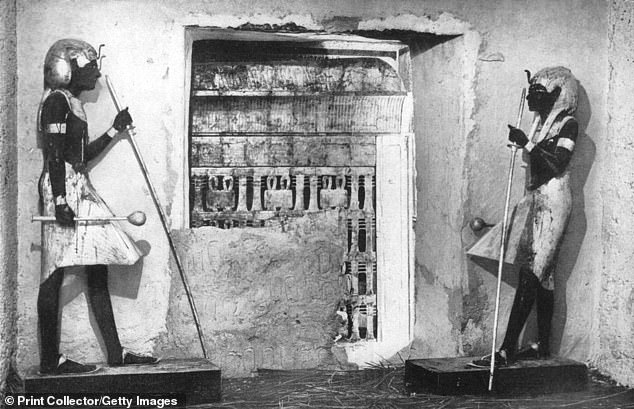
The sight that met the eyes of Howard Carter when he broke down the sealed doorway in 1922
El-Sabbahy explained that Gardiner would have had ‘concern’ to have such an object, and ‘there was also a bit of embarrassment in knowing he had outed Carter’.
She added: ‘What’s really important about these letters is that this is the first not just written but hard proof that objects had been taken out of the tomb of Tutankhamun, apparently directly by Carter himself.
‘What these letters really show me is that there was really a concerted effort to not tarnish this incredible discovery by revealing unsavoury things about Carter.
‘Because at the end, this was not about Carter. He was the discoverer, yes, but this was about Tutankhamun and this incredible legacy of the Valley of the Kings.’
The existence of the letters has been known about since at least 2022, when they were published in Egyptologist Bob Brier’s book ‘Tutankhamun and the Tomb that Changed the World’ – but this is the first time they have been seen on camera.
Carter has no direct descendants to defend his legacy, but claims of theft have been denied by his great-niece, Susan Allen, who lives in Swaffham, the town in Norfolk where he grew up.
Mrs Allen, who runs an Egyptian-themed art gallery and cafe called ‘Tutankhamun’s Emporium’ in the town, told the Daily Mail yesterday: ‘He never stole anything.’
Carter had joined the British-sponsored archaeological survey of Egypt at the age of 17 and also discovered the tombs of Hatshepsut and Thutmose IV in 1902.
He began work with the 5th Earl of Carnarvon in 1907, an antiquities collector who wanted Carter to supervise excavations, and they discovered the first signs of Tutankhamen’s tomb on November 4, 1922.
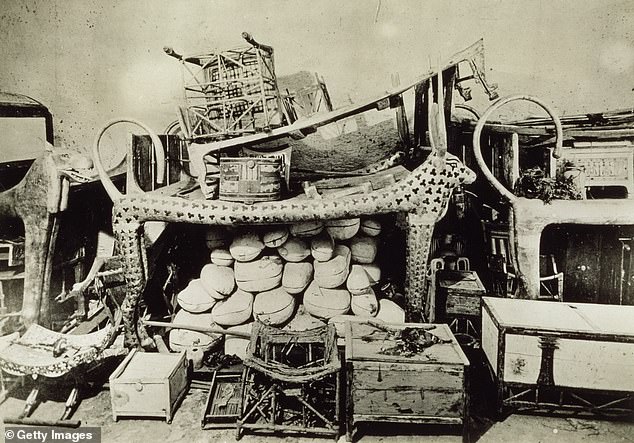
The antechamber of the Tutankhamun’s tomb following its discovery in November 1922
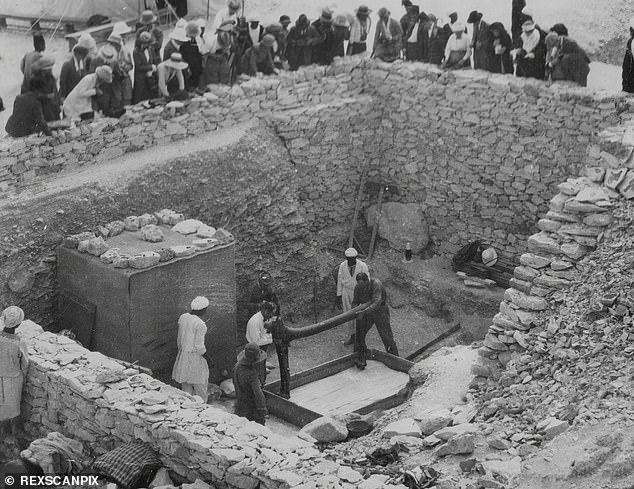
Tourists watch the removal of artefacts from Tutankhamun’s tomb in the Valley of the Kings
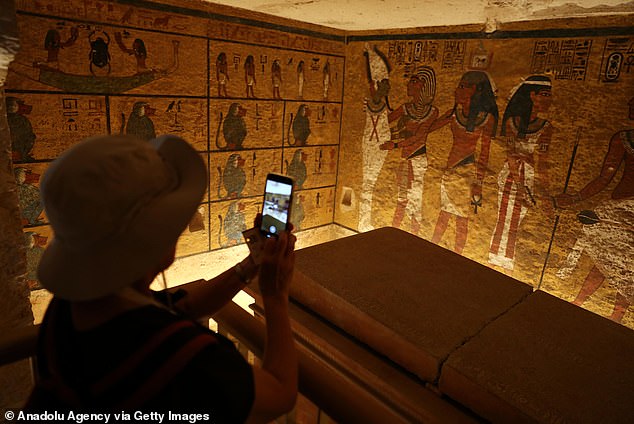
Visitors take photos inside Tutankhamun’s burial chamber in the Valley of the Kings in 2022
A second sealed doorway was reached by November 26, behind which the treasures were found.
Carnarvon famously asked: ‘Can you see anything?’ And Carter replied: ‘Yes, wonderful things!’
Carter also wrote in his diary: ‘It was some time before one could see, the hot air escaping caused the candle to flicker.
‘But as soon as one’s eyes became accustomed to the glimmer of light the interior of the chamber gradually loomed before one, with its strange and wonderful medley of extraordinary and beautiful objects heaped upon one another.’
He then spent the next decade supervising the removal of the tomb’s contents, which can now be viewed in the Grand Egyptian Museum in Giza.
The 4,500 treasures included chariots, household items, jewelled ornaments and Tutankhamun’s iconic golden mask.
Tutankhamun died aged 18 or 19 between 1323 and 1324 BC, with genetic and radiological studies suggesting malaria combined with a bone disorder as his cause of death.
He was mummified and buried in the Valley of the Kings inside three nested coffins, the smallest weighing 110kg, all placed within four gilded shrines.
‘Valley of the Kings: Secret Tomb Revealed’ is available to watch on Channel 4