On the 90th anniversary of his death, the question still remains unanswered – was King George V murdered?
King Charles’s great-grandfather was the man who created the House of Windsor and was considered one of the most solid and dependable of British monarchs during a 26-year reign. But in January 1936, at the age of 70 and having suffered serious illness, his life was drawing to a close.
It’s known that the king’s physician, Lord Dawson of Penn, administered two fatal injections which hastened the monarch’s end. He said it was done to spare the stress and strain on the sovereign’s relatives who were attending his deathbed as he slowly slipped away.
The drugs having been administered, the King’s family – Queen Mary, the Prince of Wales, his three brothers and sister – were ushered back into the bedchamber.
‘They stood around the bedside – the Queen dignified and controlled – others with tears, gentle but not noisy. Life passed so quietly and gently that it was difficult to determine the actual moment,’ he wrote afterwards.
The distinguished historian Kenneth Rose was given the task of writing His Majesty’s official biography in 1980. Himself the son of a doctor, Rose, was shocked to discover, as he did his painstaking research, that Dawson was alone when he made the single-handed decision to end the king’s life.
Alarmed at what he’d uncovered, Rose questioned whether Dawson’s actions were not a case of sympathetic euthanasia but, in fact, murder.
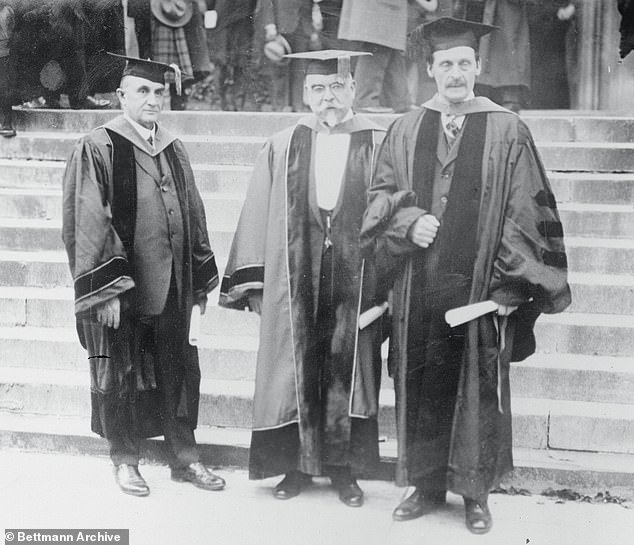
Dr Charles Mayo, retiring president of the American College of Surgeons, Dr Rudolph Matas incoming president of the organization and Lord Dawson of Penn University of Pennsylvania. All three of the noted physicians are attending the 15th annual Clinical Congress of the American College of Surgeons which opened its five day sessions in Philadelphia
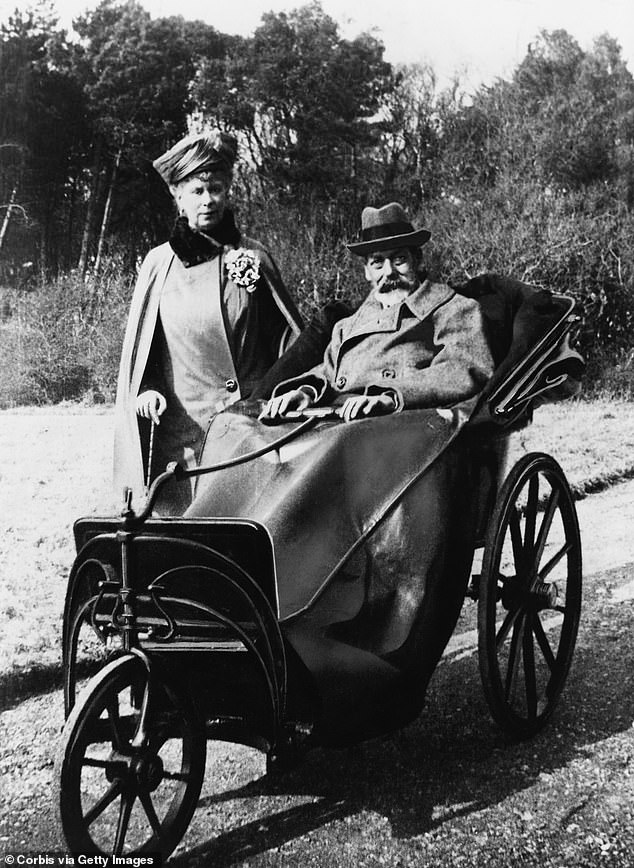
King George V used a three-wheeled invalid carriage with Queen Mary by his side during his Silver Jubilee year
Revealing that truth when his book was published, in 1983, cost Rose the knighthood that should have come his way as an official biographer of a sovereign.
The real reason for giving the monarch a late-night fatal dose of morphine, he disclosed, was so the death announcement could appear in the London morning newspapers – rather than the evening papers, which he considered trashy.
In a largely unknown note added to later editions of his book, Rose angrily wrote: ‘The King was suffering not from cancer or other agonising ailment, but from cardiac weakness. Nor was he in any discernible pain – indeed, he lay comatose.
‘How then could Dawson justify injecting his patient with between five and ten times the usual palliative dose of morphia and cocaine?’
The man whom his sovereign had ennobled 16 years earlier had, beyond doubt, hastened the king’s death.
Rose called him out on it. ‘It was’, he wrote, ‘a grotesque error of judgement’.
He was not alone in his low opinion of the royal surgeon. Though he had earned the confidence of the royal family, Lord Dawson had a reputation among the medical profession for playing fast and loose with people’s lives.
Some very senior doctors, Rose noted, shook their heads when King George appointed him as his personal physician.
Join the debate
What’s YOUR take on the claims?
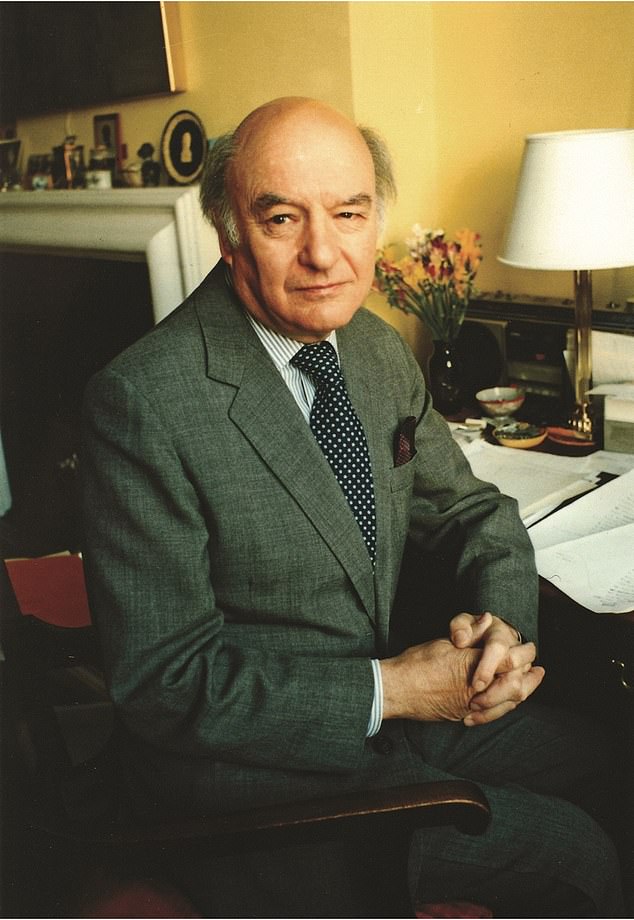
Royal biographer and historian Kenneth Rose
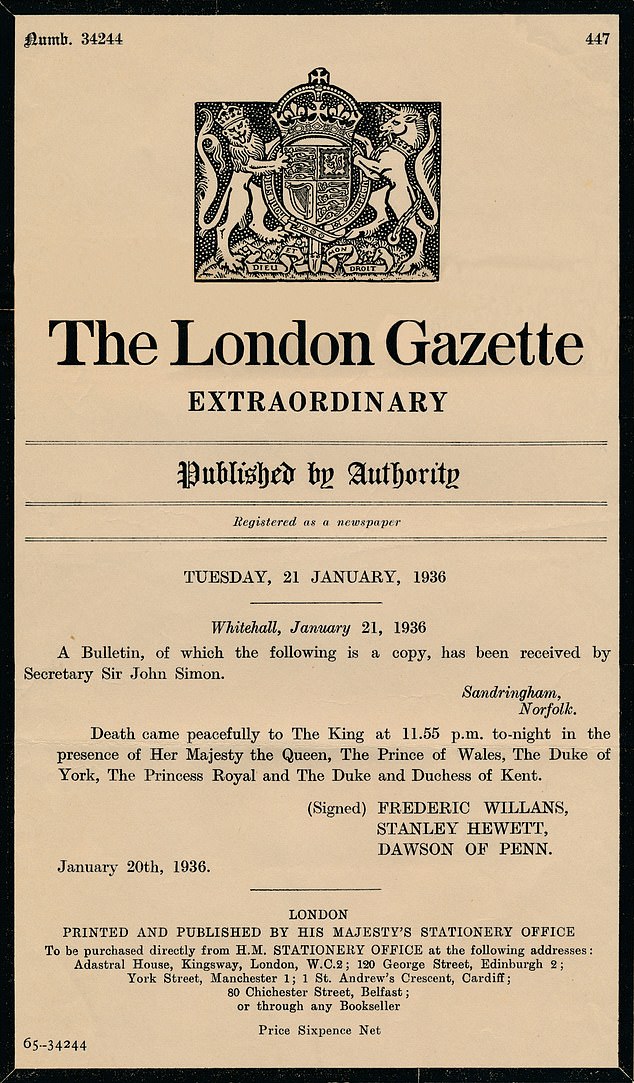
An extraordinary bulletin by The London Gazette announcing the death of King George V
One of them, the eminent surgeon Lord Moynihan, even went so far as to compose a savage clerihew:
‘Lord Dawson of Penn
‘Has killed lots of men
‘So that’s why we sing
‘God Save The King.’
But alas, Moynihan and his friends did not sing loudly enough – and the King’s life drew to a close at Dawson’s hands at 11.55pm on January 20, 1936.
In a private note, the doctor later confessed: ‘I decided to determine the end and injected morphia and cocaine into the jugular vein.
‘Determining the time of death had another object in view – the importance of the death having its first announcement in the morning papers, rather than the less appropriate field of the evening journals. I told my wife to advise The Times to hold back publication.’
The newspaper, known as The Thunderer and effectively the voice of the Establishment, had printed its first 30,000 copies when the message came through, but changed its front page immediately.
Rose sardonically asked why, if he was going to do it for the newspaper’s benefit, Lord Dawson hadn’t killed the king 30,000 copies sooner.
‘The law does not distinguish between euthanasia, or mercy killing as it is sometimes called,’ he wrote in 1983, ‘and murder’.
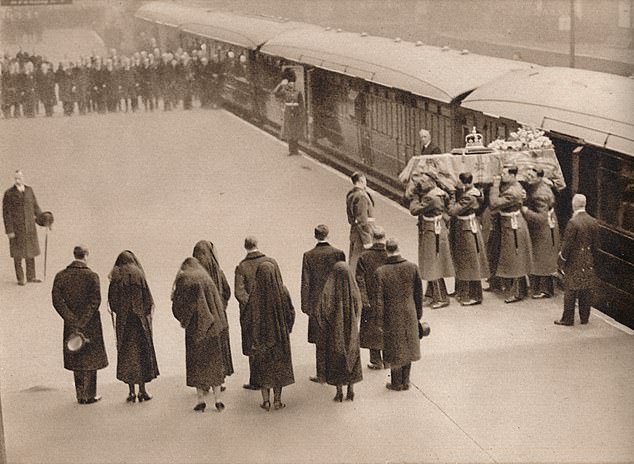
The coffin covered by the Royal Standard and surmounted with the Imperial Crown was watched by the royal mourners among whom Queen Mary is third from the left
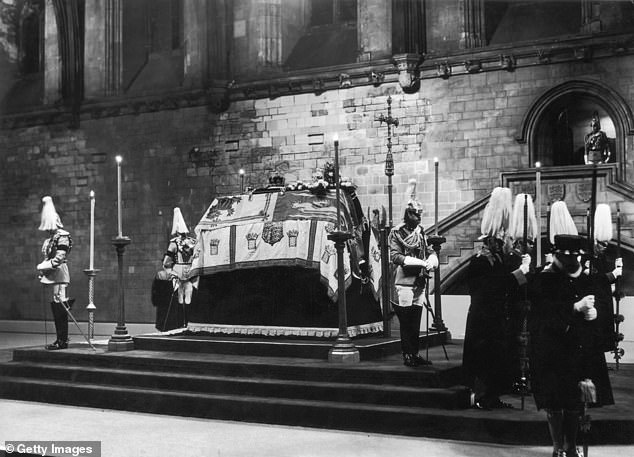
The late King George V lying in state in London’s Westminster Hall surrounded by horse guards
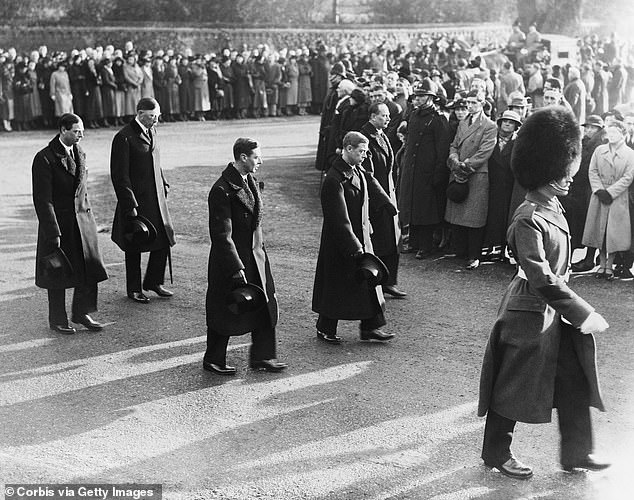
The new King Edward VIII of England takes part in the funeral procession of his late father King George V of England, accompanied by his brothers the Duke of York and Duke of Gloucester
There is no doubt as to which he thought it was.
Kenneth Rose, who died in 2014, told me of his disappointment in being robbed of his knighthood for having disclosed Dawson’s questionable actions.
Advisors to Queen Elizabeth II decided it might encourage other senior biographers to tell the truth, rather than hold their tongue, on sensitive issues.
It all ended happily, however – the Queen Mother, who disliked her father-in-law intensely, made sure Rose was awarded the next best thing, a CBE, and ostentatiously took him out to lunch at The Ritz to celebrate his investiture.