“If you’re under 16, you should not be watching this!” thundered Labour MP Jonathan Hinder as he introduced a recent video.
Any alarm that Hinder might have decided to pursue an unusual side-hustle quickly subsided as he launched into a generic call to ban under-16s from social media, which he compared to cigarettes, alcohol, and gambling.
I assume the analogy doesn’t go so far as to wanting us all to pay punitive taxes for our scrolling, or — as in the case of cigarettes — having adults gradually banned from social media over the course of the next century. Those of us deemed old enough to safely consume Hinder’s content will have to wait and see.
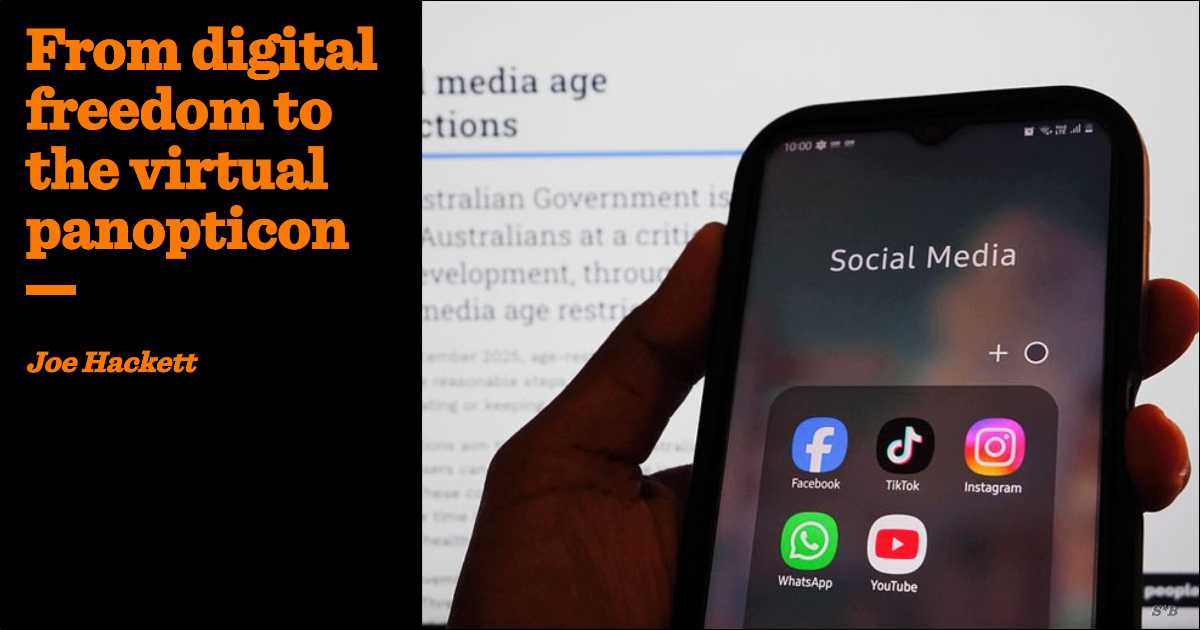
But Hinder is not alone. He’s part of a wider campaign, across politicians and the media, to ban — or at least heavily restrict — teenagers’ access to the Internet.
When Australia banned social media for under-16s in December, it was the subject of near-blanket coverage by the BBC, including a liveblog on the day it came into force. Such a ban is now Conservative policy, and Keir Starmer is publicly toying with the idea. The Lib Dems want to go further and ban 16 and 17 year olds from some sites. Meanwhile, Sky News gave a basically unchallenged platform to a campaign to ban smartphones, not just in school, but on the commute to and from school, based on the case of one teenager who was diagnosed with PTSD after being shown a violent video at school.
If it wasn’t obvious at the time (as I argued at the time, it was), it should be clear by now that the so-called Online Safety Act was little more than a gateway to further restrictions on the Internet, generally in the name of keeping teenagers safe.
It’s at this point that I should declare a slight interest: I am 31 years old. And before I entered Jurassic Park, I was, like most teenagers of my vintage (presumably including the 34-year-old Hinder), not kept particularly safe on the Internet. I turned 13 just when broadband got good enough that you could watch videos that consisted of more than eight pixels and didn’t stop every two seconds, so I’m old enough to remember back to simpler, more innocent times. I remember when age verification consisted of ticking a box confirming you were over the ripe old age of 13. I remember a time before paywalls and digital rights management got their teeth, when you’d leave the computer on for hours to torrent, painfully slowly, music you definitely had the right to own. I even remember rapidly working out how to bypass the parental controls that had been installed on my computer — which, and I swear this is true, I needed to do because I was doing a school project on ancient Egypt and virtually any site to do with that subject had been blocked as “occult”. Honest.
In short, when I was a teenager, the Internet really was the Wild West it’s often described as today — and it was great. Did I occasionally encounter age-inappropriate content? Yes. Did some things clearly need more barriers to stop teenagers accessing them? Yes. But did I, and most of my generation, turn out basically fine? I’d at least like to think so.
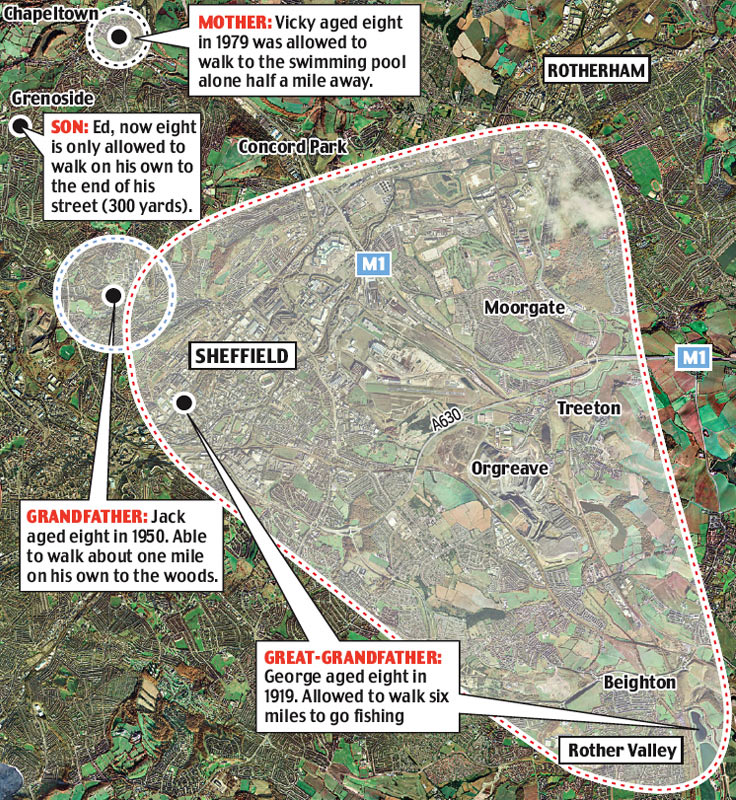
And I know that’s just my individual experience, but then again, much of the campaign for more restrictions on the Internet is driven by the experiences of individual teenagers and their families. It’s often lamented how, from generation to generation, kids have lost the freedom to explore the world due to safety concerns — which, if nothing else, should debunk Hinder’s ludicrous claim that banning social media for under-16s would lead to them going “outside, enjoying beautiful weather… talking to other human beings again,” instead of watching TV like kids actually did in the 1990s.
Much of the campaign for more restrictions on the Internet is driven by the experiences of individual teenagers and their families
My generation saw their physical world compress, but we at least had the online world to explore instead; a bigger world where it was easier than ever to be yourself, try new things, and meet people who shared your interests or came from completely different walks of life.
The Internet gave millennials a freedom which we were stripped of in the real world. I find it sad to see that freedom, that right to roam, gradually being extinguished — this time not by parents but by force of law, usually channelled through big tech firms. This isn’t, of course, just about the Online Safety Act or the myriad efforts to “strengthen” it. It’s a trend that’s been going on for 20 years, driven by a combination of politicians and corporations. A vast array of small message boards catering to various interests have been consolidated into a small number of social media sites, a process ironically accelerated by the Online Safety Act’s regulations prompting a number of long-running message boards to close.
Social media itself was created as a means for ordinary people to communicate with each other, but has increasingly become a place to consume the work of celebrity “creators” the site’s proprietors think you’ll enjoy. They think that because most of what you do online is tracked, giving these companies a file on you that the Stasi could only dream of. Politicians and campaigners might think they’re fighting this shift, and fighting big tech in general, but in practice they’re working hand in hand to lay the final bricks around the walled garden.
What’s most alarming, however, is that this isn’t just a walled garden for the kids, it’s a walled garden for all of us.
The Online Safety Act already requires that, at least in most cases, adults who want to access certain content must supply a big tech company with a selfie or even a copy of their ID. In Australia, where social media users might particularly treasure their anonymity amid the introduction of sweeping speech laws, that applies to accessing any social media site. And we know that this information isn’t always secure.
Even anonymity might not protect your freedom of expression online for much longer. One proposal ultimately dropped from the Act, but very much not dead, is requiring social media companies to censor speech deemed “legal but harmful”. Perhaps the most concerning proposal, however, was buried in Sir Keir Starmer’s anti-misogyny plan, published late last year. The Prime Minister advocated “partnering with tech companies” to make it impossible for children to take, share, or view a nude image — which, of course, sounds great in principle. The problem is that it’s hard to see how this could be remotely possible without requiring basically every device in the country to constantly record what’s on everyone’s screens and cameras, and what’s in their private communications.
Unsurprisingly, tech companies have already been developing software like this for, one suspects, data collection and AI training purposes. Microsoft Recall, launched in 2024 and quietly installed by default as part of Windows 11, takes screenshots of users’ activity every few seconds. An unsurprising backlash forced them to make it an opt-in service (here’s how you can turn it off). But it’s hard to see how Starmer could achieve his vision without bringing it back on a mandatory basis across all operating systems.
Growing up, the Internet was thought of as the information superhighway, a world at your fingertips — and a free, decentralised, relatively privacy-friendly world at that. It’s increasingly becoming a panopticon ruled by a coalition of politicians and a handful of corporations — not just for under-16s, but for adults too.
The impulse to make the Internet safer for teenagers is understandable, but the right balance needs to be struck, and at the moment our leaders appear to have thrown all sense of balance out of the window. That balance urgently needs to be restored, lest the online world become the opposite of what it once promised to be.