Passengers on board two high-speed trains, which derailed in Spain last night, were catapulted through windows, with their bodies found hundreds of yards from the crash site, officials have said.
Spain’s Transport Minister Oscar Puente said the cause of the crash remains a mystery, calling the deadly collision a ‘truly strange’ incident because the tracks had been renovated just last year.
Police on Monday said at least 39 people are confirmed dead, while efforts to recover the bodies are continuing, and the death toll is likely to rise.
The crash occurred on Sunday evening when the tail end of a train carrying some 300 passengers on the route from Malaga to the capital, Madrid, went off the rails at 7.45 p.m. It slammed into an incoming train travelling from Madrid to Huelva, another southern Spanish city, according to rail operator Adif.
The head of the second train, which was carrying nearly 200 passengers, took the brunt of the impact, according to Puente.
That collision knocked its first two carriages off the track and sent them plummeting down a 13-ft slope. Puente said that it appeared the largest number of the deaths occurred in those carriages.
At the moment of the collisions, both trains were travelling at over 120mph, Sky News reports, citing sources from the Spanish Transport Ministry.
The train which derailed first was speeding at about 130mph, while the second train that collided with it was travelling at roughly 127mph.
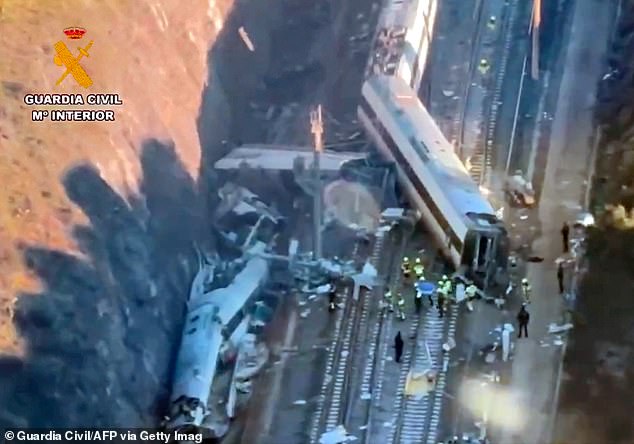
At least 39 people are confirmed dead following a high-speed train collision in southern Spain. Pictured: Emergency workers are seen at the site where a high-speed Iryo train derailed and was hit by another train as rescue efforts continue in Adamuz, southern Spain, on January 19, 2026
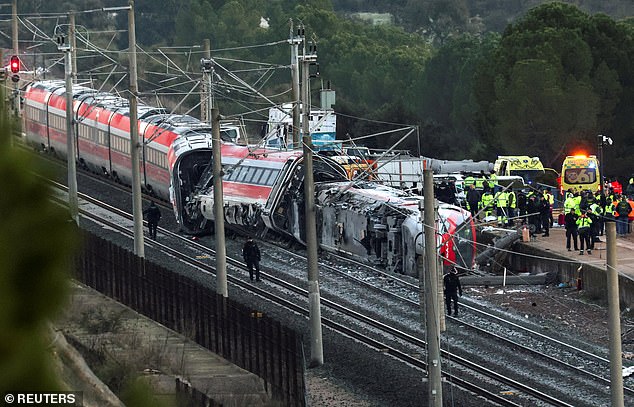
Officials said some passengers were catapulted through windows, with their bodies found hundreds of yards from the crash site
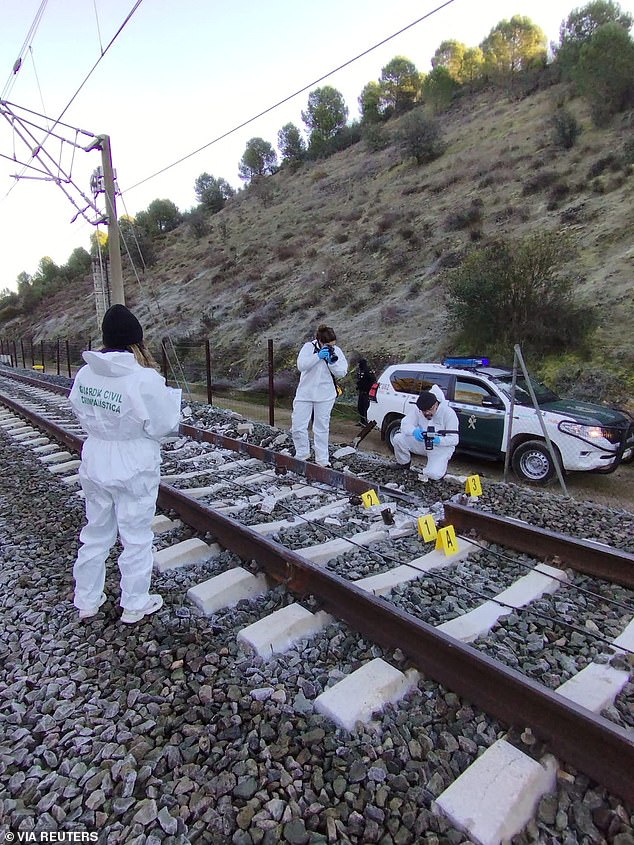
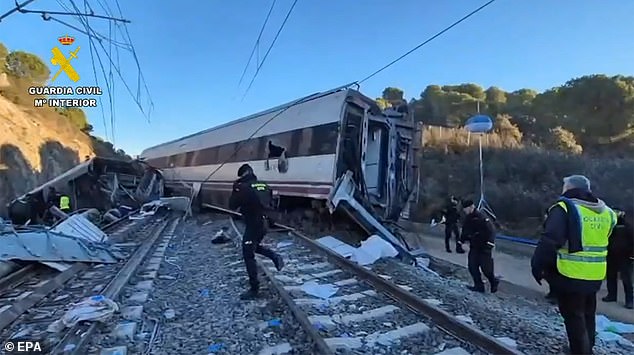
Efforts to recover the bodies are continuing, and the death toll is likely to rise. Pictured: Members of the Spanish Civil Guard work at the site of a deadly derailment of two high-speed trains near Adamuz, in Cordoba, Spain, January 19, 2026
Authorities said all the survivors had been rescued in the early morning, while work remained to recover and identify the dead.
Andalusia’s regional president Juanma Moreno said on Monday morning that emergency services were still searching what he described as a mass of twisted metal where the smashed carriages had derailed.
‘It is likely (that there will be more dead people found) when you look at the mass of metal that is there. The firefighters have done a great job, but unfortunately, when they get the heavy machinery to lift the carriages, it is probable we will find more victims.’
‘Here at ground zero, when you look at this mass of twisted iron, you see the violence of the impact,’ Moreno said.
He added that authorities are also searching the area near the accident for possible bodies.
‘The impact was so incredibly violent that we have found bodies hundreds of meters away, which means that people were thrown through the windows,’ Moreno said.
The collision took place near Adamuz, a town in the province of Cordoba, about 230 miles south of Madrid.
Various Spaniards who had loved ones travelling on the trains posted messages on social media saying they were unaccounted for and pleading for any information.
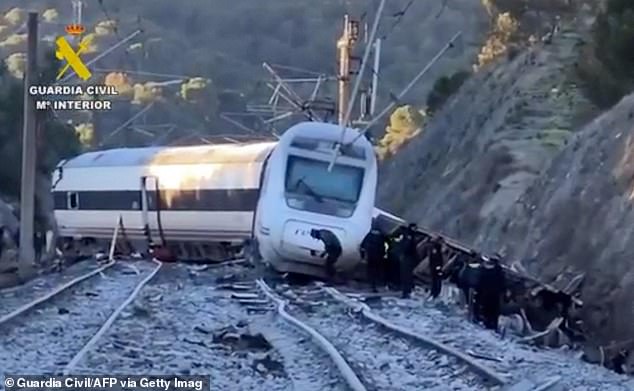
The crash occurred on Sunday evening when the tail end of a train carrying some 300 passengers on the route from Malaga to the capital, Madrid, went off the rails. It slammed into an incoming train travelling from Madrid to Huelva. Pictured: Emergency workers at the site of the track on Monday
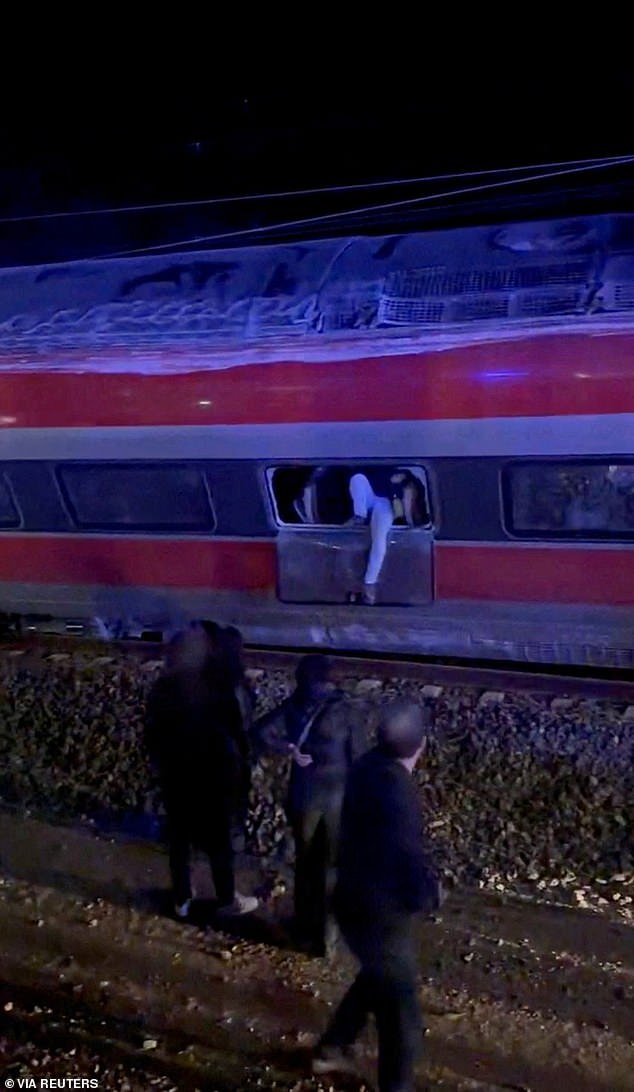
A passenger is photographed exiting one of the derailed trains as first responders search through the wreckage near Cordoba, on Sunday
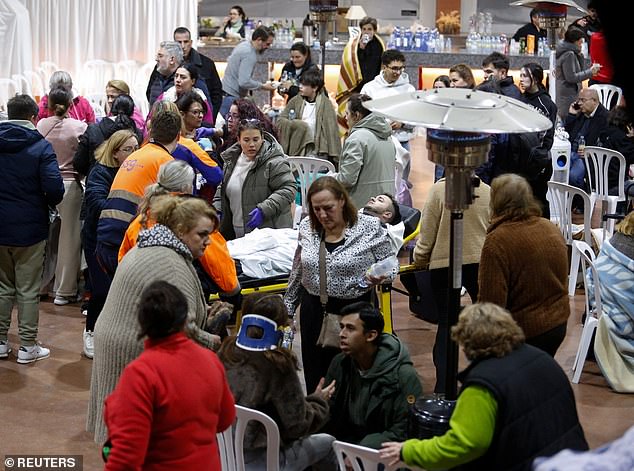
People affected by the deadly train derailment are transferred and treated at the Caseta Municipal in the town of Adamuz
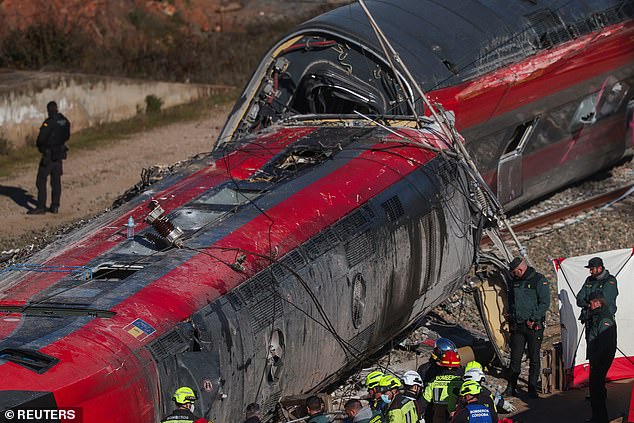
Picture shows the twisted train cars lying on their sides on Monday morning
Spain’s Civil Guard opened an office in Cordoba, the nearest city to the crash, for family members of the missing to seek help and leave DNA samples to be used to possibly identify bodies.
Video and photos showed twisted train cars lying on their sides under floodlights late on Sunday.
Passengers reported climbing out of smashed windows, with some using emergency hammers to break the windows, according to Salvador Jiménez, a journalist for Spanish broadcaster RTVE, who was on board one of the derailed trains.
He told the network by phone Sunday that ‘there was a moment when it felt like an earthquake and the train had indeed derailed.’
Spanish police said 159 people were injured, of whom five were in critical condition. A further 24 were in serious condition, authorities said.
A woman who survived the crash, named Ana, described the horrific ordeal.
Speaking to a local broadcaster with bandages on her face, the teary woman told how she and her sister, originally from Malaga, were returning to the capital after visiting their family for the weekend when her train derailed.
‘Some people were okay, but others were really, really bad,’ she said as she described the immediate aftermath of the crash.
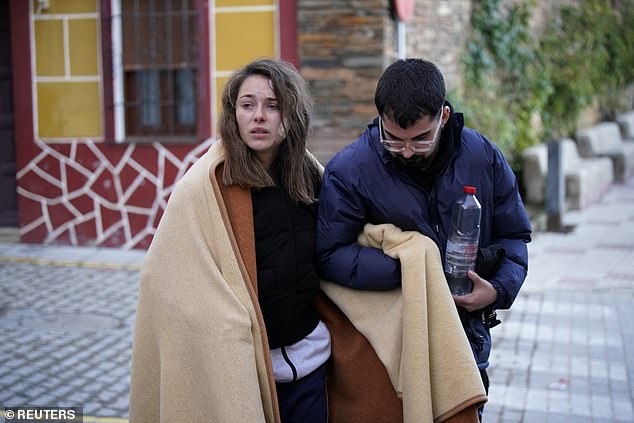
Ana, one of the victims of a deadly derailment of two high-speed trains, looks on at the Citizen Help Center while seeking her missing dog, which travelled with her and her sister, now hospitalised, during the accident near Adamuza, in Cordoba, Spain, January 19, 2026
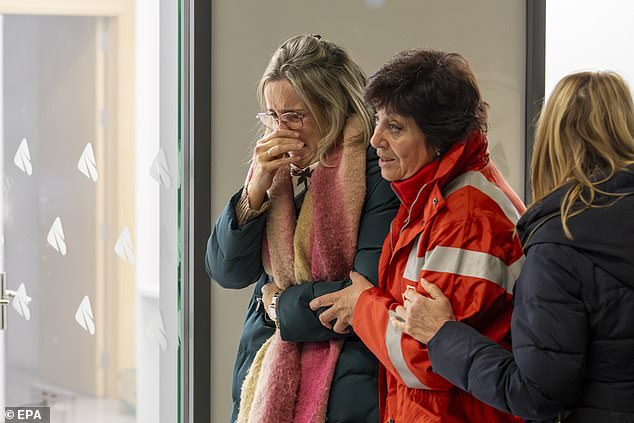
Relatives of victims arrive seeking information about the derailment at Huelva train station in Huelva, Spain, 19 January 2026
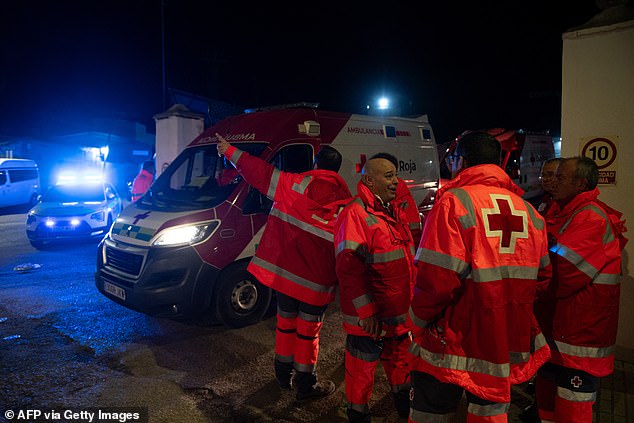
Members of the Red Cross work after a train accident in Adamuz, southern Spain, early on January 19, 2026
‘They were right next to me, and I knew they were dying, and they couldn’t do anything.’
Ana also told how her sister remains in hospital with serious injuries, while their dog Boro is missing.
A sports centre was turned into a makeshift hospital in Adamuz, and the Spanish Red Cross set up a help centre offering assistance to emergency services and people seeking information. Members of the Civil Guard and civil defence worked on site throughout the night.
Transport Minister Puente said the cause of the crash was unknown.
He called it ‘a truly strange’ incident because it happened on a flat stretch of track that had been renovated in May.
He also said the train that jumped the track was less than four years old. That train belonged to the private company Iryo, while the second train, which took the brunt of the impact, was part of Spain’s public train company, Renfe.
According to Puente, the back part of the first train derailed and crashed into the head of the other train. When asked by reporters how long an inquiry into the crash’s cause could take, he said it could be a month.
Spanish Prime Minister Pedro Sánchez expressed his condolences to the victims’ families. ‘Tonight is a night of deep pain for our country,’ he wrote on X.
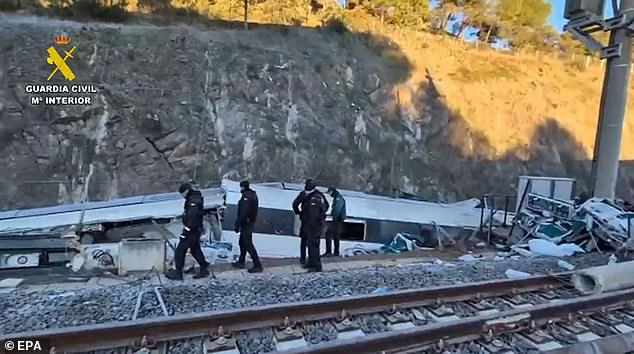
The collision took place near Adamuz, a town in the province of Cordoba, about 230 miles south of Madrid
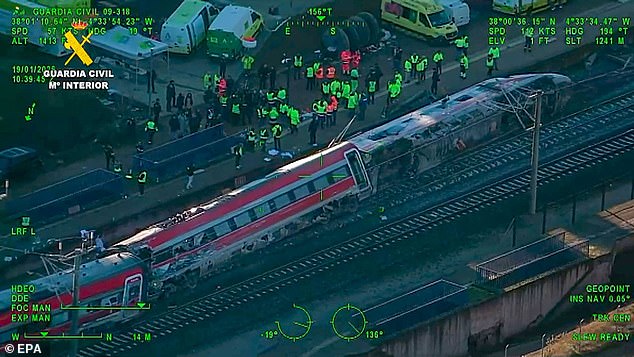
A screen grab from a video made available by the Spanish Civil Guard shows agents gathering evidence at the site of the wreckage
Spanish Prime Minister Pedro Sánchez on Sunday said it was a night of ‘deep pain’ for the country
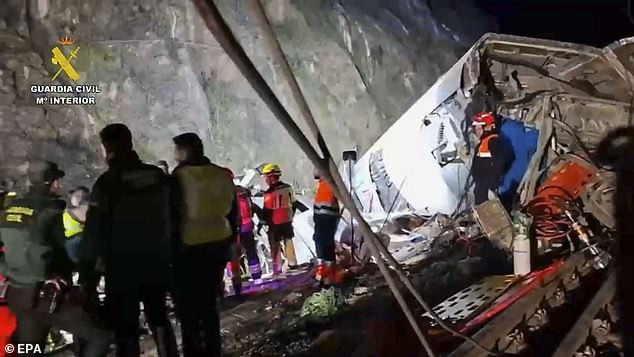
Passengers reported climbing out of smashed windows, with some using emergency hammers to break the windows. Pictured: First responders at the site of the wreckage on Sunday night
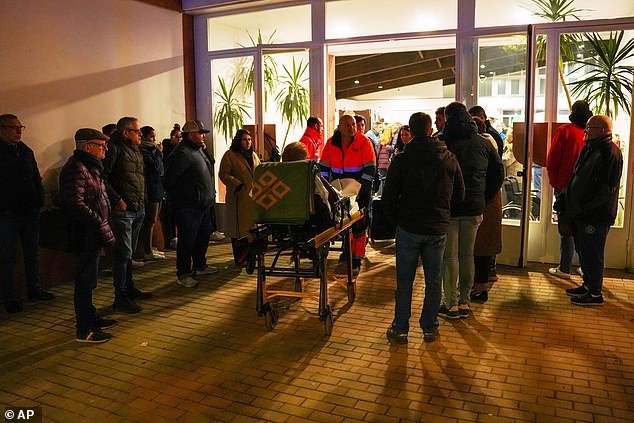
An injured person is transported to the makeshift hospital in the sports center in Adamuz
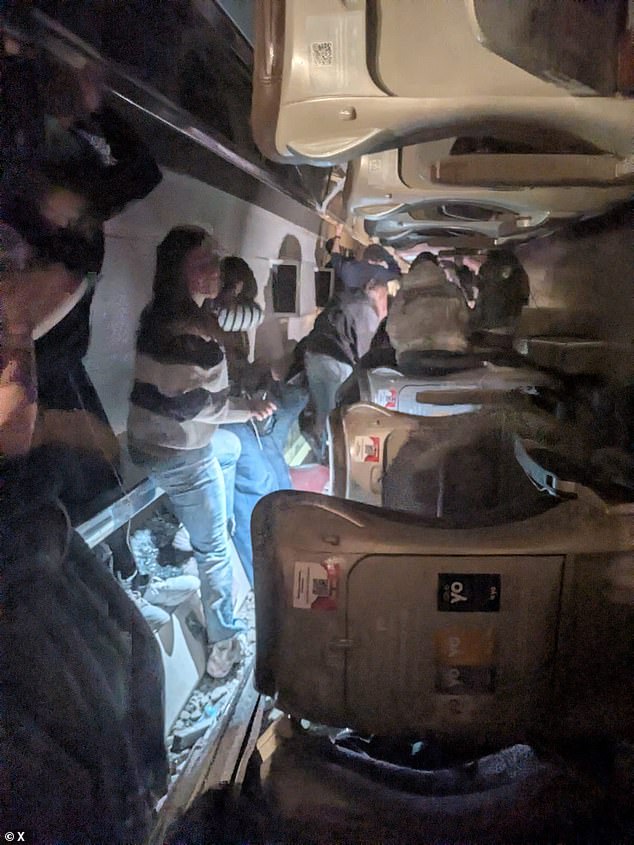
Screengrab shows the interior of one of the high-speed trains after it derailed as passengers wait to be evacuated
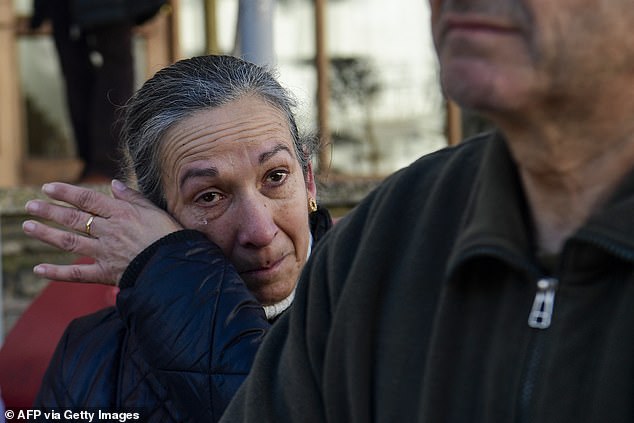
A woman wipes a tear from her cheek during a minute of silence for victims of a train accident in Adamuz, southern Spain, on January 19, 2026
The prime minister will visit the accident site on Monday, according to his office.
Spain has the largest rail network in Europe for trains moving over 155 mph, with more than 1,900 miles of track, according to the European Union.
The network is a popular, competitively priced and safe mode of transport. Renfe said more than 25 million passengers took one of its high-speed trains in 2024.
Train services on Monday between Madrid and cities in Andalusia were cancelled.
Spain’s worst train accident this century occurred in 2013, when 80 people died after a train derailed in the country’s northwest. An investigation concluded the train was travelling 111 mph on a stretch with a 50 mph speed limit when it left the tracks.