Advocates for freedom in school choice should not rely on sob stories, but on a principled defence of markets and the profit motive
We are just over a year on from the imposition of VAT on fees for private schools, and we can now debate the merits of that tax policy decision, and examine what effects that decision had on private school attendance (mixed, mostly). However, the reality is that much of it is marginal noise; the sad truth is that mainstream advocacy for private education in Britain is in poor health.
Let’s start with a hypothetical. If one believed that free markets and the profit motive were a force for good and could improve outcomes, and most people in Britain were walking around with a suitcase-sized government-issued StarmerPhone, you wouldn’t devote all of your time and energy arguing about a VAT policy that made a difference to whether 5.6 per cent or 5.7 per cent of the most affluent had a choice of iPhones and Androids. You would make the argument that iPhones and Androids should be able to freely compete with the government StarmerPhone, that the StarmerPhone shouldn’t receive preferential treatment, and that innovations should be able to easily enter the market and then leave should they fail.
Why, then, do people who believe in markets elsewhere — even within the NHS — resort to soppy stories about failed private schools being very old, rather than defend the principles of free markets and the profit motive, or advocate that commercial interests can provide for all, rather than just for the few?
The debate about private education in Britain is one that is dominated by class politics and elitism. But both the left and the right should be abandoning the idea that private education is only a luxury for the wealthy. It is a worthwhile goal to have consumers see the private provision of education as something as unencumbered by prejudices as the free market providing choices of phone providers and services.
So 12 months on from the introduction of VAT on private school fees, where does the market stand? At the time it was seen as an assault on private education, and after a year, it’s a bit of a mixed report.
Part of this is because declining birthrates have skewed the picture a little. For the 2024-25 academic year, fewer than one in seven local authorities recorded a rising number of pupils at state schools, corresponding with a falling number in private education and a fall in birthrates produced a greater impact than any changes to VAT.
According to data from the Department for Education, there was a fall of just under 2 per cent in private pupil numbers in the 2024-25 year compared with the previous year, a fall of about 11,000. State pupil numbers were down just under 1 per cent.
Imposing VAT on school fees was, in and of itself, probably “fine”. I don’t like tax, but all things being equal I would rather see consumption taxes rather than taxes on income or assets, and would like to see those taxes imposed with the fewest distortionary exemptions possible. That the government imposed the VAT on private school fees as a way of immediately expanding spending on breakfast clubs wasn’t very ceterus paribus-y of them, but in terms of impact on the financial viability of existing private schools, some of it was washed out by ability to reclaim VAT on inputs — as well as being able to claim back tax they have paid on capital projects completed over the past 10 years.
Yet while the short-term effects on schools isn’t cut and dried, it is extremely clear that the mainstream framing of the defence of private education is not working. Private provision of secondary education remains around the 6 per cent mark, and something that is in the most part for the very wealthy. It is intensely politically tribal. This is not a state of affairs that those that believe in markets would be happy with in any other sector, so why is the fight for private education so weak? Let us consider those weak arguments:
The Labour government is waging “class war” on private schools. Well, yes, that’s exactly what they’re doing and it’s fairly popular — particularly with their backbenches and core voters.
It’s forcing some private schools to close and those pupils to be educated by the state. Again, this is a popular goal for many. Private education in Britain is mostly an option for the rich, and people begrudge the children of the wealthy receiving something they think is exclusive and advantageous. Besides, lots of people instinctively think that education the role of the state, and think that it’s good that the state has more children under its control.
Private schools ease the burden on taxpayers and should receive tax relief. The public do not think this ought to be the case for private medical providers competing with “Our NHS”, and they certainly do not think this of schools that advertise their elitism.
Schools that have been around for centuries have closed down. As with fox hunting, few people mourn the loss of centuries of heritage when it exists entirely outside their own experience.
People that believe strongly in the power of the state to do good where it can, wherever it can, are obviously going to be unconvinced by these arguments. But even those closer to the centre ground are unconvinced. Part of this is that all sides of the debate on private education in Britain are poisoned by the existence of the public school system.
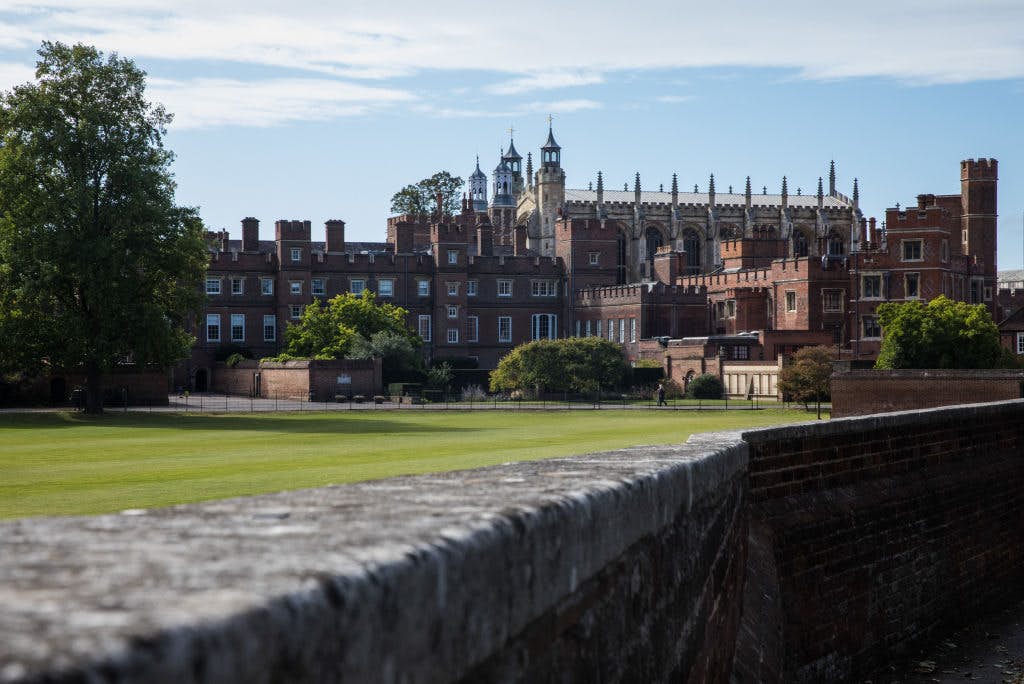
If a button existed that could be pressed so that everybody would experience amnesia about the existence of public schools, and all of the political and cultural baggage that they carry, I would press it in a heartbeat. I bear no malice towards British public schools, but I would like private education to be seen as the default option for all, rather than it be viewed as a luxury good. It is extraordinarily unhelpful to that goal to have the first thing that people think of be Eton College (£63,298.80 per annum).
Private education should be valued for its ability to improve provision for the poorest, and for those with more complicated educational needs, rather than for the richest. The affluent have plenty of tools at their disposal to achieve high levels of educational outcomes even within a rigid state education system, but a liberalised education sector could provide for those families that currently have little choice except what the state imposes.
As is sadly the case under other government monopolies, it is clear that those that were supposed to benefit from state subsidy in the form of free at the point of delivery education (ie. the children of low income families) are those that benefit least from the current system. Though higher income families are either able to access currently expensive private education, or are able to move to an area with better schools, lower-income families remain trapped within failing schools.
People do not have any qualms about doing their weekly food shop at a privately owned, profit-seeking supermarket and have a strong sense of the benefits of competition and the profit motive in catering to something as vital as human sustenance. They are also unbothered that there are eye-wateringly expensive food shops that cater to the very wealthy, since it doesn’t affect their own grocery shop. So, it’s worth exploring why there isn’t a Tesco School and a Sainsbury’s Academy in every town in Britain.
Of course, socialists on the left are naturally averse to the introduction of the profit motive in education, but there are just as many conservatives that feel more comforted by socialist notions than they feel at the prospect of unadulterated market mechanisms. How many times have you seen conservatives spring to the defence of private schools by relying on tales of bursaries, scholarships, and percentages of pupils receiving some kind of charitable assistance? Certainly far more often than you would ever hear making an argument for more efficient allocation of services and resources.
Charitable giving is something to be celebrated and encouraged. But charity is not required to make the profit motive moral. The same is true of markets in education, and we should not rely on fuzzy tales of giving back to the community. Private education needs to be argued for on its own merits.
Whether in healthcare, or housing, or the case of the hypothetical StarmerPhone, a centrally planned state is bad at anticipating individual consumers’ current and future needs. Markets process dispersed knowledge through voluntary exchange and price signals, allowing rapid adaptation to changing conditions. This is something no central authority can replicate effectively. It is a fundamental aspect of free markets that “the knowledge of the circumstances of which we must make use never exists in concentrated or integrated form but solely as the dispersed bits of incomplete and frequently contradictory knowledge which all the separate individuals possess.”
Within education, the individual consumer is the parents of the child. It’s difficult or even impossible for a state education planner to anticipate their motives or information, but within a market they are not only able to make their own choices, but through the price mechanism signal to others whether or not their demand is being properly met.
The current system of education can be viewed as a system of protectionism, not unlike the NHS starving out competition thanks to its ability to call upon taxpayer funds and on government legislation to protect its position. Government subsidies that fund state schools are used to shield those state schools from private sector alternatives, with those most damaged by the protectionism being the least well off, with weak, slow, or nonexistent mechanisms for consumers to effectively signal that their needs are not being met.
As Toby Young’s experience with Free Schools showed, it is extremely difficult to make real changes if the profit motive is forbidden, or if there are onerous regulations put in place so that you are not playing on a level playing field with the state competition. The absence of the conditions necessary for entrepreneurship meant that each new school was incredibly hard-fought and essentially meant that everybody wanting to open a new school had to start from scratch.
If profit-making firms could own schools, they would have established capital and credit, and could take the equity risk for failure. Their established track record would mean that procurement would be straightforward, with subcontractors confident in the credit of the supplier. If the school were successful, the investing firm would make a profit, and if it failed it would swallow the loss. Without this scope for commercial interests, well-meaning groups wanting the best for children have to try to find a building site, raise capital, overcome planning and all regulatory obstacles to even build class rooms let alone begin the business of teaching. If after all of that the school is successful, there is little incentive to start another school. It’s like every person that wants to drive a new Ford Mondeo needing to go and dig in their garden for oil and iron and then go about working out how to build a combustion engine.
When framing the case for private education, it’s tempting to rely on the merits of school choice. There are certainly grounds for that. If the main thrust of your ambition is not to give the children living in a catchment area filled with multimillion pound houses a more socially prestigious education than they could have received at their state school, but to provide an option for the parents of a bright child, or a child with different needs, in a poor catchment area with options, then school choice is helpful. Throughout the world small, parent-funded schools in the most impoverished areas do just that.
However, another vital merits of private enterprise is its ability to innovate. Before the liberalisation of telecoms in Britain, there was one telephone company and you rented your telephone handset from them. The most beneficial effect of injecting competition into the market was not people could now choose between a white or a beige landline telephone handset, but that there was a surge in innovation in the ways that people communicated across telephone networks. The same follows for large-scale privatisation in education, where rather than merely being a mechanism for the replication of a largely homogenous model of what a school looks like, there should be a treatment of schools as a bundle of educational services, with the profit motive discovering the best ways of combining different services in that bundle.
The crisis in the special educational needs and disabilities (SEND) sector in British education merits a stand alone article. It’s a thorny subject. Richard Tice MP, for example, has said that he did not get any death threats over Brexit, but that he did over discussing special needs education.
Many focus on private education as a means of improving attainment in academic assessments, but the struggles of parents trying to seek out the best solutions to their children’s needs are a reminder that the state is very bad at anticipating individual needs and motives. Briefly, and incomprehensively, let us consider three aspects of the SEND sector that are worth noting as part of this broad overview of private education provision.
Firstly, that there is some degree of greater tolerance for participation of private sector solutions than in the wider educational sector. It’s predicated on a belief that children designated as SEND each have such unique and differing requirements that top-down solutions from the state cannot respond to their needs. (Oddly, this thought process is not carried on to the rest of the education sector.) While there is greater tolerance, though, it is limited. This is manifested in the soaring costs of home-to-school transport costs in England, which have risen to £2.3bn a year, as increasing numbers of children with special educational needs and disabilities travel farther afield to schools that can meet their requirements, partly because there is insufficient flexibility in the system to allow for private education providers to offer solutions closer to home.
Secondly, there are widespread accusations of parents gaming the system to have their children designated as SEND pupils. In Scotland, 43 percent of pupils have designated “additional support needs”. In England, 19.5% have SEND status. It is not possible to be sure of the degree to which accusations of inflated diagnoses are true. But it is possible to say that within a highly rigid government monopoly, it would be completely rational to seek a diagnosis for a child that would result in differential treatment. Were it made easier for parents to seek different educational pathways for their children without using the SEND system, it is likely that we would see a strong drop off in rates.
Thirdly, the SEND crisis demonstrates that it is not enough to simply introduce profit-seeking interests into a sector in order to guarantee the best outcomes possible. Once in a market, businesses will often try to seek government protection to keep out other competition, such as when transport providers lobby to have a local authority list of approved operators so that they can increase prices without fear of being undercut. Established businesses also lobby for greater and greater regulation to create very high barriers of entry to newcomers. The result is a private monopoly, which brings about many of the problems associated with a public monopoly, all while damaging public perceptions of the value of market-based solutions. It’s therefore insufficient to merely allow the profit motive in education, but there should also be as low a barrier of entry as possible. The state should only step in to restrict that freedom in extreme circumstances.
advocates for private education should not spend the duration of a hostile government weeping into their old school ties about central planning statists doing lots of statism.
Clearly, the current Labour government is not a friend of free markets in education. But advocates for private education should not spend the duration of a hostile government weeping into their old school ties about central planning statists doing lots of statism. If a reforming government comes to power, there will be a huge amount of hacking away at the state that will need to be done. Policies will be prioritised, and as things currently stand, private education is not something that an incoming political party will be inclined to prioritise. It is imperative, then, that the focus should be on the huge amount of good that market based solutions can do for all parents. Petty reminiscing about spires, quads, and cloisters should remain in the pages of Harry Potter.