When I first started wearing contact lenses, I was terrified. You’re handed these tiny foreign objects, and after a quick how-to from the optician, sent off to practise getting them in and out of your eyes all on your own.
The result is hours standing in front of the mirror, getting increasingly annoyed as you try to manoeuvre the fiddly things into your eye while they’re flipping this way and that.
That’s not to mention the endless warnings – don’t sleep in them, don’t swim in them, don’t stretch their use – which left me shining my phone torch in my eye at 11pm thinking: ‘Did I definitely, definitely, definitely take them out?’
But after time, like everything, you get used to them. Plucking them out takes only a second. Maybe, like me, you become a bit careless. There’s been countless times I’ve dozed off on the train, only to wake up, groggily rub my eyes, and find a dried out contact stuck to my hand. Other times I’ve started cleansing my face, looked up, and realised the bubbly water is clouding the lenses I’ve once again forgotten to remove.
I never thought I’d become dangerously ‘complacent’, though. Sure, I slipped up occasionally, but what was the worst that could happen? It was a question I was going to get a lot closer to finding out than I ever wished to.
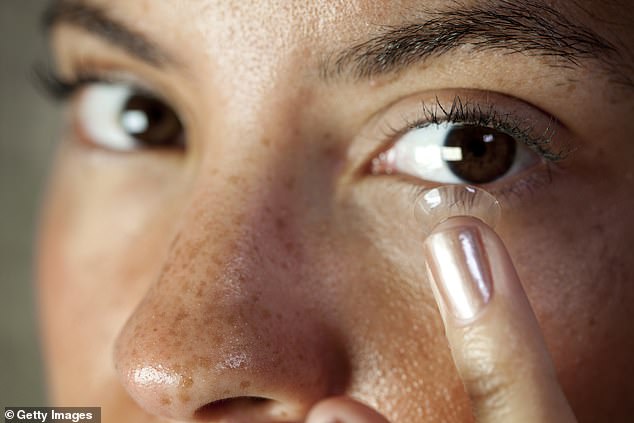
After time you get used to contact lenses, writes Scarlett Dargan… but maybe, like me, you then become a bit careless
My simple mistake
During a visit to a spa in Turkey with my mum, I left my contact lenses in. This was pretty common for me: I wasn’t planning on any swimming, needed my sunglasses, and without my lenses (and aided vision) I’d struggle to get around safely.
I knew the rules, of course: no swimming or submerging your head. And I stuck to them pretty well, I thought, only showering as required upon entering the spa. It was just a quick rinse: I didn’t wash my hair, didn’t stand under the spray for long, and didn’t think twice when a bit of water splashed into my eye. It was irritating, but fleeting and, in my brain at least, inconsequential.
Later that day, back at the hotel, I took my contact lenses out as normal – or so I thought. There was no discomfort, no redness and absolutely no sign that anything was wrong. I went to bed completely unaware that one of the lenses had torn into jagged halves, and that only part of it had actually come out. The other half? Stuck, wedged deep, under my eyelid.
The following week
For the next couple of days, everything seemed fine. My vision was normal, my eye didn’t feel dry or sore, and there was no sensation of a foreign body stuck in it. I flew back from Turkey via a hen party weekend in Amsterdam, and was back to normal life shortly after.
Around ten days later, my eye suddenly became swollen. It happened overnight, and after attending an early-morning spin class, my eye wasn’t just mildly irritated or a bit pink – it was noticeably inflamed, puffy and sore, in a way that was impossible for me (and my colleagues) to ignore.
I initially assumed it was an infection or an allergic reaction, but as the swelling worsened, I panicked. I wandered around nearby opticians asking them to take a look. Quite rightly, none of them would touch it and told me to head straight to the Western Eye Hospital.
After hours of waiting – thankfully following a quick appointment with the nurse, who applied numbing drops to ease the pain – an eye specialist examined my eye using fluorescein dye, which highlights damage and foreign material under blue light.
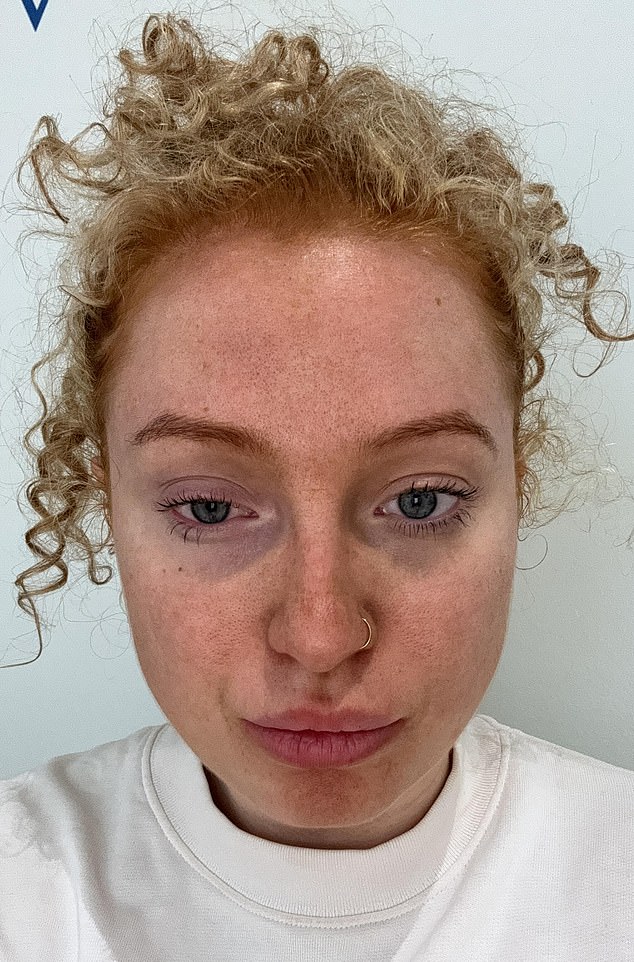
Scarlett went to the Western Eye Hospital after her left eyelid became swollen
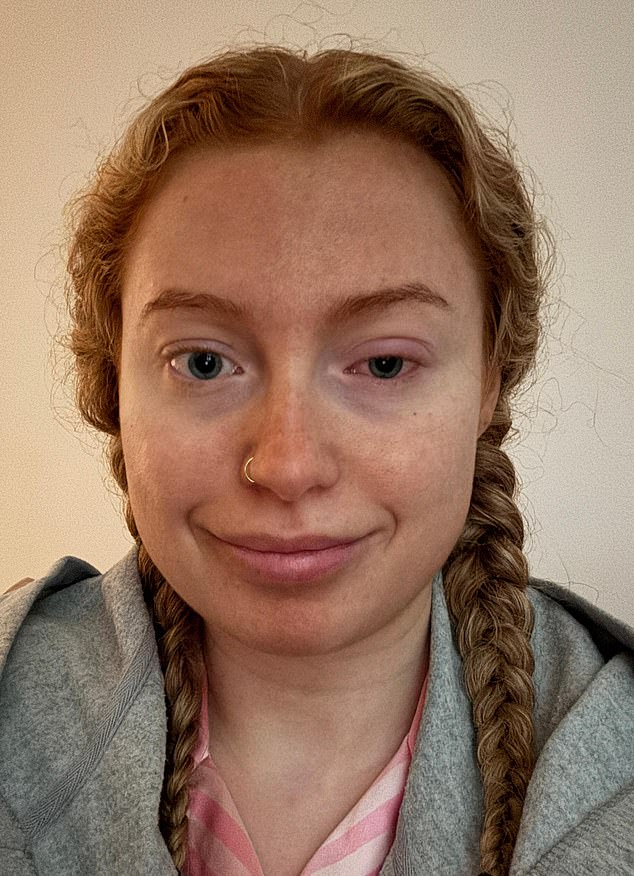
The eye was still very inflamed 48 hours after the lens was removed
What was really going on
After a good look around, she spotted the issue: the jagged old half of my contact lens had wedged itself deep behind my eyelid. It was folded and lodged high up in my eye, completely invisible without specialist equipment. It had to be removed with (if your squeamish, look away now) eye forceps, which wasn’t a pleasant experience but did offer immediate relief. I had a small scratch on my cornea, was prescribed antibiotic eye drops and told not to wear contact lenses for two weeks while the inflammation settled.
What scared me the most in the aftermath was how bad this could have been. Water – including tap water, showers, spas and hot tubs – can contain bacteria and microorganisms that should never come into contact with lenses.
If a lens, or part of one, remains in the eye, it can trap these organisms against the surface of the cornea. This can lead to serious infections, including Acanthamoeba keratitis, a rare but potentially sight-threatening condition that can cause corneal damage and, in extreme cases, permanent vision loss.
Other issues that can arise include:
- Eye infections: A retained or torn contact lens can trap bacteria and other harmful microorganisms against the surface of the eye, significantly increasing the risk of infections such as conjunctivitis and keratitis. These can be painful, slow to heal and may require prescription treatment.
- Corneal ulcers: Ongoing irritation and reduced oxygen supply can cause tiny open sores to form on the cornea. These ulcers are extremely painful and, if not treated promptly, can leave permanent scarring that affects vision.
- Lack of oxygen to the cornea: The cornea needs oxygen from the air to stay healthy. A lens stuck in the eye can deprive it of this oxygen, leading to corneal hypoxia. Over time, this can trigger abnormal blood vessels to grow into the cornea in an attempt to compensate, which can permanently impact eyesight.
- Giant papillary conjunctivitis (GPC): A stuck lens can cause an inflammatory reaction to protein deposits that build up over time. This leads to soreness, excessive mucus and small bumps forming under the upper eyelid, often making contact lenses uncomfortable or impossible to wear.
- Scratches and surface damage: A dried-out or folded lens can rub repeatedly against the eye, causing painful scratches to the cornea and ongoing surface damage.
- Chronic dryness and irritation: The eye’s natural tear film can be disrupted, leading to persistent dryness, burning, redness and the constant sensation that something is in the eye — even after the lens has been removed.
After two weeks of antibiotic drops and a forced break from contact lenses, the swelling fully subsided and my eye healed without any lasting damage to my vision. Had it been left any longer, or had an infection taken hold, the outcome could have been very different.
What the experience really changed wasn’t my eyesight, but my attitude. I’d stopped seeing contact lenses as something that needed attention, and started treating them as an extension of my body that I could forget about entirely. That complacency is what caught me out and nearly concluded with a much nastier ending.
Now, I’m much more careful with my eyes. I don’t ignore irritation and I won’t wear contacts anywhere near water, no matter how brief or harmless it seems. Contact lenses are safe when they’re used properly, but they rely on users being responsible and vigilant. And as I learned the uncomfortable way, it only takes one small, easily overlooked mistake for things to go very wrong.