A PLETHORA of hugely popular motors are being driven off into the sunset in 2026 – including one model that once seemed unstoppable.
With the current car market overwhelmingly favouring SUVs and electrification, a host of more traditional body types have been suffering – including hatchbacks and two-seater roadsters.
The sad truth is that SUVs sell in huge numbers and profits from these machines help brands fund the expensive transition to lower-emissions tech – meaning the demise of your favourite set of wheels could simply be down to failure of product appeal.
Ford Focus
An instant hit when it emerged in 1998, the Ford Focus – which replaced the ageing Escort – was the relentless king of family motors for some 27 years.
Ford originally announced the decision to axe the Focus back in 2022, with the model officially leaving the production line in November – after some 12 million sales.
Ford likely still has some stock available, meaning they probably won’t officially stop selling new Focuses to customers until sometime in 2026.
But the iconic hatchback’s passing, following that of the Fiesta and Mondeo – two other stalwarts of the Blue Oval – shows how the company is turning its attention to electric cars and perhaps losing some of its identity to the surge in popularity of SUVs.
Ford, though, may feel some justification as the Puma continues to dominate the sales charts.
Honda Civic Type R
The hugely iconic Honda Civic Type R is set to be discontinued in the UK by the beginning of 2026 – marking the end of a hot hatchback that will be sorely missed by petrolheads.
The model, adored for its powerful turbocharged engine, track-ready handling and sometimes-polarising design, has run for 25 years – but its end has come across Europe and the UK due to its engine failing to meet new European emissions regulations.
Recently, though, Honda has strongly hinted that the future of its sporty hatch will live on into the electric age.
Jeep Wrangler
While it remains hugely popular in the US, the Jeep Wrangler is nearing the end in Europe due to a host of long-standing issues.
These include upcoming safety regulations, the motor’s physical characteristics clashing badly with modern compliance demands and the difficulty integrating soon-to-be-required driver-assistance features.
What’s more, its poor aerodynamics mean not only high fuel consumption for drivers but worryingly high CO2 emissions from the UK’s available 2.0-litre petrol engine.
Its removal from the UK market is a sad one though, as few other motors boast the Wrangler’s off-road capabilities, low-range gearing, locking differentials and disconnecting anti-roll bar.
Alpine A110
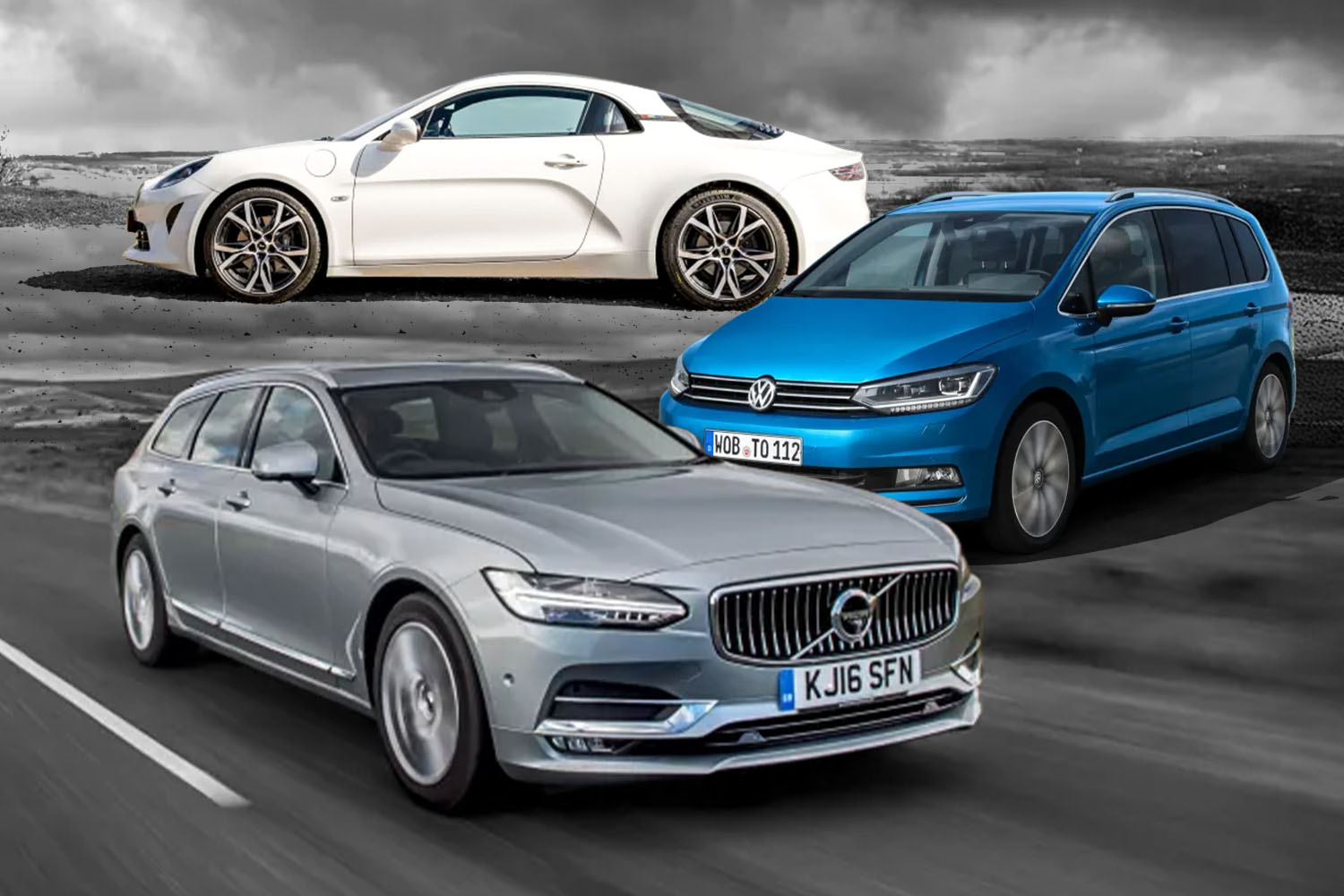
Alpine’s A110, their gorgeous, ultra-lightweight sports coupe – first unveiled in 2017 as a revival of the A110 name – isn’t going away for long, as the French marque is lining up an electric replacement.
In recent weeks, the Renault sub-brand has been readying its final orders of the motor, with just 1,750 more units of the regular A110 model to be built before the petrol-powered car bows out, along with 50 additional examples of the high-performance A110 R.
Production at the Alpine factory in Dieppe, France, will reportedly continue until mid-2026 when they stop making A110s and begin preparing for the new electric A110 – to be built on the brand-new Alpine Performance Platform.
Volvo V90
Volvo and estates go together like Keats and Yeats – but the Swedish favourites are putting an end to their beloved family motor to match the body type’s waning popularity.
The Volvo V90 is the ultimate in real-world practicality, with a world-famous boot boasted by supportive seats – and plenty of style.
But the inevitable market shift to SUVs and the cost and complexity of meeting new European homologation requirements for plug-in hybrids from 2026 onwards gave Volvo no other option.
Volkswagen Touran
Another body type that’s lost its appeal is the compact MPV – with family drivers looking for a child-friendly seven seater being ushered towards the SUV equivalent.
The VW Touran, which is now only available to order from stock, is a good, recent example of the falling momentum of MPVs.
In its heyday, the model was innovative – becoming the first car to feature VW’s electro-mechanical steering that altered the weight according to speed, while the 2006 facelift brought Park Assist tech to the brand for the first time.
But it’s now just another model replaced with an SUV, with VW currently offering the T-Cross, T-Roc, Tiguan, Tayron and Touareg, alongside its bigger electric ID models – and not a traditional MPV in sight.
BMW Z4
BMW’s traditional two-seat, front-engine, rear-wheel-drive petrol sports car is truly a blast from the past.
The Z4, while it has always divided opinion on styling, has always been a decent seller for the German manufacturer – and has always been relatively cost-effective to build thanks to shared development with the Toyota Supra.
A true drop top with plenty of emotional appeal, ultimately the Z4 – which will keep being made until spring next year but with UK order books already closed – no longer fits BMW’s future-facing image and EV-led direction.