Picture the scene. A rooftop bar at sunset. The golden light catches the rim of champagne flutes as a group of effortlessly glamorous people drink a toast – to success, friendship, the sheer joy of being alive.
The tag line? ‘For those who know how to live.’
This ad isn’t just selling champagne. It’s whispering: ‘Drink this, and you’ll be more like them.’
More confident. More interesting. More magnetic.
And here’s the thing: it works.
I spent more than 25 years in advertising, and I can say with absolute certainty: we don’t just buy products, we buy stories.
The most compelling brand ads say almost nothing about the product itself. Instead, they tap into deep-seated human desires and sell us a fantasy – car ads sell freedom, sportswear ads sell guts.
In the world of alcohol advertising, champagne aligns with beautiful people and success; vodka promises mystery, rebellion, and untouchable cool.
Whisky sells intelligence and power. Wine says sophistication. Beers are all about belonging, camaraderie and brotherhood.
Feeling socially awkward? Have a drink – now you’re the life of the party. Frazzled at the end of day? Mix a gin & tonic – have a well-deserved reward. Feeling left out? Crack open a beer – now you’re one of the lads.
So, as you pour your next drink, what exactly are you thirsty for?
Comfort? Connection? Relief? Freedom? We all have cravings and we reach for something to satisfy them. For years, I reached for alcohol: I didn’t question why, it was just what I did. I wasn’t an alcoholic, but when I look back I see that I used alcohol to fill the gaps. To give me confidence in social situations. To help me relax at the end of a long day.
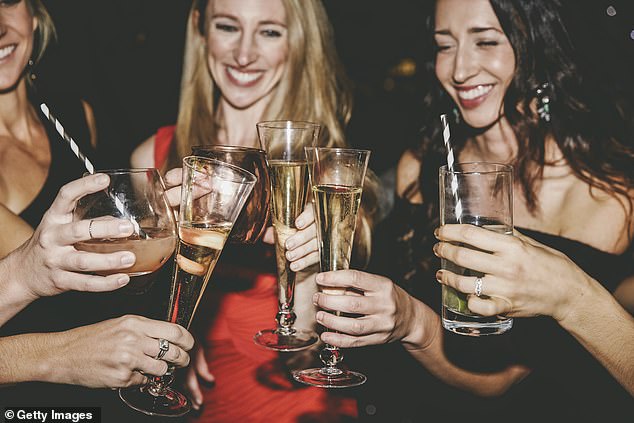
For years, I reached for alcohol: I didn’t question why, it was just what I did. I wasn’t an alcoholic, but when I look back I see that I used alcohol to fill the gaps
I would pour a glass of wine if I was bored or lonely, believing somewhere deep down that it would make me feel more sexy, more interesting, and more connected. I should have known better, having helped sell some of the world’s biggest brands, including alcoholic drinks.
My job as a strategist was to target the unspoken desires that drive people’s decisions. In other words, to work out what makes people tick.
It might sound complicated, but we all need roughly the same things to make us happy. At its most basic, happiness rests on physical wellbeing – having enough sleep, feeling physically strong and secure.
Then we need connection – deep relationships, emotional closeness and trust. Beyond that, according to a ‘hierarchy of needs’ established by American psychologist Abraham Maslow in 1943, we need status and respect to bolster our self-esteem, and meaningful goals to help us grow.
If any of those elements are missing – or not quite where we want them to be – we turn to something to fill that gap.
Very often that is a drink, whether to oil the wheels of social interaction – making us feel more confident and more attractive – or to ward off feelings of inadequacy.
And yes, alcohol does give you a quick fix. That first drink causes dopamine, the feelgood hormone, to be released in the brain, giving an initial buzz or mild euphoria.
But that quick fix is deeply deceptive. The alcohol enters the bloodstream, but this pleasurable lift only lasts for about 20-30 mins because, in response, the brain produces a counter-chemical called dynorphin. Dynorphin is a depressant with sedative effects, which brings our mood down. It lingers for longer than dopamine – up to 3-4 hours – taking our mood lower than it was before we started drinking.
Yet, thanks to advertising – and to social attitudes in general – we are conditioned to believe happiness and alcohol go hand in hand. Drinking seems the gateway to joy – the sparkling champagne at a wedding, the beer shared in celebration after a long day.
That first drink can feel like a warm glow spreading through the body. But, as we’ve seen, it then leaves us lower than we were when we started.
If alcohol were truly making us happy, then the people who drink the most – all day every day – should be living their best life.
That initial high, the dopamine hit, cannot be recaptured after the first drink. The more we chase it, the more we disrupt our sleep and our body’s functioning. So, when we reach for alcohol to create happiness, we’re unknowingly reaching for a wrecking-ball that can demolish the very foundation of our wellbeing. For if happiness is a lightbulb, then alcohol is the dimmer switch – turning down our lows, yes, but also dulling every bright, beautiful, moment in the process. This is what I want you (and everyone I encounter in my new role as an alcohol coach) to ponder.
I’m not telling you to give up drinking. But I would like you to examine the reasons you drink – and I can give you practical ways to cut down if that is what you want to do.
The key is to make sure drinking is adding to your life, not taking away from it. In my experience, many people are beginning to question their drinking – not because they’ve hit a crisis point, but because they start to ask: is this really working for me?
They’re not hiding bottles. They’re not drinking in the morning. They may be outwardly high-functioning, juggling careers, families, friendships.
And yet… they feel flat. Tired. Frustrated by the gap between who they are and who they want to be. Their drinking isn’t dramatic, but it’s also not… nothing.
They might not drink every day, but they think about it most days. They might not black out, but they regret more than they’d like to admit. There’s a name for this: grey area drinking. It describes someone who doesn’t fit the stereotype of a ‘problem drinker,’ but who is not entirely comfortable with their drinking either.
Is that you? If it is, believe me, I can help. But first, you need to understand the role alcohol plays all the way through our lives.
Early adulthood
As a teenager, drinking is about social bonding and belonging – it’s a symbol of adulthood. At 15, I sat in my boyfriend’s garden, sipping Blue Curaçao, cigarette in hand, The Smiths playing in the background. I wasn’t just drinking, I was defining myself.
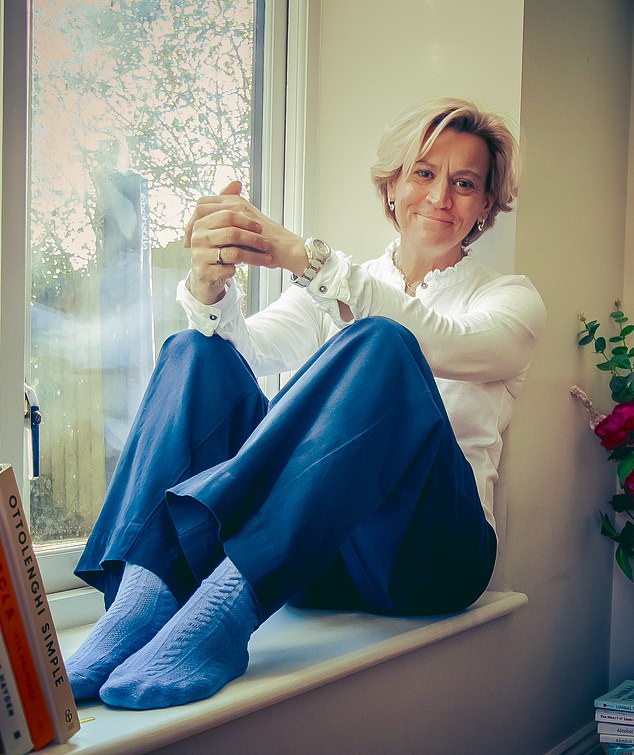
Anna Donaghey, alcohol mindset coach and author of What Are You Thirsty For?
Through university and my early working life, alcohol was a passport to connection. It reassured me that I fitted in, that I was fun, that I belonged.
Alcohol smooths out awkwardness and helps us find our place in the crowd. My drinking in those early years wasn’t just about having fun. It was about proving that I was up for a laugh. That I was fun to be around.
Career and work
My first job after university was working for Rover, the car company that once dominated South Birmingham. Fridays were an early finish for those on the factory floor, and when the car assembly blocks emptied, workers poured into the local pubs in Longbridge to celebrate the start of the weekend.
And me? I was the girl with the posh-sounding accent, going pint for pint with my Brummie colleagues. I loved it. After eight years I moved to London. I found my way into the fast-paced world of advertising, and now it wasn’t just after-work pints: alcohol was ingrained in the industry. The agencies I worked for even had bars inside the building – and we were in Soho, where there was a pub on every corner.
Meetings happened over drinks and lunches with clients stretched long into the afternoon. I travelled the world on business trips and stayed in beautiful hotels. Alcohol was everywhere – and effectively free, as the expense account covered pretty much everything.
Parenthood and settling down
Life keeps moving. By the time we hit our 30s, marriage, homes and kids are on the agenda. As always, alcohol is right there with us. It’s present at every major milestone: our birthdays, weddings, promotions, new homes, and, of course, the arrival of our little bundles of joy.
But life also brings challenges. Careers, relationships and parenthood all demand more from us than ever. And if there’s one thing that changes everything, it’s having children.
Life becomes an endless juggling act of responsibilities, sleep deprivation, and the quiet but relentless pressure to hold it all together.
And so, the job we give alcohol evolves. Now, it becomes an escape hatch.
A glass of wine after the kids are in bed or a few beers while cooking dinner can become a way of carving out some ‘me time’ – a small rebellion against the weight of responsibility of adulting.
Midlife
The big old chunk of time we label ‘midlife’ can encompass many transitions. Work life is rarely a totally trouble-free zone. At some point, a difficult boss or a progression ceiling may bring frustration or disappointment.
You might find yourself under financial stress after being made redundant. Or you might get burnt out. Or you might experience the grief and loss associated with divorce or the end of a relationship – another commonplace at this point in life – and which can induce a whole range of other painful emotions as well.
Any of these scenarios can lead to an increased reliance on
alcohol. Midlife is often described as ‘a reckoning’ – and for good reason. if you have children, you can experience a profound sense of loss when they leave home.
It’s a time when old wounds can resurface with surprising force.
Family dynamics we’ve papered over, disappointments we’ve buried, traumas we’ve never fully processed – they all have a way of rising to the surface. It’s also the time of so-called ‘Sandwich generation’ pressures on those of us simultaneously caring for our own children and aging parents, often while managing careers.
My clients who find themselves weighed down with these pressures, talk about ‘me time’ moments of drinking alone ‘to validate that I even exist when it feels like the entire world wants a piece of me’.
Later life
As life moves on again, alcohol finds another role to play – this time, managing the heavier burdens that come with age. Personal illness, the decline of a loved one, chronic pain… these can be a stark reminder of mortality.
The psychological toll of ageing can also make people feel disconnected from their past vitality. Suddenly, they feel a whole new kind of loneliness, and alcohol becomes a way to take the edge off. A glass of wine to quiet the racing thoughts. A whisky to take the sting out of grief. Or a drink to fill the silence.

I was the girl with the posh-sounding accent, going pint for pint with my Brummie colleagues. I loved it (Model pictured)
Loneliness can affect anyone, of any age. Indeed, many consider it to be one of the greatest public health challenges we face in western societies. It is particularly debilitating for the elderly, and the ritual of a nightly drink can bring a sense of routine or comfort in a time when life feels uncertain, unstimulating or empty.
Most people think of drinking in binary, black-and-white terms: you’re either an alcoholic, or you’re fine. But many drinkers don’t fit neatly into either extreme. Instead, they live in the murky inbetween – the space where alcohol isn’t destroying their life, but it’s not exactly serving it either.
And it’s this inbetween place that so often offers just enough plausible deniability to keep your conscience quiet: I’m not that bad. I can stop anytime. Everyone else drinks too.
But the cumulative impact of slightly too much alcohol – on sleep, productivity, self-esteem, relationships, mental health – is huge. Alcohol doesn’t put you to sleep, it knocks you out. If you drink regularly, alcohol never really leaves your system. It has a half-life of five hours, so a last drink at 10pm will affect you long into the night.
Grey area drinker
The grey area may not scream for attention or even be visible from the outside, but it quietly shapes how we feel, how we show up – and who we become.
Grey area drinkers don’t wake up craving a drink. They don’t need alcohol to function. They might even take breaks, do ‘Dry January’, or set rules like ‘only on weekends’. But deep down, they feel a subtle tension. A sense that alcohol is taking more than it’s giving.
They cycle through rules, bargains, and negotiations, trying to keep alcohol in its place – only to find that it soon creeps back in.
You might be a grey area drinker if:
- You don’t drink every day, but when you do, it’s more than you intended.
- You move between productive days and hungover, tiring unproductive days.
- Alcohol doesn’t feel like an issue, yet you know you’re more dependent on it than you’d like – and this is subtly affecting your energy, relationships, or self-trust.
- You have one small, internal voice telling you to stop drinking, but another that’s telling you to stop overthinking it… it’ll be fine.
Alcohol is a functional tool, until it’s not. Drinking starts as a choice, then becomes automatic. Small, subconscious choices snowball into habits, and those habits can become dependencies.
The more clearly you understand your drinking, the more control you have over your decisions. If you’re a grey area drinker and want clever ways to cut down, tomorrow I will show you how.
Knowing your 10/10
Many years ago, I was in the process of changing jobs when I was offered a session with a career coach.
After some polite chit-chat over a plate of Hobnobs, she asked me what seemed like a straightforward question: ‘On a scale of 1 to 10, how satisfied were you in the job you’re leaving?’ Without hesitation, I answered 7/10.
It felt right: I wasn’t miserable, but I knew there was room for improvement. The job hadn’t given me everything I wanted, but neither was it a disaster. A solid seven.
I was feeling pleased with myself… until she hit me with her next question: ‘So what does 10/10 look like?’ I didn’t have a clue. I had no idea what a 10/10 job looked like, because I’d never actually thought about it.
She smiled knowingly. ‘Interesting,’ she said. ‘Because if you don’t know what 10/10 looks like, how do you know you’re at a seven?’
Don’t you just hate smart people? Her message was simple but
profound: if you don’t have a clear sense of what ‘ideal’ looks like, how can you accurately measure where you are?
The same principle applies to every area of life – our health, our relationships, our sense of purpose, our happiness.
Here’s a simple visual tool that will help you work out how near or far you are from your 10/10. Grab a pen and mark on the Wheel of Life where you are – from one to ten – on the ‘spokes’. Now connect the dots – this shape represents your life today.
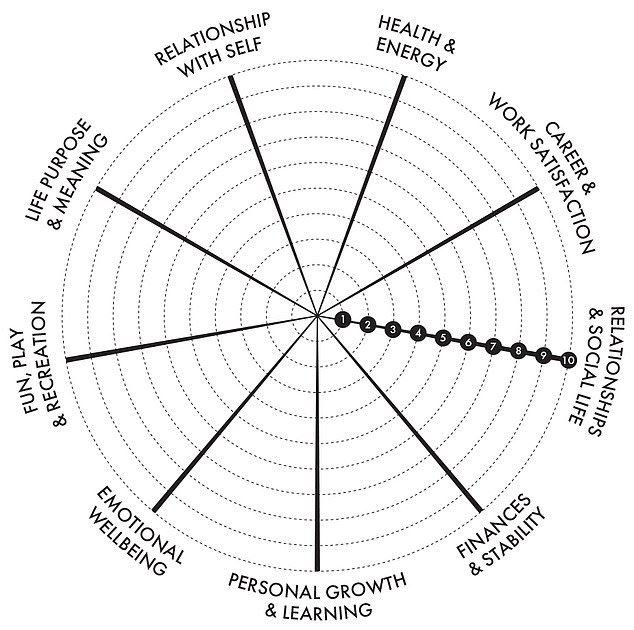
Reflect on your wheel. How do you feel when you look at it?
Which areas feel strong? Which feel neglected?
Now, consider the impact of alcohol. If alcohol wasn’t in the picture, would any of these scores improve? That’s it – you’ve just taken a powerful step.
Remember: you don’t have to overhaul your entire life to feel better. You just have to stop settling for one that’s out of sync with who you really are – and who you want to be.
Adapted from What Are You Thirsty For? by Anna Donaghey (New River, £10.99). © Anna Donaghey 2026. To order a copy for £9.89 (Offer valid to January 31; UK P&P free on orders over £25) go to www.mailshop.co.uk/books or call 020 3176 2937.