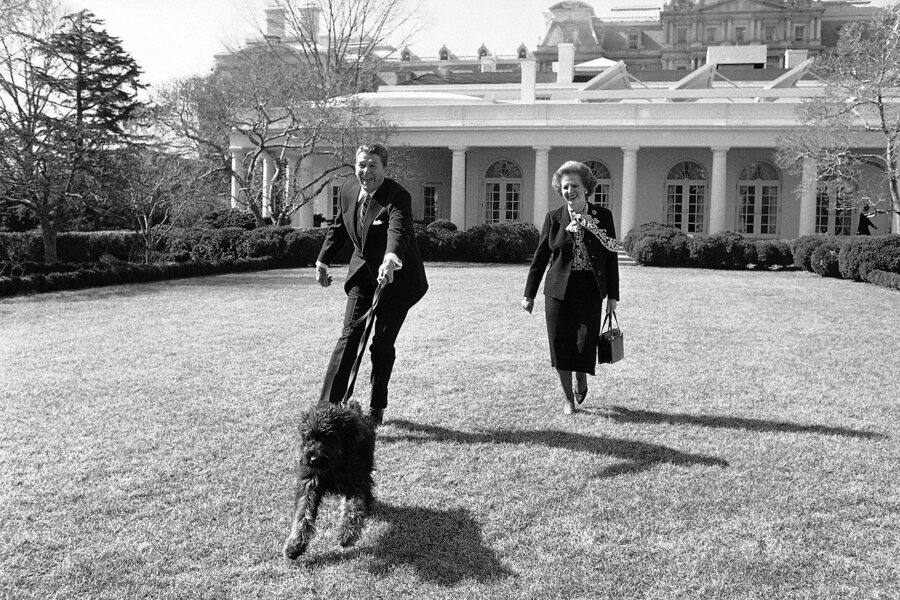
When I was coming of age in the 1980s, I lived in a household that lionized Ronald Reagan. My parents saw him as the man who restored confidence to a nation weary of inflation and self-doubt.
Conservatism then was said to rest on a three-legged stool: free markets and small government; a robust national defense; and traditional, family-oriented social values.
Mr. Reagan’s nearly decadelong dominance of American politics sent Democrats looking for a “third way” in the 1990s. Bill Clinton embraced business-friendly policies, ended welfare as we knew it, and, after the collapse of communism, helped construct a more open system of global capitalism. For the next two decades, the center left and center right generally agreed on the priorities of free markets and economic growth.
The ideals of both political parties look very different today. This week’s cover package explores how these ideologies have evolved, and how they are evolving in an era of populist revolt.
According to a much-cited definition by the scholars Cas Mudde and Cristóbal Rovira Kaltwasser, populism, whether on the left or the right, is less an ideology than a belief that the “people” have been betrayed by a “corrupt elite.”
The reporting by the Monitor’s Troy Aidan Sambajon and Simon Montlake bears this out, suggesting that both the democratic-socialist left and the MAGA right are positioning themselves as insurgencies against a decadent political establishment that they say has grown unaccountable, corporatized, and morally hollow.
In another story in this week’s issue, Simon reports how under President Donald Trump, the Republican Party has elevated nation and culture over free markets, not only with the use of tariffs as an economic and foreign policy tool, but also with the U.S. government taking stakes in private companies or setting the price of steel – in the past an anathema to Reagan conservatives.
Within these stories, though, there seems to be a deeper point: The tectonic shifts in America’s two major parties over the past decade are perhaps not just about economics but about an ache for community – an attempt to find the moral center in our common lives together.