The remains of a medieval ‘super ship’ have been discovered off the coast of Denmark, representing the largest of its kind ever found.
The ship, which dates back 600 years, is an exceptionally large cog – the dominant cargo vessel of the Middle Ages.
It is estimated to be about 28 metres (92 ft) in length, nine metres (30ft) wide and six metres (20ft) high, capable of carrying around 300 tonnes (300,000kg) of cargo.
This makes it the world’s largest cog ever found and provides unprecedented insight into life at sea during the 1400s.
The ship, named ‘Svælget 2’ after the channel where it was found, is exceptionally well preserved and even retains traces of the rigging – the system of ropes, cables and hardware needed to support and move loads.
Divers have even uncovered painted wooden dishes, shoes, combs and rosary beads, offering a glimpse into the life of crew on board.
They also unearthed the extensive remains of a real timber-built stern castle – a covered deck where the crew could seek shelter and stay relatively protected.
‘The find is a milestone for maritime archaeology,’ excavation leader Otto Uldum said. ‘It is the largest cog we know of, and it gives us a unique opportunity to understand both the construction and life on board the biggest trading ships of the Middle Ages.’
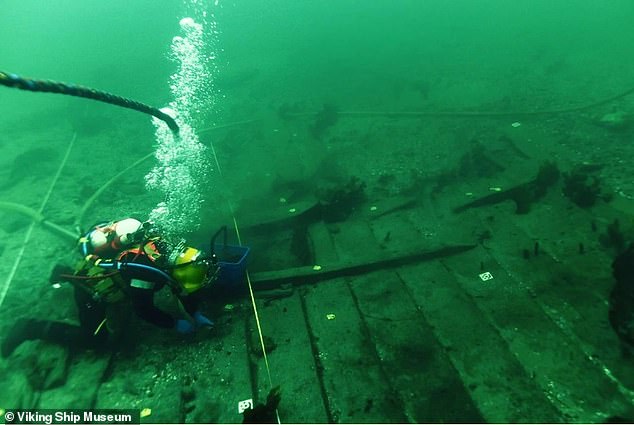
The remains of a medieval ‘super ship’ have been discovered off the coast of Denmark, representing the largest of its kind ever found
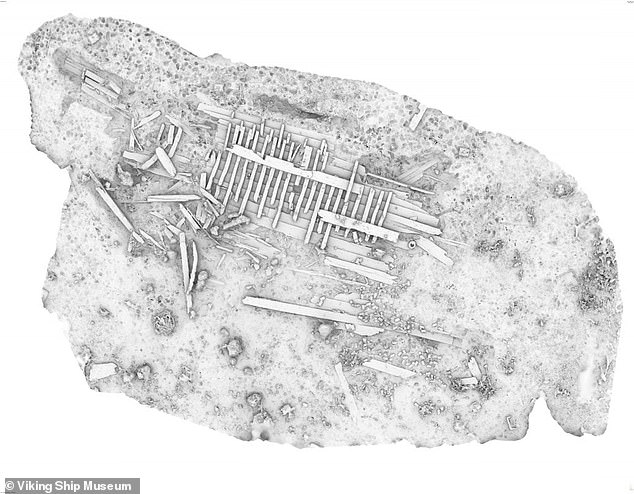
It is estimated to be about 28 metres in length, nine metres wide and six metres high, capable of carrying around 300 tonnes (300,000kg) of cargo
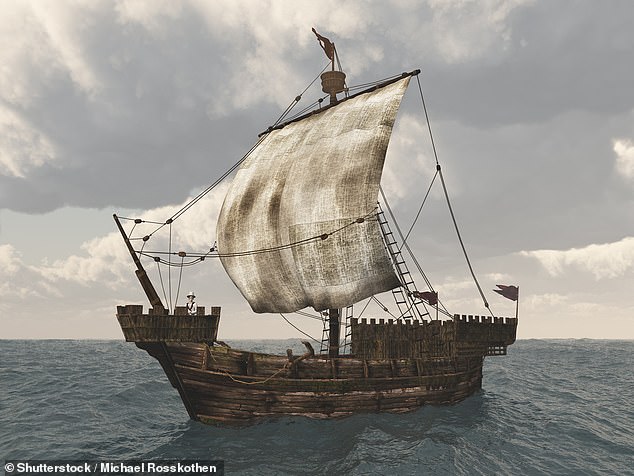
They also unearthed the extensive remains of a real timber-built stern castle – a covered deck where the crew could seek shelter and stay relatively protected. Pictured: A computer-generated cog complete with bow and stern castles (file image)
The cog was an efficient type of ship that could be sailed by a remarkably small crew, even when heavily loaded, experts from the Viking Ship Museum in Denmark said.
They were built to make the hazardous voyage around Skagen from what is now the Netherlands through the Sound, reaching the trading towns of the Baltic.
This wreck was excavated at a depth of 13 metres, where it had been shielded from the forces that normally destroy ships near the coast.
A covering of sand gave the ship extensive protection – providing archaeological evidence that has never been documented before.
This includes castles – the timber-built platforms at each end of the ship that are known from countless illustrations but have never been found.
‘We have plenty of drawings of castles, but they have never been found because usually only the bottom of the ship survives,’ Mr Uldum said.
‘This time we have the archaeological proof.’
He explained that the introduction of castles represented a ‘big step forward’ compared to Viking-age ships, which only had open decks in all kinds of weather.
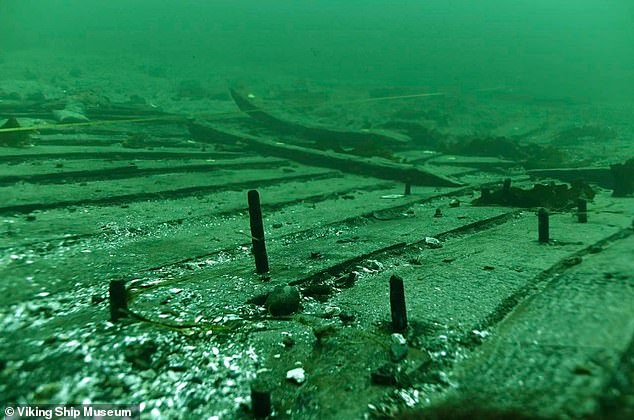
The wreck was excavated at a depth of 13 metres, where it had been shielded from the forces that normally destroy ships near the coast
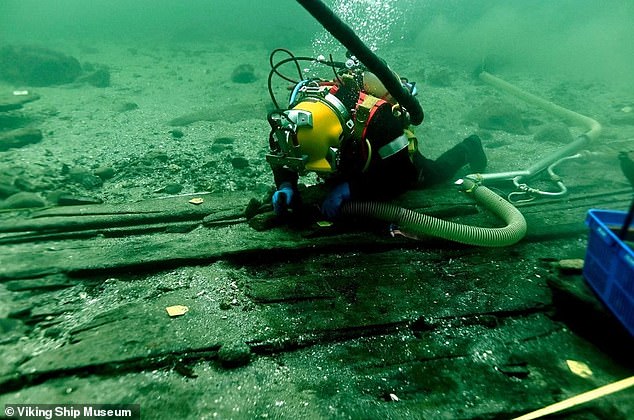
Archaeologists used special ‘underwater vacuum cleaners’ to remove centuries of sand and silt from the shipwreck
Another major surprise was the discovery of the ship’s brick-built galley, the earliest example of its kind from Danish waters.
This was where the crew could cook over an open fire. Around 200 bricks and 15 tiles formed the galley, and in the same area archaeologists found bronze cooking pots, ceramic bowls and remains of fish and meat.
‘We have never before seen a brick galley in a medieval ship find from Danish waters,’ Mr Uldum said.
‘It speaks of remarkable comfort and organisation on board. Now sailors could have hot meals similar to those on land, instead of the dried and cold food that previously dominated life at sea.’
In the galley area archaeologists also uncovered parts of the crew’s tableware and the pots used for cooking, as well as remains of provisions such as fish and meat and hundreds of finely cut sticks that may have been used for stockfish.
One of the biggest questions is what the huge ship may have been carrying and, so far, researchers have found no trace of the cargo.
The ship’s hold was not covered, so barrels of salt or bundles of cloth would have floated away during the sinking. The same would probably apply to timber, the team said.
The absence of a ballast suggests the ship would have been loaded to the brim with heavy trade goods.

Divers have even uncovered painted wooden dishes, shoes, combs and rosary beads, offering a glimpse into the life of crew on board
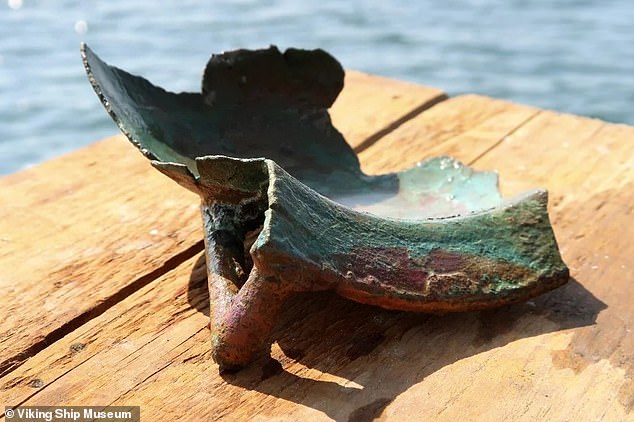
A cooking pot found in the wreck of the medieval ship. Experts described the find as a ‘milestone for maritime archaeology’
Despite the missing cargo, there is no doubt that Svælget 2 was a merchant ship, the experts added. Archaeologists have found no signs of military use.
The ship’s components are now undergoing conservation at the National Museum in Brede.
‘We now know, undeniably, that cogs could be this large – that the ship type could be pushed to this extreme,’ Mr Uldum concluded.
‘Svælget 2 gives us a tangible piece of the puzzle and makes it possible to understand how technology and society evolved side by side in an era when shipping was the driving force behind international trade.’