The 17th-century Welsh farmhouse at the centre of The Salt Path controversy has been placed on the market.
Raynor Winn, who wrote the best-selling book, claims she lost the farmhouse in Pwllheli, Wales, when she and her husband Moth invested in a friend’s company that failed, leaving them without a roof over their heads.
The Salt Path tells the story of how they became homeless after the house was repossessed, which was closely followed by the discovery that Moth had the terminal condition corticobasal degeneration (CBD).
Winn and Moth – real names Sally and Timothy Walker – set off on a year-long 630-mile trek on the South West Coastal Path, sleeping in a tent and facing numerous ordeals along the way.
The book, which was made into a film starring Jason Isaacs and Gillian Anderson, became a publishing phenomenon and earned its author a multi-million-pound fortune.
But an investigation by the Observer newspaper last year cast doubts over the accuracy of her account and claimed the couple were forced to sell the home after stealing £64,000 from her employer.
Now, the isolated farmhouse, which is set up a long lane in the village of Y Ffor and three miles from the coastal town of Pwllheli in Gwynedd, north Wales, is up for sale for £618,000.
The home is now owned by Maxine Farrimond, 63, who bought the farmhouse for £280,000 almost four years after it was repossessed from the Walkers.
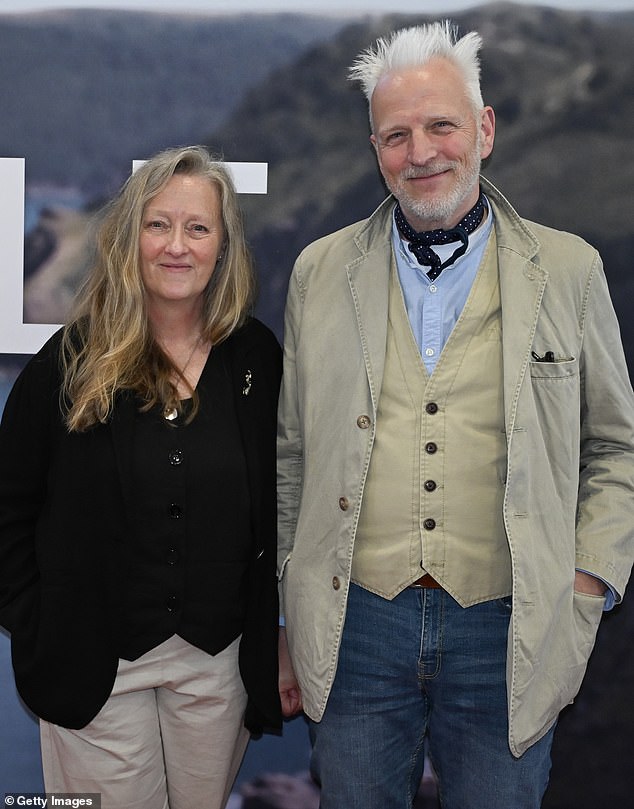
Author Raynor Winn, real name Sally Walker, with her husband Tim at a screening of The Salt Path film

The isolated farmhouse, which is set up a long lane in the village of Y Ffor and three miles from the coastal town of Pwllheli in Gwynedd, north Wales, is up for sale for £618,000
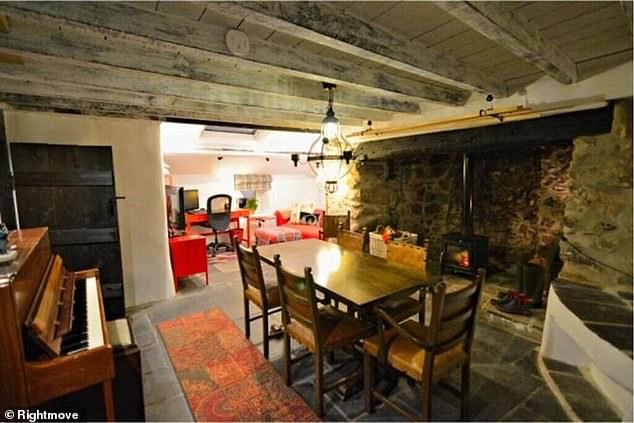
The home is now owned by Maxine Farrimond, 63, who bought the farmhouse for £280,000 almost four years after it was repossessed from the Walkers
When Ms Farrimond bought the property in July 2016, it was damp and dilapidated, but she spent more than £150,000 renovating the home.
Ms Farrimond, 63, said: ‘It’s a magical property and I’ve been very happy there.
‘The Walkers said they loved it there. They had 20-odd years there.
‘I feel very sad to be going but I’m at an age where I’ve got to move.
‘It’s been a project I’ve done all by myself and I hope someone else will now enjoy the property.’
Set in two acres, the three-bed farmhouse comes with a converted stone barn, a stream, paddocks and woodland.
The Walkers had also invested in improving the home by adding slate flooring, and Mr Walker, who described himself as a master plasterer, had even inscribed ‘Tim [heart] Sally xxx’ into the plasterwork of the converted barn.
When the Walkers left the house, Ms Walker described in the book how they had to leave in a rush because the bailiffs had come.
The Walkers had lived there for over 20 years, raising their two children there, before they left in a rush.
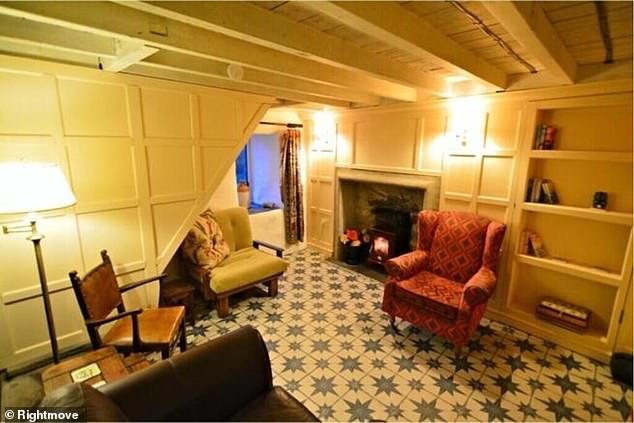
The sung at the Welsh farmhouse at the centre of The Salt Path controversy
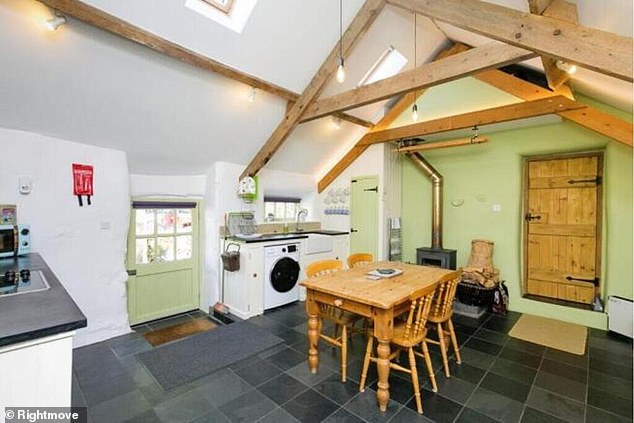
The kitchen area in the barn conversion currently used as a holiday let
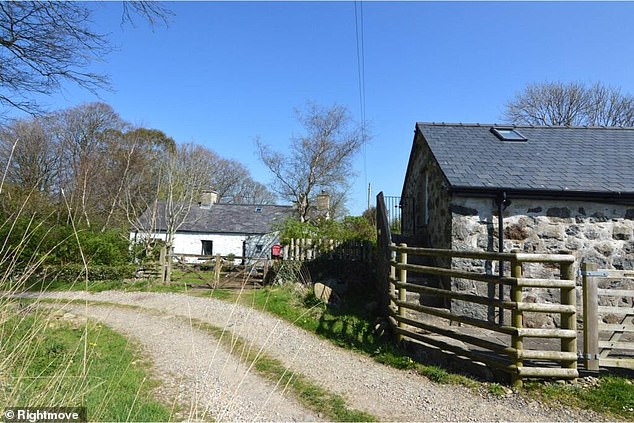
Ms Farrimond bought the property in July 2016, it was damp and dilapidated but she spent over £150,000 renovating the home
Ms Walker worked as a bookkeeper in the early 2000s for the property firm run by Martin and Ros Hemmings.
An investigation by The Observer newspaper claimed that rather than being forced out of their home, it is alleged that the property was repossessed after Ms Walker stole tens of thousands of pounds from her former employer.
When the couple failed to repay a loan taken out with a relative to repay the stolen money – agreed on terms that the police would not be further involved – they lost their home, it is claimed.
A spokesman for the Walkers told the Daily Mail at the time that the allegations made in the Sunday newspaper were ‘highly misleading’.
Their statement added: ‘The Salt Path lays bare the physical and spiritual journey Moth and I shared, an experience that transformed us completely and altered the course of our lives. This is the true story of our journey.’
When asked to specify which allegations were misleading or factually inaccurate, the spokesman declined to comment further but said that the couple were taking legal advice.