Myanmar’s civil war rages on as the country resumes voting in what critics describe as sham elections designed to legitimize military rule. An estimated 3.5 million people have been displaced since the military overthrew the elected government in a 2021 coup, and across the countryside, rebel groups armed with drones, rocket launchers, and improvised explosives are fighting to hold the line.
But analysts say there’s more to the story than arms, territory, and questionable elections. The future of this conflict will be shaped by another factor lying just under the surface: rare earth minerals.
“Myanmar is a globally critical source of heavy rare earth elements, almost all of which flows into China for processing,” says Richard Horsey, Myanmar adviser to the International Crisis Group.
Why We Wrote This
Efforts to diversify rare earth supply chains are bringing new attention to war-ravaged Myanmar, where massive rare earth deposits create opportunity – and risk – for the fractured rebellion.
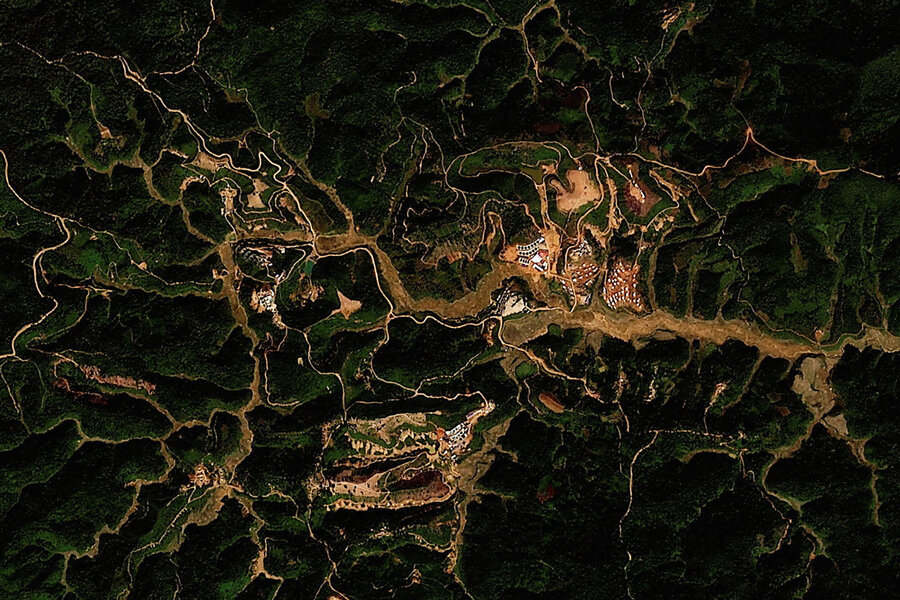
The deposits lie mostly in rebels’ rural strongholds, bringing revenue and political leverage to groups fighting against the military junta. As international competition over these minerals grows, Myanmar’s rare earth boom could bring investment that nudges the country toward stability – or it could prolong a war already fueled by the pursuit of power and resources.
Rare earths
Used in electric vehicles, wind turbines, advanced electronics, and military systems, rare earth minerals have become central to economic competitiveness and national security around the world.
China sits at the heart of the industry. It is the world’s largest consumer and importer of rare earth ores and compounds, and dominates their processing into refined materials and magnets, giving Beijing outsize influence over global supply chains. In response to U.S. tariffs last year, China tightened controls over rare earth exports, a move that highlighted how dependent the world has become on China’s rare earth refining technology.
“China is consolidating upstream control and restricting downstream exports, while countries like India, Japan, and the U.S. are scrambling to stockpile material and develop alternative refining capacity,” says Dr. Horsey. “In the near term, however, there is no substitute for China’s processing dominance.”
And Myanmar plays a key role in feeding that dominance. While public data is limited, trade and research estimates suggest that more than half, and possibly up to two-thirds, of China’s rare earth imports by volume have come from Myanmar in recent years. Between 2017 and 2024, Myanmar exported more than 290,000 metric tons of rare earth materials to China, valued at over $4.2 billion. Around 85% of those exports were sent after the 2021 coup.
As India, Japan, and the United States explore ways to reduce reliance on China-dominated systems, Myanmar is emerging as a potential, if deeply complicated, source for the raw material.
New international attention
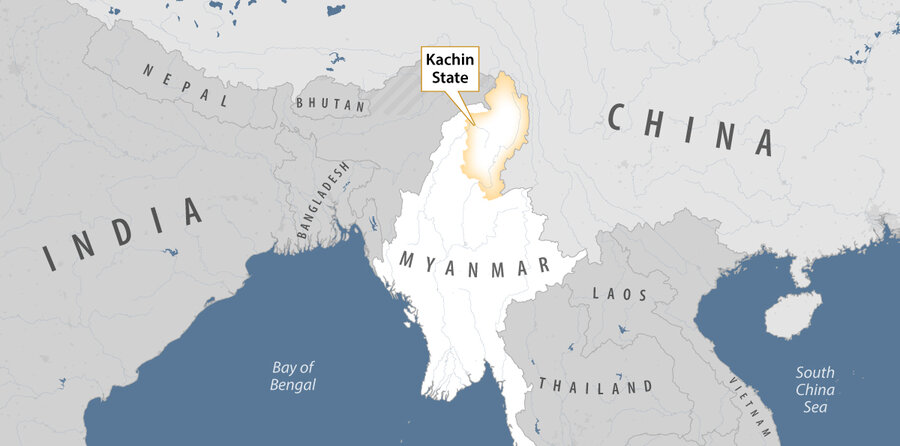
India’s interest is particularly keen. New Delhi has reportedly begun engaging with several ethnic armed groups including the Kachin Independence Organization (KIO) – a rebel outfit that controls some of the world’s richest supplies of dysprosium and terbium in Myanmar’s northern Kachin state, which shares a border with both China and India. Sources within these groups say Indian officials are considering strengthening cross-border road connectivity to facilitate access to rare earth resources, which could complicate an already fragmented conflict landscape.
“India’s reported entry into rare earth extraction in northern Myanmar introduces a new regional player,” says Angshuman Choudhury, a Myanmar-focused researcher. “It creates a new competitive fissure in regional geopolitics, and gives armed groups like the KIO another partner to negotiate with.”
China, however, remains the dominant external actor.
“China would never allow critical resources on its border to be exploited by a rival,” says Dr. Horsey, adding that Beijing is unlikely to view India’s interest as an immediate threat, given India’s limited refining capacity. The KIO may choose to reject India’s business, too.
“The importance of these resources to China creates a strategic risk for the KIO if it is regarded as disloyal or noncompliant by Beijing,” he says.
On whether rising global interest in Myanmar’s rare earths could help stabilize the country, many analysts are skeptical. Mr. Choudhury warns that relying on rare earth revenues – like other profits from the extraction of natural resources – risks entrenching predatory economies and perpetuating poor governance.
“Because of the high-stakes nature of rare earths, all armed actors will vie for access and profit,” he said. “That may incentivize them to fight on rather than pursue peace.”