Tensions between U.S. presidents and heads of the Federal Reserve banking system, history shows, are common. In 1965, Lyndon B. Johnson reportedly shoved and yelled at the chair of the Fed, for not lowering the interest rate to the president’s liking. In the 1950s, Harry Truman pressured not one, but two, chairmen on the same issue. And in the 1970s, Richard Nixon succeeded in his efforts – which economists blame for yearslong, double-digit inflation.
“Divorcing monetary policy from national politics helped make the United States a safe haven for global investors,” observed conservative commentator Nick Catoggio in The Dispatch on Monday. The Federal Reserve, he wrote, “has a special role in America’s international preeminence and therefore also arguably a special duty to resist” presidential or political pressures.
While past White House-Fed differences have typically been argued behind closed doors, they have now burst into the open, threatening to further erode declining public trust in governance and democratic institutions. Calling for a 1% interest rate, President Donald Trump has escalated verbal and social media criticism of current chair Jerome Powell and other Fed board members.
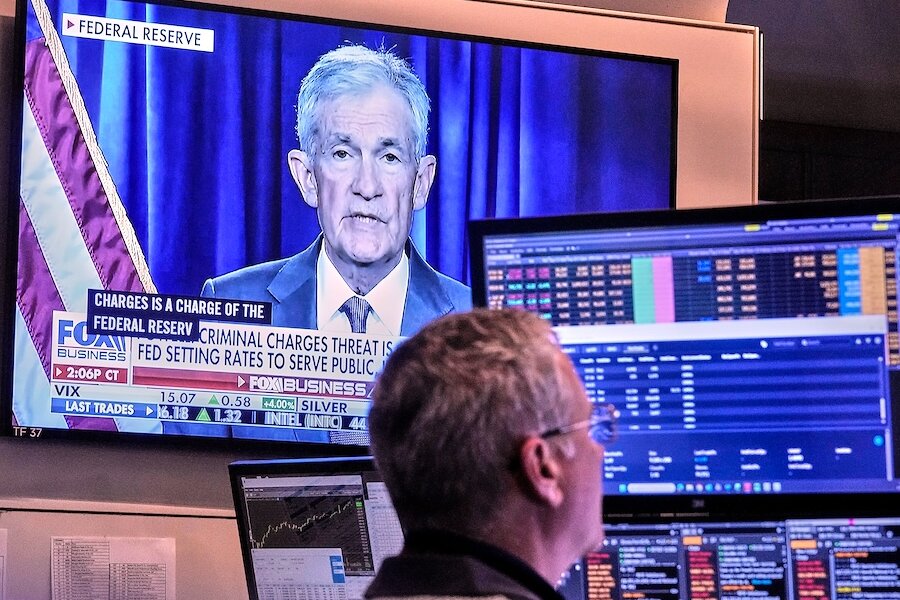
On Jan. 9, the Department of Justice served the Federal Reserve with subpoenas to investigate Mr. Powell’s testimony to Congress about renovations of its headquarters. Both Republicans and Democrats in Congress have decried the move as politically motivated. And Wall Street CEOs as well as global central bank heads have expressed confidence in Mr. Powell’s integrity – and in the importance of independence from political meddling.
Mr. Powell agrees that he is not “above the law.” But in a video statement, he cast the administration’s move as retaliation for “setting interest rates based on our best assessment of what will serve the public, rather than following the preferences of the President.”
Perceptions of how well the institutions of democracy serve the “public interest” are key assets for any government. Countries such as Argentina, Turkey, Russia, and Venezuela, where political leaders pushed for artificially low interest rates, have experienced runaway inflation, rapid devaluation, and instability.
“Public trust is a cornerstone of central banking,” researchers at the London-based Centre for Economic Policy Research noted in a January 2025 report analyzing 4 million social media posts about the Federal Reserve.
Trust, the researchers explained, is about the “belief in the goodwill or integrity of the central bank. … an expectation that [it] will act in the public interest.”
“Scandals that bring into question the integrity of key officials cause the largest erosion in trust” they found.
Whether the Federal Reserve investigation moves forward or not, Americans would do well to expect goodwill among public institutions and political leaders – while also demanding integrity from them.