Grains have been part of the human diet for tens of thousands of years – and they remain at the heart of meals eaten around the world.
From a breakfast bowl of Rice Krispies or porridge, to bulgur wheat at lunch and pasta for dinner, all washed down with a glass of orange barley, these tiny plants quietly power our daily lives.
Broadly speaking, grains fall into two categories. True grains are the seeds of grasses, such as wheat, rice and corn. Pseudograins, meanwhile, come from non-grass plants but are eaten in much the same way.
Some are classed as ancient grains, meaning they have remained largely unchanged for thousands of years – unlike modern wheat and corn, which have been extensively cross-bred to meet the demands of industrial agriculture.
These ancient grains tend to be naturally richer in protein, fibre, vitamins and minerals.
Last week, the Daily Mail revealed that one ancient grain – amaranth – had been hailed as ‘the world’s healthiest carb’, thanks to a nutritional profile that left brown rice and quinoa, two long-standing wellness staples, trailing behind.
But amaranth is far from the only grain with impressive credentials.
The Daily Mail asked four nutrition experts to assess some of the most popular grains available in supermarkets today. And one familiar favourite is conspicuously absent…
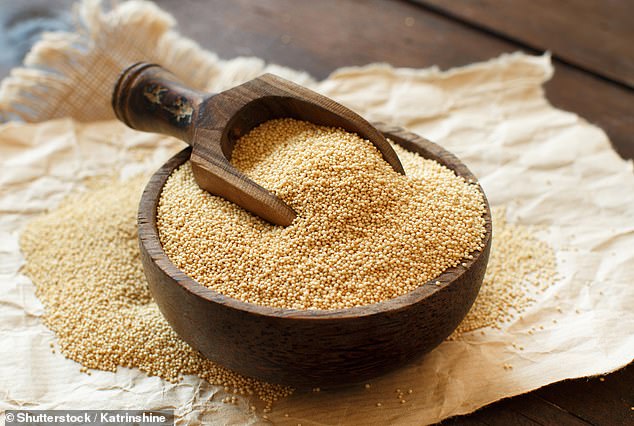
Amaranth is best soaked or sprouted before cooking to improve digestibility
Amaranth
Amaranth is a naturally gluten-free pseudograin that’s rich in fibre, plant protein, iron, magnesium and lysine, an amino acid that many grains lack.
Nichola Ludlam-Raine, specialist registered dietician and author of How Not to Eat Ultra-Processed, recommends adding the cooked grains to hot dishes.
‘When cooked, it has a porridge-like texture and slightly earthy flavour, making it ideal for breakfast bowls or thickening soups,’ she says.
Nutritional Therapist Hanieh Vidmar agrees, adding that the sticky texture of amaranth makes it ideal for making veggie burgers, too.
‘It absorbs a lot of water and becomes sticky, making it ideal for porridges or binding veggie patties,’ she says.
‘It’s best soaked or sprouted before cooking to improve digestibility. It contains all nine essential amino acids, but it’s lower in methionine and cysteine, so combining it with legumes or seeds improves protein balance.’
And the grain, which was first cultivated by the Aztec and Inca civilisations, might also be the perfect accompaniment for your next movie night.
Maz Packham, Nutritional Therapist at W-Wellness, says: ‘It has a nutty flavour and the whole seeds can be cooked and used in porridge or ground into a flour to use in baking.
‘Some people also pop the seeds like popcorn. It’s a good source of non-heme iron, so pairing it with vitamin C rich foods such as red peppers or tomatoes can support the absorption.
‘To reduce the physic acid content (which can bind to minerals like iron and zinc preventing the body from absorbing them), you could soak it overnight in warm water with Apple Cider Vinegar. This also make it easier for the body to digest.’
Typical nutrition (100g cooked)
- Energy: 102 cal
- Carbohydrate: 19g
- Protein: 3.8g
- Fat: 1.6g
- Fibre: 2.1g
- Is amaranth gluten-free? Yes
Barley
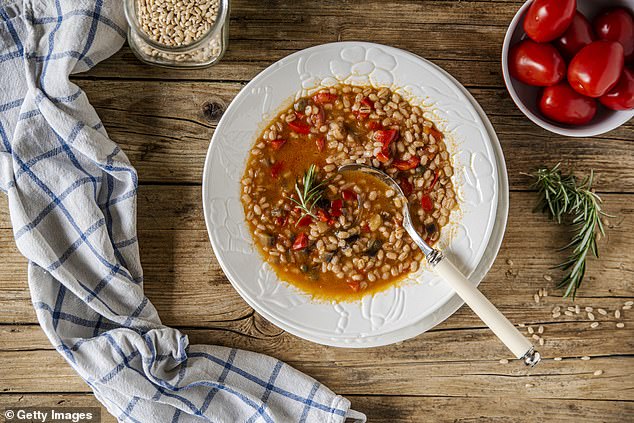
Barley has a creamy, chewy, pasta-like texture when cooked
Barley is a nutrient-dense grain that is rich in fibre, especially beta glucans, a type of soluble fibre that forms a gel in the gut, slowing the absorption of carbohydrates which can support blood sugar control.
It has a mildly sweet, slightly salty flavour and has a creamy, chewy, pasta-like texture when cooked.
Ms Packham says: ‘It’s a not a complete protein, so by pairing it with other foods such as beans or lentils you can support protein quality.
‘Pairing with healthy fats such as nuts and Extra Virgin Olive Oil can support the absorption of some fat-soluble antioxidants and pairing with vitamin C foods like red peppers, you can boost the absorption of non-heme iron.
‘Barley works well in soups, stews, salads and grain bowls, it has a mild, nutty flavour and is a little chewy in texture.’
Ms Vidmar says that barley doesn’t just offer a hefty dose of fibre, she rates it for its high levels of plant protein, B vitamins, and minerals – including selenium, copper and chromium.
‘In most supermarkets, you’ll find pearl barley, which has been polished to cook faster and offer a softer bite,’ she says.
‘If you want the most nutrition, look for hulled barley, which keeps the bran layer intact.
‘It’s the perfect addition to cosy autumn soups, stews, or hearty grain salads. Just keep in mind that barley contains gluten, so it isn’t a fit for gluten-free diets.’
Typical nutrition (100g cooked)
- Energy: 123 cal
- Carbohydrate: 28 g
- Protein: 2.3 g
- Fat: 0.4 g
- Fibre: 4 g
- Is barley gluten-free? Yes
Buckwheat
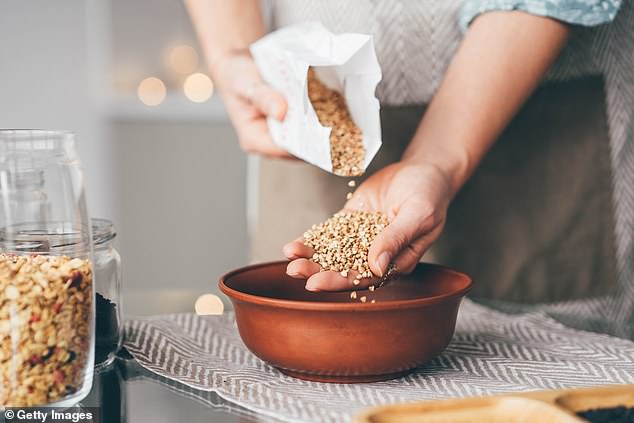
Buckwheat isn’t actually made from wheat, meaning it is gluten free
Like quinoa and amaranth, buckwheat is a gluten-free pseudocereal, and a good source of fibre, vitamins and minerals such as manganese, magnesium, copper, phosphorus and B vitamins.
It also contains an antioxidant called rutin, which helps strengthen vascular health and blood vessels, improving circulation.
Ms Packham says the grain is as versatile as it is nutritious.
‘Use buckwheat groats in porridge, soups, you can roast it and add to salads and when turned into flour, you can use it to make bread and pancakes.
‘Unique for a plant-based food, it contains all nine essential amino acids making it a complete protein source. It has an earthy, nutty flavour.’
Typical nutrition (100g cooked)
- Energy: 92-118 cal
- Carbohydrate: 19.9-21.3 g
- Protein: 3.4-4.3 g
- Fat: 0.6-1.2 g
- Fibre: 2.1-3 g
- Is buckwheat gluten free? Yes
Bulgur wheat
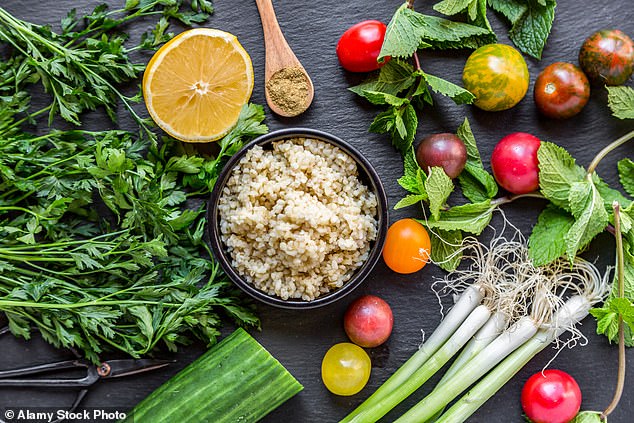
Bulgar wheat is a a key ingredient in tabbouleh
Bulgar wheat is a key ingredient in tabbouleh, a Middle Eastern salad made with parsley, tomatoes, cucumber and lemon juice.
The grain is cracked, partially pre-cooked whole wheat, which makes it quick and convenient to prepare.
Ms Ludlam-Raine says: ‘It’s a good source of fibre, magnesium and iron, and has a light, nutty flavour.
‘Because it retains the bran, it’s nutritionally closer to a wholegrain than many refined wheat products.’
Typical nutrition (100g cooked)
- Energy: 83 cal
- Carbohydrate: 18.6 g
- Protein: 3.1 g
- Fat: 0.2 g
- Fibre: 4.5 g
- Is bulgar wheat gluten free? No
Corn
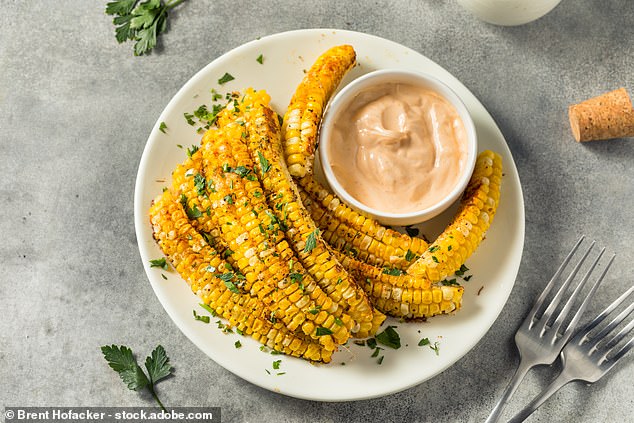
Pairing corn with beans or pulses improves amino acid balance
Corn, also known as maize, is another gluten-free cereal grain and a major global staple.
Unlike the other grains in this list you can get it tinned, fresh or frozen, massively reducing any preparation and cooking time.
And, according to nutritionist Rob Hobson, author of Unprocess Your Family Life, the tender kernels are ‘underestimated’.
He tells the Daily Mail: ‘Nutritionally, it sits somewhere between a grain and a starchy vegetable.
‘It’s often underestimated, but unlike most grains it contains small amounts of natural fat and a range of protective plant compounds.
‘Its protein content is modest and incomplete on its own, which is why corn-based diets traditionally rely on complementary foods.’
Pairing corn with beans or pulses improves amino acid balance and turns it into a more complete protein source, and adding olive oil, avocado or seeds improves absorption of carotenoids, which are fat-soluble.
Similarly, combining corn with vegetables and legumes helps slow digestion and improve blood sugar control.
‘Nutritionally, whole corn is very different from ultra-processed corn products, so how it’s eaten matters,’ adds Ms Ludlam-Raine.
Typical nutrition (100g cooked)
- Energy: 96 cal
- Carbohydrate: 21 g
- Protein: 3.4 g
- Fat: 1.5 g
- Fibre: 2.4 g
- Is corn gluten free? Yes
Farro
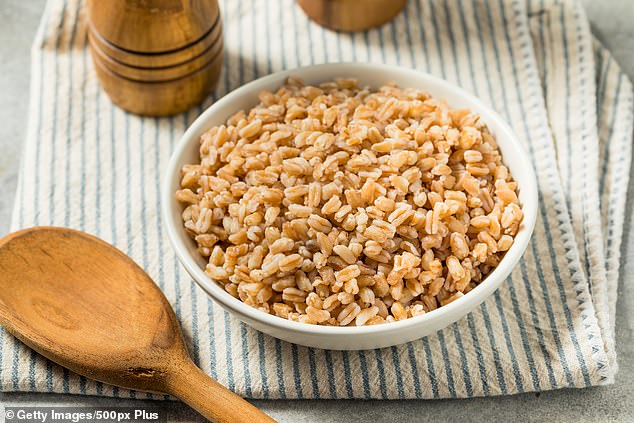
Farro is an ancient wheat grain with a hearty, chewy texture and nutty flavour
Farro is an ancient wheat grain with a hearty, chewy texture and nutty flavour.
It’s naturally higher in fibre – with one cup delivering around 20 per cent of daily fibre needs – and is higher in protein than many modern wheat products.
Like other whole grains, farro also supplies protective plant compounds, including polyphenols and other antioxidants, and is rich in B vitamins, iron and zinc.
‘Because it’s more robust in texture, it tends to be more filling and works particularly well in warm salads, soups and risotto-style dishes,’ says Ms Ludlam-Raine.
If you’ve picked up some dried farro rather than one of the pre-prepared pouches available at most large supermarkets, Ms Vidiar advises ‘soaking overnight before cooking to help reduce anti-nutrients and improve digestibility.’
Typical nutrition (100g cooked)
- Energy: 127–150 cal
- Carbohydrate: 26–37 g
- Protein: 5–6.5 g
- Fat: 0.8–1 g
- Fibre: 3–6.3 g
- Is farro gluten free? No
Freekeh
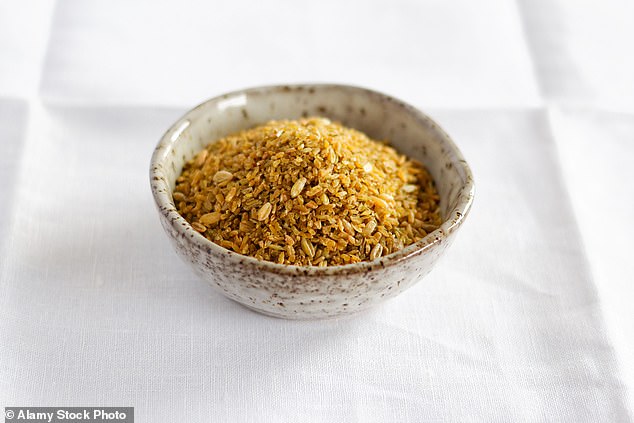
Freekeh retains more fibre and minerals than fully ripened wheat
Classed as an ancient grain, freekeh is actually young green wheat harvested early and roasted.
Because it’s picked before full maturity, it retains more fibre and minerals than fully ripened wheat, while still behaving nutritionally like a wholegrain.
Ms Packham added: ‘It has a smoky nutty flavour, and a chewy texture compared to other grains.
‘Whole freekeh is harvested from durum wheat kernels that are roasted and rubbed to remove the husk.
‘It’s popular in Middle Eastern cooking and makes a good substitute for rice or quinoa in salads and soups. It’s high in fibre, and a good source of manganese, phosphorus and iron.
‘It’s low glycemic index makes it a good option to support satiety and balanced blood glucose levels.’
Typical nutrition (100g cooked)
- Energy: 65 cal
- Carbohydrate: 30.2 g
- Protein: 8.8 g
- Fat: 2 g
- Fibre: 5.2 g
- Is freekeh gluten free? No
Millet
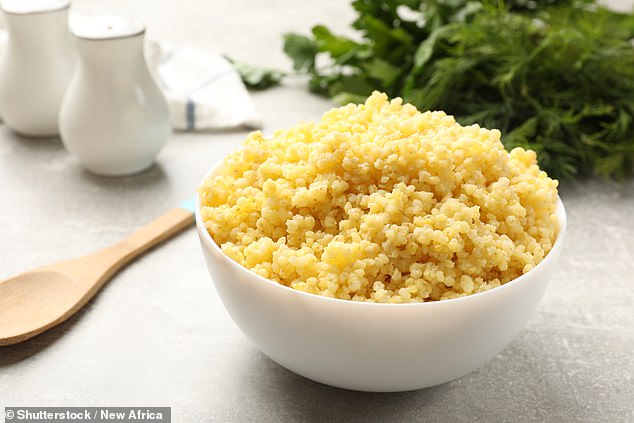
Millet can be used in sweet and savoury dishes
Millet is a small cereal grain that looks like a seed and comes in different varieties such as pearl millet. It’s light and can be used in sweet and savoury dishes.
‘Cooked millet is fluffy like rice, whereas toasting enhances the nutty flavours,’ says Ms Packham.
‘You can use it in porridge as an alternative to oats, or in salads to add a bit of texture and diversity.
‘You also find it in flour form used in muffins or pancakes. Most seeds and grains contain phytic acid, and these can inhibit absorption of minerals such as iron and calcium, so by soaking the grains overnight or sprouting, you can reduce the phytic acid content to make the nutrients more bioavailable and also make the grains more digestible.’
Typical nutrition (100g cooked)
- Energy: 119–140 cal
- Carbohydrate: 23–24 g
- Protein: 3.5–4 g
- Fat: 1 g
- Fibre: 1–2.3 g
- Is millet gluten free? Yes
Oats
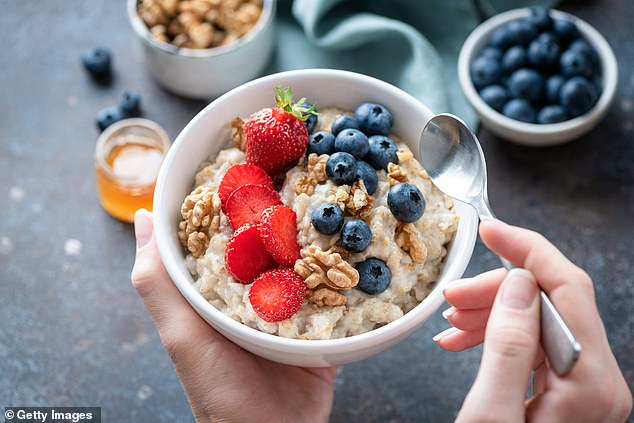
Oats are most commonly eaten in the form of porridge
Oats are a wholegrain rich in beta-glucan fibre, which helps slow digestion and contributes to a more sustained release of energy.
They also provide protein, magnesium, molybdenum, B-vitamin and antioxidant compounds.
Their mild flavour and creamy texture make them particularly versatile for breakfast and baking – who can resist a flapjack?
Ms Vidiar says: ‘Oats are most commonly eaten as porridge but are also used in baking, breakfast cereals and oat milk.
‘It’s quite easy to make oat milk at home – just blend rolled oats with cold water, strain through a fine sieve or cloth, and refrigerate – super easy homemade oat milk is ready in minutes.
‘Steel-cut or soaked oats are better tolerated than instant varieties.’
Typical nutrition (100g cooked)
- Energy: 63-68 cal
- Carbohydrate: 12-28g
- Protein: 2.4-5.9g
- Fat: 0.6-3.6g
- Fibre: 1.7-4g
- Are oats gluten free? Yes
Quinoa
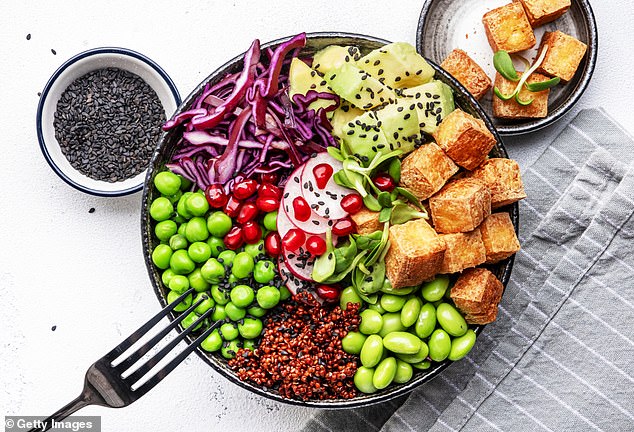
Quinoa is often served as part of a Buddha bowl, a healthy salad packed with colourful food
Like amaranth, quinoa is a seed used like a grain and is often described as a ‘complete protein’ because it contains all nine essential amino acids.
Mr Hobson explains that it contains ‘better protein quality, not dramatically higher protein quantity’ as well as small amounts of naturally occurring unsaturated fats.
‘Taste-wise, it’s light and fluffy with a slight crunch from the germ ring. Neutral but nutty, making it easy to pair with both savoury and fresh flavours.
‘You can boost its nutritional power by adding avocado, olive oil or oily fish which all help with satiety and fat-soluble nutrient absorption.’
He also recommends pairing with vegetables rather than relying on quinoa alone for micronutrients.
Furthermore, rinsing before cooking removes saponins, improving taste and tolerance.
Typical nutrition (100g cooked)
- Energy: 120 cal
- Carbohydrate: 19.4–21.3g
- Protein: 4–4.4g
- Fat: 1.9–2 g
- Fibre: 2.8 g
- Is quinoa gluten free? Yes
Rice
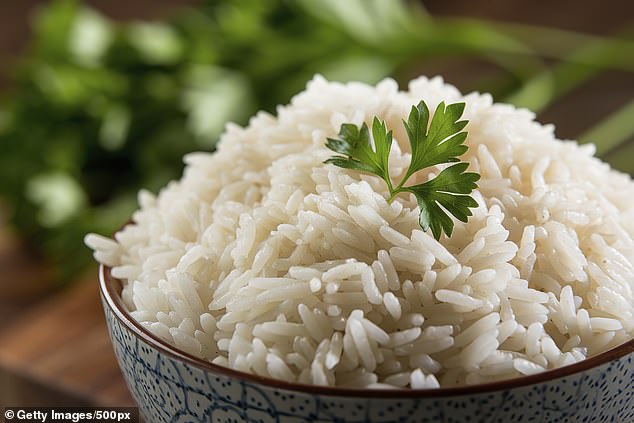
Rice isn’t a major source of vitamins
Arguably the most famous grain in the world – and one of the most widely eaten – rice isn’t a major source of vitamins, but it does quietly contribute to daily mineral intake when eaten regularly.
Adding lentils, beans, tofu, eggs or fish turns rice into a complete, filling meal and improves blood sugar control.
Similarly, mxing rice with beans, vegetables or whole pulses dramatically increases fibre intake and slows digestion.
Mr Hobson says: ‘It has a neutral in flavour and soft when cooked, which is exactly why it works so well as a base.
‘White rice is fluffy and light but brown rice is firmer with a slight chew (I prefer short grain as its less husky).
‘Its mild taste makes it ideal for absorbing flavours from herbs, spices, sauces and broths.
‘Brown rice contains iron and magnesium, but both are better absorbed when eaten alongside vitamin C-rich vegetables such as peppers, greens or tomatoes.’
Another top tip from our experts? Mr Hobson advises ‘cooling cooked rice and reheating it later, which increases resistant starch, which feeds beneficial gut bacteria.’
Typical nutrition (100g cooked)
White rice
- Energy: 123–131 cal
- Carbohydrates: 28–31.1g
- Protein: 2.5–3g
- Fat: 0.3–0.4 g
- Fibre: 0.4–0.5 g
Brown rice
- Energy: 111–123 cal
- Carbohydrates: 23–26g
- Protein: 2.6–3.6g
- Fat: 0.8–1 g
- Fibre: 1.5–2 g
- Is rice gluten free? Yes
Sorghum
Sorghum is a drought-resistant cereal grain that’s rich in fibre and protective plant compounds, and is native to Africa and parts of India.
It has a mild flavour and chewy texture and can be popped like popcorn, cooked into porridge, or used in salads.
Typical nutrition (100g cooked)
- Energy: 144 cal
- Carbohydrate: 26.8 g
- Protein: 3.8 g
- Fat: 1.4 g
- Fibre: 2 g
- Is sorghum gluten free? Yes
Teff
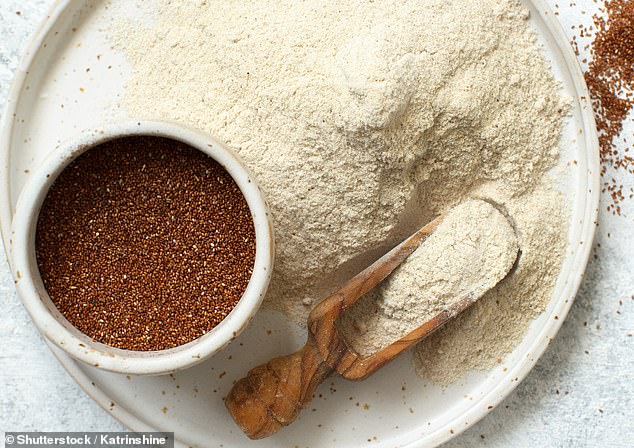
Teff is similar to millet and quinoa
From Ethiopia, teff is a naturally gluten-free ancient grain similar to millet and quinoa, but much smaller, so this means it cooks more quickly.
The tiny grains range in colour from ivory to deep reddish-brown and can be boiled or steamed, used in salads, or mixed with other grains to add texture and contrast so, again quite versatile.
Ms Vidiar says: ‘Teff is also commonly eaten as a porridge, although this can become glutinous or gritty if not prepared carefully.
‘Teff flour is widely used to make gluten-free breads and pasta. In terms of nutrition, teff is one of the most mineral and fibre-rich grains, providing particularly high levels of calcium and iron, along with a good amount of plant protein.’
Typical nutrition (100g cooked)
- Energy: 101 cal
- Carbohydrate: 20 g
- Protein: 4 g
- Fat: 0.7 g
- Fibre: 3 g
- Is teff gluten free? Yes
Wheat
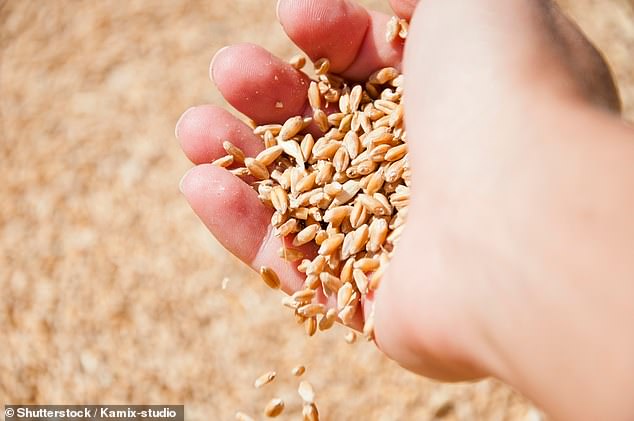
Whole wheat in particular is a good source of fibre, iron, zinc and B vitamins
Wheat is the most widely consumed grain worldwide, and when you consider the myriad ways we eat it, from bread to pasta to pizza and biscuits, it’s no surprise.
Ms Ludlam-Raine says: ‘Whole wheat in particular is a good source of fibre, iron, zinc and B vitamins.
‘Many of the negative perceptions around wheat come from its refined forms, rather than the grain itself.
‘Choosing wholegrain versions of bread, pasta and flour significantly improves its fibre content and nutritional value.’
Typical nutrition (100g cooked)
- Energy: 120–132 cal
- Carbohydrate: 27–28 g
- Protein: 5–5.7 g
- Fat: 0.8–1 g
- Fibre: 4.3–5 g
- Is wheat gluten free? No
What about couscous?
Despite being marketed in the same vein as quinoa, couscous is not a grain; it’s a refined wheat pasta.
‘The biggest myth about couscous is that it’s a grain,’ says Ms Vidiar.
‘In reality, it is a type of pasta made from semolina wheat flour. This means it is strictly not gluten-free and generally lacks the high fibre and protein content of true whole grains like quinoa.
‘In terms of nutrition, it’s closer to white pasta than to whole grains and offers limited fibre or micronutrients unless fortified.’
‘Wholegrain couscous is a better option, but it’s still not equal to intact whole grains like quinoa, millet or barley.’