We must do more to protect businesses that are not just essential for readers but for local communities
Here’s a topical joke for you. Rachel Reeves and a pig walk into a pub in rural Suffolk. The landlord says “We don’t serve your sort in here.” He then turns to the pig and asks: “Now what can I get you sir?”
I admit, this isn’t the best gag I’ve ever written. It does, however, highlight a stark crisis of faith facing the members of the parliamentary Labour Party in their leaders. Theirs was once a party awash with the working class symbolism of after work pints down the pub. Labour of old used to negotiate its position via the medium of beer and sandwiches. Today, their MPs can’t even order an IPA in a constituency boozer without getting slung out. Thanks to the Chancellor’s proposed hike on business rates, one of her suite of cheese pairing taxation policies, if you sit on the Labour benches, then you are barred from a bar stool.
After seven successive policy U-turns, in the mere eighteen months since coming to power, it now seems a fatal malaise has come over the Starmer government. Whenever it announces an economic policy, this is inevitably followed by either a full or partial climbdown a matter of months later. Following debacles such as the Winter Fuel Allowance and the Family Farm Tax, the latest reversal comes in the wake of Ms Reeves’s November budget and her planned reduction in headline business rates for the hospitality industry. This was initially seen as a positive step. However, this was swiftly negated by her planned cessation of Covid-era reliefs and a three-yearly revaluation of property values. These decisions combined to emasculate any benefit caused by the rate cut. As a result, pubs were left facing average rate rises of 76 per cent over three years.
The landlords, like the farmers before them, cried “enough”. Rather than marching on Whitehall in tractors, the licencees simply banned all Labour MPs from their establishments. The parched backbenchers began to grumble in short order. Tonia Antoniazzi, Labour chair of the APPG on beer, eloquently highlighted the role pubs play in community cohesion. Fearing yet another backbench revolt, the Chancellor swiftly slid the Treasury’s Austin Allegro into reverse gear. In another repeating pattern of this Labour government, Rachel Reeves left it to others to do the media rounds after her plans toppled like a drunk — in this case party Chairman Anna Turley. Turley’s explanation of “this isn’t a government U turn, it’s a government that’s listening” left many observers with the expression you make when you miss last orders.
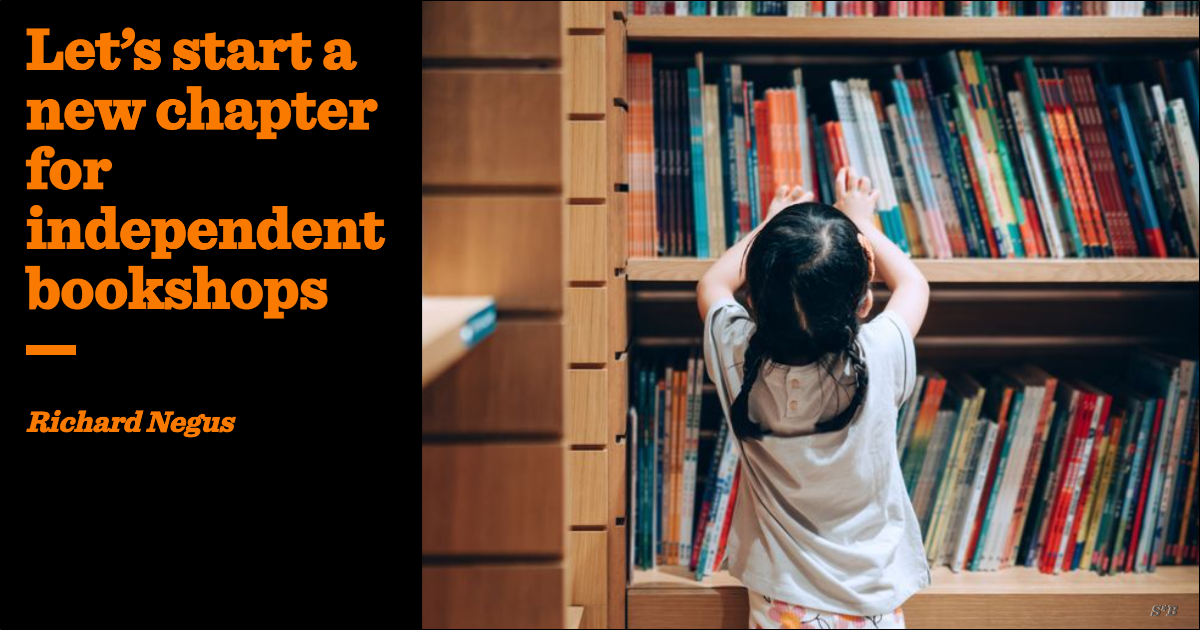
If, as the MPs within the beer trade’s APPG stressed, (which does sound the best of all party parliamentary groups to join) pubs do deserve particular protection, due to both their economic importance and the social and cultural benefits they bring to communities, it does beg a question — why only save the boozer from the business rates hikes? Why not, one wonders, include independent bookshops too? An article in last November’s edition of The Bookseller highlighted fears from the book industry that the business rates issue spelled “disaster” with a “deluge of increased costs for already hamstrung bookshops”. Many independent stores are now facing a trebling of their business rates, a sum very few could withstand.
These are businesses that do so much more than simply sell books
It is easily argued that the 1,052 independent bookshops, who ply their trade in cities, market towns and larger villages, play just as pivotal a role both in local and wider society as pubs do. I discovered this truth last summer on a promotional tour around Britain for my book Words From The Hedge. I visited eighteen shops and attended over twenty literary events, each supported by independent book retailers. Yet these are businesses that do so much more than simply sell books.
For example, at Aldeburgh Books, in the notably artistic Suffolk coastal town, John and Mary James host over forty events each year in their shop, most of which are either free entry or for a minimal cost. While local literati types are regulars at these functions, many authors attract their own fan-base, with some travelling significant distances to meet their literary hero or heroine in person. This out-of-town audience not only helps set the tills ringing in the bookshop itself, but brings additional and much needed out of season trade to pubs, B&Bs, restaurants and, naturally, Aldeburgh’s famed fish and chip shop. Frome’s charming Winston Hunting Raven is a bookshop that is as much a part of the Somerset town’s DNA as the man-made stream called “the leat” that runs down Cheap Street. Tina, the dynamo manager there, highlighted to me not only the cultural significance the shop has for locals, but how she has become a quasi agony aunt, district nurse and confidante. She told me she has contacted social or emergency services at least five times while out delivering books to elderly or house-bound customers. “Books” Tina says “are about everything, therefore our customers feel they can talk to us about anything – from their mental health to how their garden grows. Would they feel as confident about doing that with a bar maid I wonder?”
Certainly one area where the bookshop’s role far outweighs the pubs’ local and national importance is with children and young people. The Education secretary Bridget Philipson has declared 2026 to be the “National Year of Reading”. The Secretary of State cited numerous reports linking reading with “a range of benefits including stronger writing skills, improved wellbeing and confidence, and even higher future earnings”. £27.7 million is being dedicated to support the teaching of reading and writing in primary schools in a bid to reverse the trend among young people who see reading as a chore not a pleasure. In 2025 a survey revealed only one in three young people aged 8 to 18 said they enjoyed reading in their free time. Clearly the bookshops are a vital link in helping Ms Philipson achieve her goals.
Kett’s Books, just opposite the market cross in Wymondham, Norfolk is a prime example of an independent bookshop that is dedicated to inspiring younger readers. Over one third of its floorspace is dedicated to children’s books, with its own dramatic zone. It is decorated as if you are entering a jungle, engendering a feeling of adventure and awe, even in 54 year old children like me. Comfy bean bags and rugs are scattered about to encourage a lengthy stay while books are perused, cogitated over, chosen and then purchased. There is no hint of a librarian’s “shush” in this place where you find juvenile critics happily comparing Julia Donaldson’s Superworm with Lynley Dodd’s Hairy Maclary.
It is perhaps surprising that while many journalists rallied to the defence of pubs in the face of the Reeves business rate reforms, most appear oblivious the impact these will make on independent bookshops. Particularly curious when so many journalists are also authors, and as authors we rely heavily on bookshops for our sales and, through the events they run, for profile building. Confounding too is the seeming disconnect between the Chancellor’s business rate policy and the aspirations of the ministers for health and education. The benefits of reading, both mentally and physically, in old and young alike, are well understood and researched. Of course we could all buy books off Amazon rather than the noble bookshop, but what a soulless (and lowly taxed) way that is to indulge your literary cravings and requirements. I wonder how many of you reading this would, like me, describe the perfect day to yourself comprising an hour or two spent searching around your local bookshop for a riveting read? Better still, once you have made that purchase, if you devour the first few chapters tucked up in a secluded corner of a proper pub, drinking decent beer while a log fire crackles in the grate.