Petrol and diesel lorries could be banned under controversial plans by Labour as part of their Net Zero drive.
Ministers have announced that fossil fuel-powered trucks will no longer be sold and have ruled out allowing the continued use of low-carbon or synthetic fuels.
The latest eco dive means that all new heavy goods vehicles (HGVs) will have to be electric from 2040.
Critics have warned Labour’s controversial plan would push up the cost of business, consumer goods and parcel deliveries as haulage companies would be forced to move to battery or hydrogen-powered vehicles.
It comes as The Mail on Sunday revealed today how Labour’s ‘obsessive’ drive towards Net Zero could cost Britons a staggering £4.5trillion over the next 25 years, official estimates suggest.
Richard Holden, the Tory shadow transport secretary, told The Telegraph: ‘Labour are sleepwalking into a cost shock for the entire economy.
‘Forcing haulage firms to scrap perfectly good lorries while they can still run for years and replace them with other vehicles before either the technology or infrastructure is ready will simply drive up costs, as well as being environmentally disastrous.
‘Those costs will be passed straight through supply chains into higher prices in shops, higher construction costs, and more pressure on inflation.’
The latest move could spark further attacks from the Conservatives and Reform, who have vowed to row back on expensive Net Zero policies.
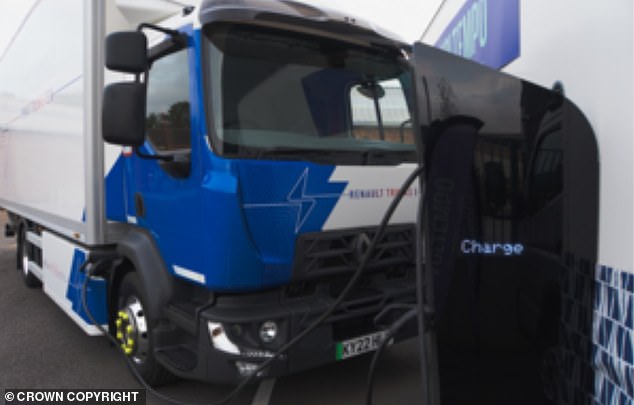
Petrol and diesel lorries could be banned under radical plans by Labour as part of their Net Zero drive. (File image)
Both parties have pledged to scrap the 2030 petrol car ban and cut subsidies to save taxpayers from billions a year.
The 2040 deadline for phasing out petrol trucks was first proposed by the Tories in November 2021.
The Department for Transport last week published three options for enforcing the new petrol lorry crackdown.
Firstly, manufactures would be set annual quotas for the number of electric HGVs they must sell. Secondly, haulage companies could be set carbon emissions caps in a similar approach to the EU.
And finally, deliver firms could be required to ensure an increasing proportion of their fleet was electric, eventually reaching 100 per cent.
Chris Ashley, from the Road Haulage Association (RHA), said: ‘We’re clear that the decarbonisation transition hinges on two key issues being addressed – infrastructure in place to power zero emission HGVs, and vehicle affordability.
‘The pathway to decarbonise lorries and coaches in the UK must be realistic and viable – we’ll look to see how the consultation achieves that.’
Last year, an RHA survey found seven in 10 haulage firms said they had no plans to add zero-emission vehicles due to the extra costs of buying electric lorries and concerns over their lack of range.
According to figures from February last year, there were just 500 electric HGVs registered in the UK out of a total fleet of 535,000.
Last week, the Government announced it was slashing the cost of electric lorries by up to £120,000 in a bid to make it more affordable to hauliers making the switch.
Keir Mather, the minister for transport decarbonisation, said: ‘We’re backing British businesses to go green by making electric lorries more affordable, helping hauliers to make the switch whilst turbocharging growth, investment and jobs in the sector.
‘Our proposals will provide the certainty the industry has been calling for so that Britain becomes the best place for green investment.’