A coherent national interest relies on a coherent nation. That can no longer be assumed.
‘We have no eternal allies, and we have no perpetual enemies’, goes Palmerston’s famous quote; ‘Our interests are eternal and perpetual, and those interests it is our duty to follow.’
In his recent book No More Napoleons, the historian Andrew Lambert argues that Palmerston is enunciating the complex system by which Britain ensured it would never face a Europe once again dominated by a single power. Through a judicious application of naval power, wily diplomacy and the ‘Wellington system’ of limited land-based interventions to secure key areas of the Low Countries, Lambert argues the British “ordered” a stable European system it could balance from offshore.
What is perhaps most remarkable is the sense of continuity between the successive Prime Ministers. Palmerston was merely one in a long line stretching from Liverpool to Asquith, all of whom recognised that British security was built on European stability. Since 1945 our leaders have displayed a similar commitment to the postwar international system and a ‘complacent dependence on the US’, which has allowed us — alongside other European nations — to abdicate responsibility for the defence of our own continent.
Repeated American warnings about inadequate defence spending among NATO members, and Washington’s willingness to override European preferences over Ukraine, have failed to jolt our political class out of this torpor. Perhaps only Donald Trump’s provocations over Greenland may be sufficient to force a serious reappraisal.
Britain will now have to define its national interest anew. That task will be far harder than is often admitted, for the simple reason that the national interest is not a fixed abstraction. It changes as the nation changes — and Britain is going through the most significant demographic change in its history.
To speak meaningfully of Britain’s interests requires some clarity about what Britain now is — and, just as importantly, what it understands itself to be. That question is increasingly under-examined, even as it becomes more urgent.
Public commentary tends to treat generational change as a set of lifestyle curiosities. We are told that Generation Z drinks less or is marginally more religious than its predecessors, as though this was a simple cultural or attitudinal change between otherwise identical generations. Much less attention is paid to the deeper structural realities: Gen Z is the most ethnically and culturally diverse generation in British history. But this is not an incidental detail; indeed, when it comes to the national interest, it is central.
When polling shows that only 11% of young people say they would fight for Britain (and a staggering 41% say there are no circumstances at all in which they would take up arms for their country), the figure is usually presented as evidence of apathy or decadence. But (and this is not to make a monocausal claim) it is not even clear how many of those surveyed understand Britain as their country in any meaningful sense.
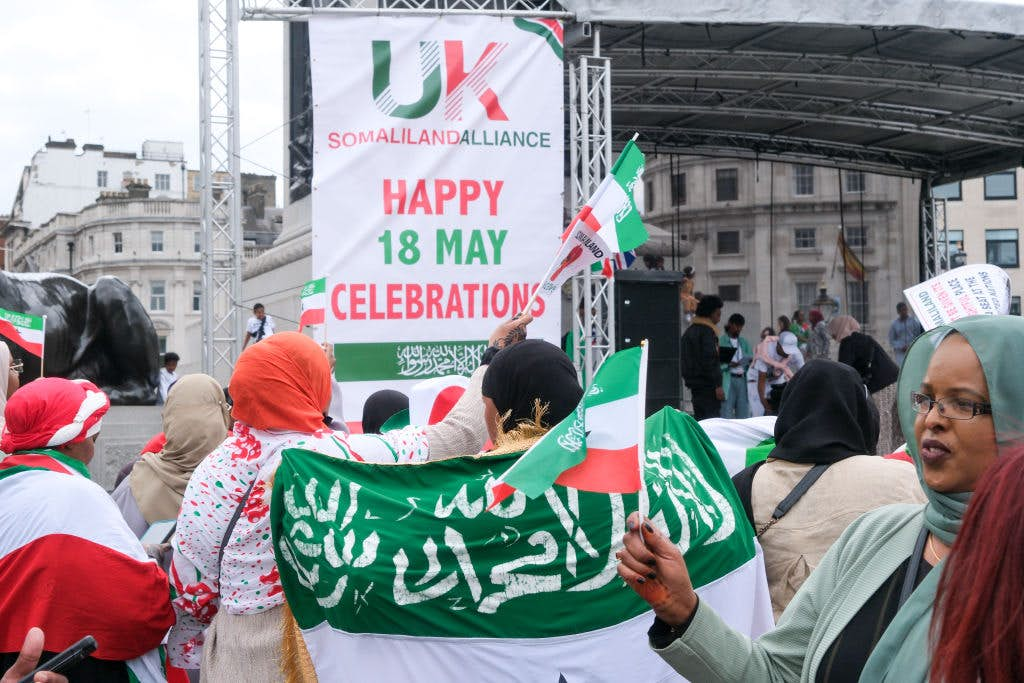
In recent years, this ambiguity has seen an increasing trend in the diaspora of other countries conflating Britain’s national interest with that of their country of origin, or sectarian interest. We have seen this most notably over Gaza, where the national interest has been invoked on behalf of both Palestine and Israel. Both sides seem unable to disentangle Britain’s national interest from their chosen side.
Both sides seem unable to disentangle Britain’s national interest from their chosen side
But this phenomenon is far from confined to the Middle East. British politics has become a venue for proxy foreign policy disputes imported wholesale from elsewhere. An increasingly stark division between Indian voters backing the Conservatives and the overwhelming support for Labour amongst the Pakistani community is demonstrating competing subcontinental narratives bought into UK politics, particularly over Kashmir. The Tamil diaspora is also politically active, utilising UK politics as a way to sanction Sri Lankan politicians. Abtisam Mohamed, the Labour MP for Sheffield Central, recently took to Twitter to declare that the ‘ UK foreign policy should align principle with the reality on the ground and move towards recognition of Somaliland.’ This follows Liverpool City Council’s decision in 2024 to officially recognise Somaliland, at the behest of the city’s Somali population.
None of this should be read to making a moral judgement as to the conflicts in question, on the individuals or communities involved, or even a claim about their sincerity or good faith. It is a question of political attachment; at no point in any of these is Britain’s own strategic interest — its alliances, its constraints, its priorities as a state — treated as uppermost. Rather, Britain is treated as a vehicle to further the causes of particular interest groups in quarrels in faraway countries, between people of whom we know nothing.
In a mass democracy, this outcome is scarcely surprising. Britain has absorbed large numbers of people from more collectivist societies who retain strong external loyalties; they are often geographically concentrated and, increasingly, electorally influential. As Mancur Olson noted in The Logic of Collective Action, organised and motivated minorities will always outcompete a large but fragmented majority – particularly when it only has a vague sense of national purpose. Groups with clearer, narrower and more intense conceptions of interest are better able to concentrate themselves. Mass democracy does not reward moderation or disinterest.
In an increasingly unstable world, the question of whether British foreign policy can remain coherent in the face of mass migration is becoming unavoidable. British foreign policy was able to remain so coherent between Napoleon and the First World War because Britain remained such a coherent political community, capable of identifying interests and acting upon them. That assumption can no longer be taken for granted.