Health chiefs have warned of rising numbers of people becoming addicted to nasal decongestant sprays, which can cause irreversible damage to the airways.
The sprays – available for less than £4 at high street chemists – are a go-to remedy for relieving a blocked nose, especially during cold and flu season.
But concerning new research has revealed that nearly 60 per cent of people are unaware of the risks of long-term use, putting them at serious danger of rebound-congestion.
Research conducted by ITV and Ipsos suggests that more than a fifth of adults who have used the sprays have done so for longer than seven days – meaning around 5.5million in the UK have risked dependency.
Experts at the Royal Pharmaceutical Society (RPS) say that using them for longer than a week at a time can irritate the sensitive blood vessels in the nose, causing swelling.
This in turn makes congestion worse, resulting in a viscous cycle that leaves patients dependent on the medication to help them breathe.
Medically known as rhinitis medicamentosa, it can affect anyone who overuses nasal sprays, triggering irritation, runny nose, sneezing and congestion.
Some patients who have a chronic history of the condition are forced to have surgery to address damage caused by chronic swelling, which can lead to breathing problems and facial disfigurements.
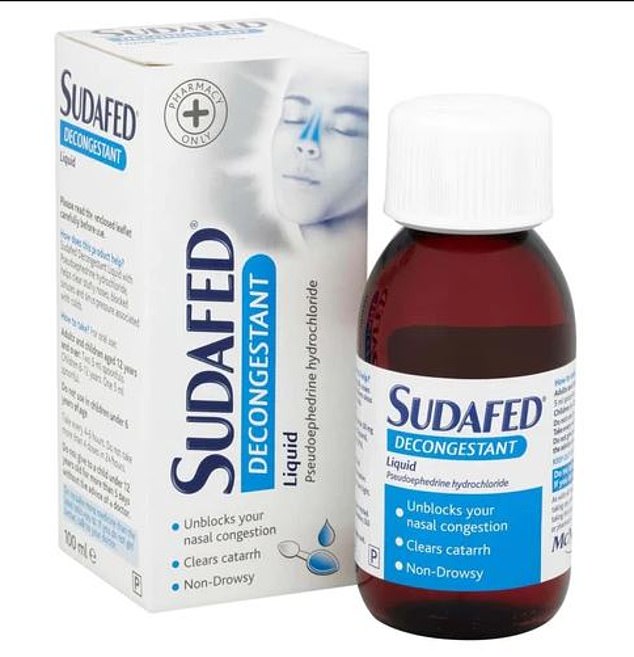
Patients are becoming increasingly reliant on nasal decongestant sprays which can cause irreversible damage to the airways, experts have warned
Now, the RPS are calling for the risks of overusing these medications, such as Sudafed and Vicks, to be clearly labelled on medication packaging.
Professor Amira Guirguis, chief scientist at the RPS, said: ‘Our research shows that many people are unaware of this risk, which means they may continue using these sprays without realising they could be prolonging their symptoms.
‘We’d like to see clearer warnings on the packaging which you can’t miss and greater awareness of the seven-day limit.’
Others, who have been affected by the problem, have previously called for the medications to be made available by prescription only, so GPs can monitor and limit the supply.