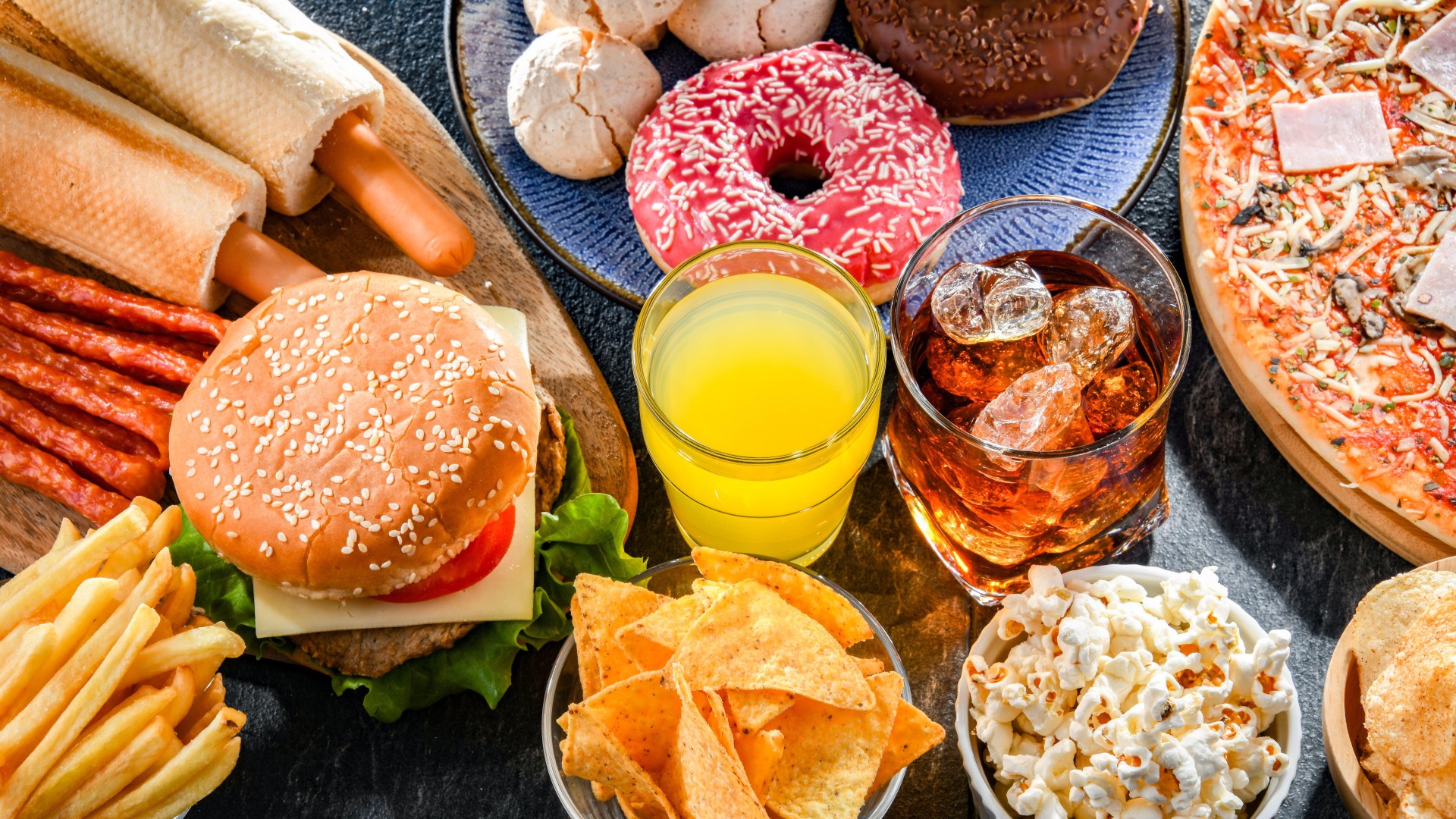
SCOFFING junk food regularly could raise the risk of developing certain cancers by almost a third, a study suggests.
Foods laden with preservatives such as ready meals and crisps have been vilified for decades over their alleged risks, with dozens of studies linking them to a host of diseases.
Experts have even called for ultra-processed foods (UPFs) – typically anything edible that has more artificial ingredients than natural ones – to be slashed from diets.
Now in a major review, scientists in France discovered that frequently consuming foods packed with six specific preservatives was linked to higher rates of cancers including breast and prostate.
The preservative sodium nitrate, often found in processed meats like bacon and salami, raised the risk of prostate cancer alone by 32 per cent, they said.
The researchers said they could not prove exactly why the six preservatives were linked to a higher risk of cancer.

But they suggested that some compounds could impact how the body’s immune system responds to threats, potentially ‘triggering the development of cancer’.
Experts today also stressed that further research was vital before calling on manufacturers to overhaul how they use preservatives.
Writing in the journal The BMJ, the researchers from Université Sorbonne Paris Nord and Université Paris Cité said: “Preservatives offer clear benefits by extending shelf life and lowering food costs, which can be particularly important for populations with lower incomes.
“However, the widespread and often insufficiently monitored use of these additives, with uncertainties of their long term health effects, call for a more balanced approach.”
In the study, researchers tracked the health and dietary habits of more than 105,000 people, aged 42 on average.
Over a follow-up of more than seven years, they discovered 4,226 people had received a diagnosis of cancer, of which more than 1,200 were breast, 500 prostate and 350 colon.
Of the 17 individually studied preservatives, 11 were not associated with cancer incidence.
People who had high intakes of six others, however, had an increased risk of developing cancers compared to those with low intakes.
The scientists discovered that potassium sorbate specifically, found in pastries, icings, processed meats and certain condiments, was linked to a 14 per cent increased risk of overall cancer and 26 per cent increased risk of breast cancer.
Sulfites, which are commonly used in baked goods like crackers and certain cereals, bottled juices and sausages, raised the risk of cancer overall by 12 per cent.
Sodium nitrite, meanwhile, was associated with a 32 per cent increased risk of prostate cancer, with potassium nitrate raising the risk of overall cancer (13 per cent) and breast cancer (22 per cent).
Acetates, found in processed meats, baked goods and ready meals, were associated with an increased risk of overall cancer (15 per cent) and breast cancer (25 per cent).
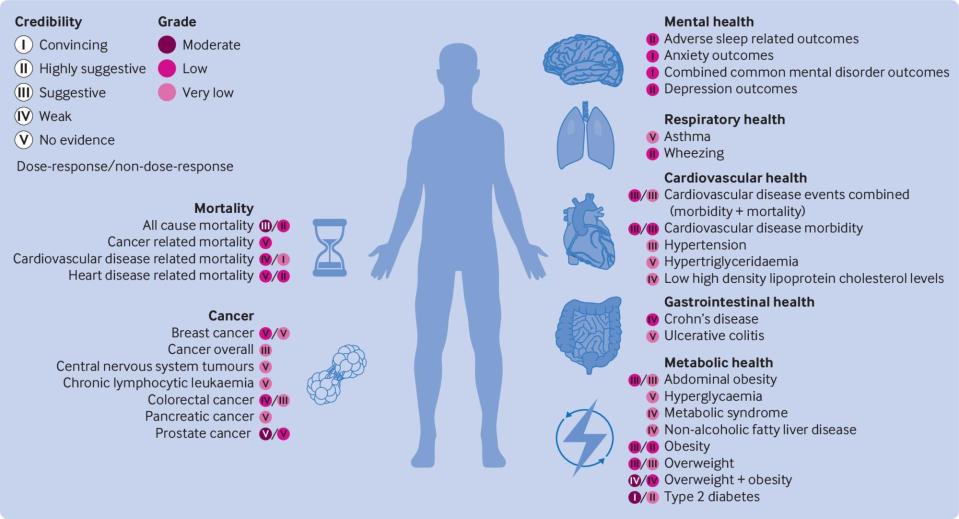
Experts today, however, cautioned that while the study had ‘many strengths’, people should not panic over the findings.
Rachel Richardson, a methods support unit manager at The Cochrane Collaboration, said: “It’s worth pointing out that the associations found were generally modest and the margins of error mean that the true effect could be very small.
“For example, the increased risk of any cancer with a higher consumption of acetic acid was 12 per cent, but it could be as low as one per cent.”
Professor Gunter Kuhnle, a professor of nutrition and food science at the University of Reading, added: “The unreliability of the data is highlighted by the results which disagree with most other data: for example the adverse health effect of nitrite is well established and higher intake results in a higher disease risk.
“However, the current study suggests that only moderate – but not high – intake is associated with higher risk of cancer.
“In the UK and the EU, all permitted food additives are regularly reviewed for their impact on health.
“Regulators such as the UK’s Food Standard Agency (FSA) or the European Food Safety Authority (EFSA) review toxicological and other scientific data to ensure that potential risks are identified.
How ultra processed is YOUR kitchen?
Ultra processed foods (UPFs) were defined by Brazilian researchers who made the NOVA classification system. It breaks foods into groups depending on how processed they are. The most natural foods are in group 1, while the most processed are in group 4.
The groups do not entirely indicate how healthy a food is. However, it does indicate how processed it is – and studies have linked UPFs to a number of diseases.
How does your kitchen compare to the following groups?
Unprocessed or minimally processed foods (group 1)
- vegetables and fruits (fresh or frozen)
- dried fruits with no added sugar, honey, or oil
- grains and legumes (chickpeas, lentils)
- meat, poultry, fish, seafood, eggs
- milk without added sugar
- plain yogurt with no added sugar
- nuts and seeds
- spices and herbs
- tea, coffee, water
Processed culinary ingredients (group 2)
- iodized salt
- salted butter
- sugar and molasses from cane or beet
- honey extracted from combs
- syrup from maple trees
- vegetable oils crushed from olives or seeds
- butter and lard from milk and pork
- starches extracted from corn and other plants
- vegetable oils with added anti-oxidants
- vinegar with added preservatives
Processed foods (group 3)
- canned vegetables, fruits, and legumes
- fruits in syrup
- salted or sugared nuts and seeds
- salted cured or smoked meats
- canned fish
- artisanal breads and cheese
Ultra-processed foods (group 4)
- pop and fruit drinks
- sweetened yogurt
- sweet or savoury packaged snacks (e.g., cookies)
- candies and cake mixes
- mass-produced packaged breads and buns
- margarines and spreads
- breakfast cereals
- cereal and energy bars
- energy drinks
- instant soups, sauces, and noodles
- poultry and fish nuggets, hot dogs
- many ready-to-heat products: pre-prepared pies, pasta, and pizza dishes
“While some members of the public might be concerned about the safety of food additives following this study, in my view the study does not contain any data that justify such concerns.”
The umbrella term UPFs is used to cover anything edible made with colourings, sweeteners and preservatives that extend shelf life.
Ready-meals, ice cream and tomato ketchup are some of the best-loved examples of products that fall under the umbrella UPF term.
This is now synonymous with foods offering little nutritional value.
They are different to processed foods, which are tinkered to make them last longer or enhance their taste, such as cured meat, cheese and fresh bread.
The UK is the worst in Europe for eating UPFs, which make up an estimated 57 per cent of the national diet.
Experts recommend around 80 per cent of our diets should be from whole or minimally processed foods – fresh meats, fruit, vegetables, cheeses, nuts, whole grains and legumes.