Westminster’s politics are switched to easy settings while Farage thrives on cheat mode

“Nobody is listening to her!” Keir Starmer was taunting Kemi Badenoch, and he had a point. Facing a government in trouble, which is retreating on multiple fronts, she had chosen to use Prime Minister’s Questions to ask about Ukraine and Donald Trump, two areas where she essentially agrees with him. The trouble is that no one much is listening to Starmer, either.
Nigel Farage wasn’t even there. His ego, swollen by his poll rating, will no longer allow him to be anywhere where he isn’t the main event. Instead, he held a press conference on the other side of town that lasted close to two hours. We can only imagine how long Prime Minister’s Questions will take if he ever gets the top job. It’s churlish to complain when someone takes every question they’re asked, as Farage often does, but he could be a touch briefer in his answers, which are starting to take on Fidel Castro proportions.
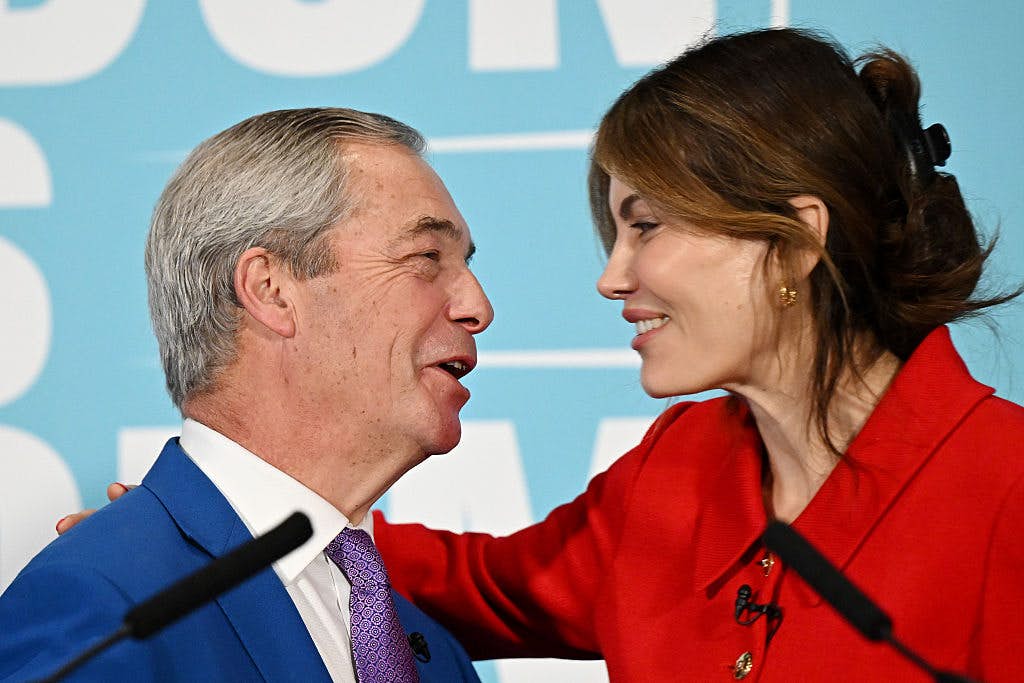
He was in the Glazier’s Hall, which is next to the Bermondsey Bierkeller. Farage excitedly reminded us that the last time he’d been there, he’d been taking control of the party back from Richard Tice. Leading a putsch, as it were.
We were there to talk about London. He was about to announce the party’s candidate for London Mayor. Next week he’ll announce the party’s new Scottish leader. Both have been chosen using the Reform Party’s system of one man, one vote. The man in question being Farage.
To no one’s surprise, the Mayoral candidate is Laila Cunningham, a former lawyer, former entrepreneur, and self-described vigilante mum. You can see why Farage likes her: she’s an articulate speaker who takes no prisoners and has an eye for the main chance. This time last year, she was a Tory councillor. Now she’s Reform candidate for mayor. (Reform is very much the party for people who feel the world hasn’t recognised their true talent.) Cunningham turns out to be one of those politicians to whom people are always coming up and saying the exact thing that proves their point. She promises to be a terrific source of material, at least for sketchwriters.
“Parties I have led in the past have not done particularly well in the capital,” Farage said, and we savoured the wonder of a politician who can refer to “parties” that they’ve led. Anyway, this was all about to change, he said, because the city is a disaster zone, a Mad Max-style hellscape.
London, Farage told us, “is now being talked about around the world in increasingly disparaging terms.” Who by, Nige? Anyone you know? You couldn’t go out in London any more, for fear of being stabbed or raped. There was more, so much more, of this. Cunningham said things had been better when she was growing up, and that her parents hadn’t worried about her riding the Tube as a 10-year-old. We marvelled briefly at the idea that London Underground had been safer in 1987, the year of the King’s Cross fire.
Let us leave aside the point that statistics simply do not bear out Reform’s picture of London. After all, as Farage pointed out, you can only believe the stats he likes, and what are facts next to anecdotes from strangers on Facebook? It may well be possible to persuade people in Dubai or Chicago or Wigan that London is a crime-ridden hellhole where everyone is stabbed as they walk out their front door, but will it work on actual Londoners? Do people want to vote for parties that noisily hate the place where they live? “It’s the greatest city in the world,” Cunningham said, trying to walk the tightrope, “but I’m not blind to what it’s become.” Perhaps the Reform promise is going to be that if we put them in charge, they’ll stop going on American TV to talk about how awful the place is.
Over the course of the questions that followed, Farage’s mood, flitted between “wildly triumphalist” and “angrily snippy”. He was asked about his days as a teenage fan of 1930s strong-man politics. At the end of last year, he was apologising for this, but his position has shifted again, and now the stories are “complete made-up fantasies”.
It is amazing that he can get away with such inconsistencies, but if the Conservatives play politics on the easy setting, Farage seems to have discovered a cheat mode. Not only does he have a TV channel that supports him so much it pays him hundreds of thousands of pounds a year, he has newspapers so supportive that the Daily Express asked him if the Conservatives shouldn’t be standing down candidates in his favour. There are news outlets in North Korea that would be embarrassed about that.
Do people want to vote for parties that noisily hate the place where they live?
One of Farage’s revenue streams is X, the social media site that Ofcom urgently wishes to speak to about the ability of its Grok AI facility to undress women and generate child porn. He has been paid just under £13,000 by the company since entering parliament. Was he still comfortable taking money from the company? Cunningham gasped at the temerity of the question.
Farage seemed briefly worried. He complained first of all that the parliamentary register of interests doesn’t allow him to offset his expenses. To be fair, it wasn’t set up for people who view being an MP as a money-making enterprise. But the short answer is that he will continue to take the X cash.
Other party leaders aren’t on the X payroll, but their answers are hardly better. After PMQs we asked their spokespeople what they were doing about the company. Number 10 explained that the situation was “unacceptable”, although the prime minister’s continued presence on X suggests that he can, in fact, accept it. Badenoch’s spokesman gave a forthright denunciation: “There has to be something done.” What? Who should do it?
There are many political questions that are genuinely difficult, as the current rows over Venezuela and Greenland show. It’s hard to see why “Should we continue supporting the use of an app that can be used to generate child porn on demand?” is one of them, but what do I know? Badenoch’s spokesman added that we would not be able to find a difference between the Conservatives and the government on this. Which is correct, because neither of them is doing anything. No one is listening to them, but what would be the point?