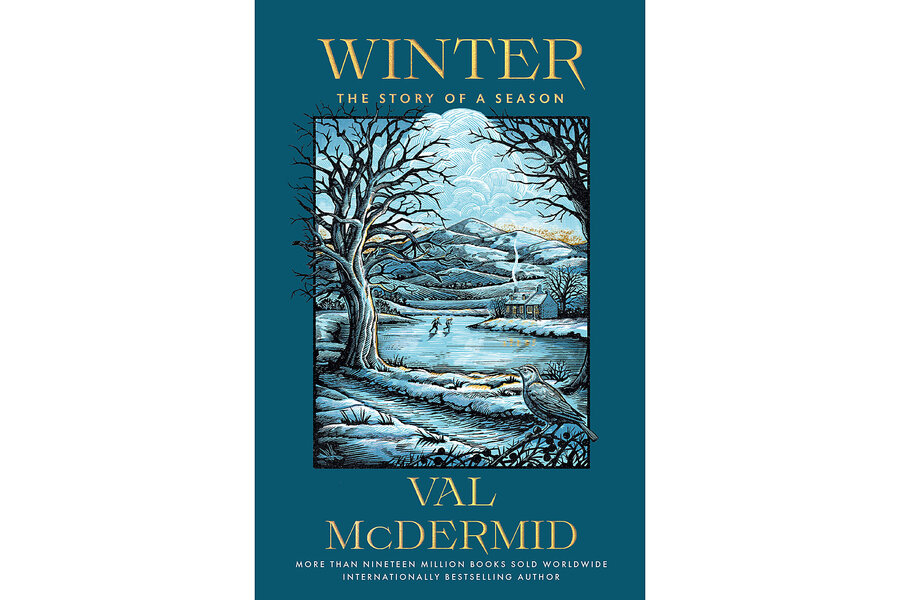
Val McDermid, the popular Scottish writer whose intricately plotted “tartan noir” crime novels are awash in gore, took a break from what she calls “my usual gig of murderous fiction” to write “Winter: The Story of a Season.”
It’s a lovely, gentle little book, a warming meditation on the coldest, darkest time of the year. “Winter” celebrates how local Scottish traditions take the bite out of short, frosty days and long, windblown nights. These include not just holidays and festivals, but excursions to the three iconic bridges of the Firth of Forth in Queensferry (which are usually overrun by tourists in the warmer months), and comforting suppers of homemade soup, which she touts as “central heating for the soul.” Philip Harris’ beautiful drawings complement the author’s resonant blend of personal memories and cultural history.
McDermid notes that on the winter solstice, Dec. 21, the sun doesn’t rise in Edinburgh until 8:43 a.m., and sets at 3:39 in the afternoon, a mere seven hours later. “Nothing says ‘Scotland in winter’ like walking to school with dawn barely broken, then walking back in the dark,” she writes, recalling her childhood in Fife in the 1960s.
Why We Wrote This
Winter comforts offer a respite from Scotland’s short days and long nights. Not just festivals like Burns Night (Jan. 25), but also cozy evenings at home help stave off feelings of deprivation. Even homemade soup, which mystery novelist Val McDermid calls “central heating for the soul,” plays a warming role.
It’s no wonder, McDermid writes, that Scots love Christmas lights, sparklers, and the fireworks that brighten the sky on Bonfire Night, Nov. 5, a holiday that commemorates Guy Fawkes’ failed attempt to blow up the Houses of Parliament in England in 1605. Such festivities, she writes, “take our minds off the privations of the season” and serve as reminders that brighter, longer days will return.
Among the celebrations McDermid extols is Hogmanay, “the signature Scottish festival in the eyes of the outside world,” which begins on the last day of the year – Auld Year’s Day. She says that when she was growing up, Dec. 31 was traditionally a day of housecleaning, baths, haircuts for the men, and “something tartan-and-shortbread Scottish” on television – often featuring kilted dancers. After the New Year was rung in, everyone eagerly anticipated the First Foot – the first friend or neighbor to cross one’s threshold, bringing good cheer and good fortune.
These homey traditions have ebbed over the past few decades, replaced by large outdoor celebrations such as the annual giant street party that takes over Edinburgh.
More to her liking is Burns Night, Jan. 25, which celebrates the national bard, Robert Burns, at a banquet featuring a dinner of “haggis, neeps and tatties.” She helpfully translates the dishes as “sheep’s offal cooked in a sheep’s stomach with oatmeal and spices, including a lot of white pepper; mashed swede/rutabaga; [and] mashed potatoes.” McDermid, an admirer of the poet, has given the ceremonial toast at the event.
“Winter” is spiced with local dialect, some obscure, like neep, or swede for rutabaga, others needing no translation, such as dooking for apples, jeely pan, and Loony Dook, a fundraiser for charities that involves a dunk or plunge into the bitterly cold waters of South Queensferry.
The plunge McDermid takes each January is of a different sort. After the holidays, she hunkers down to begin writing that year’s book. (She has written more than 40 so far.) McDermid extols the satisfactions of burrowing into her work.
But when she needs a break, she hies over to the National Gallery of Scotland to see the annual display of 38 of the 19th-century English painter J.M.W. Turner’s finest watercolor sketches, exhibited free of charge during the month. The collection, funded by a man who made his fortune in hatmaking, reminds McDermid – a miner’s granddaughter who graduated from Oxford University and became a successful writer – “of the power of dreaming, of holding fast to ambition even when its realisation seems against the odds.”
Back at her desk, McDermid spends the winter laboring happily. And as the days grow longer, so does her new book.