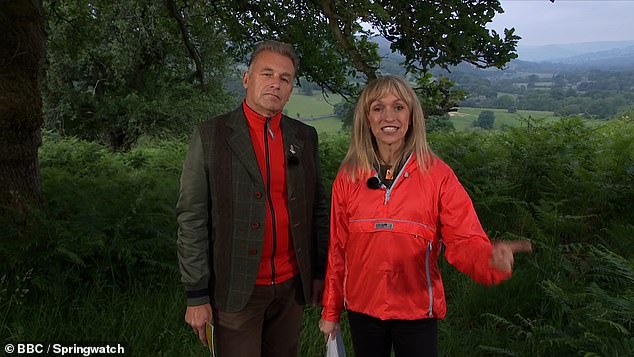
The RSPB has been accused of neglecting two of its nature reserves in favour of the one used on BBC Springwatch.
The bird charity has been accused of focusing its time and money on RSPB Arne, the Dorset site where Chris Packham and Michaela Strachan regularly host the acclaimed wildlife show.
But the RSPB has caused anger after it announced it would cutback on its resources at two nearby wetland locations, Radipole and Lodmoor.
It is getting rid of eight wooden viewing platforms that ornithologists stand on to get a better view of birds like lapwings and marsh harriers.
The charity, which, according to its most recent annual report, has an annual income of £195million, claims it can’t afford the £100,000 to replace the structures and they must come down before they become a health and safety hazard.
Continued work to cut back brambles and vegetation on footpaths around RSPB Lodmoor and RSPB Radipole in Weymouth will also stop, meaning they will soon become impassable to visitors.
This will save the charity between £5,000 and £10,000 a year.
Teams of volunteers who dedicate their time clearing both sites of litter say the news is a kick in the teeth.
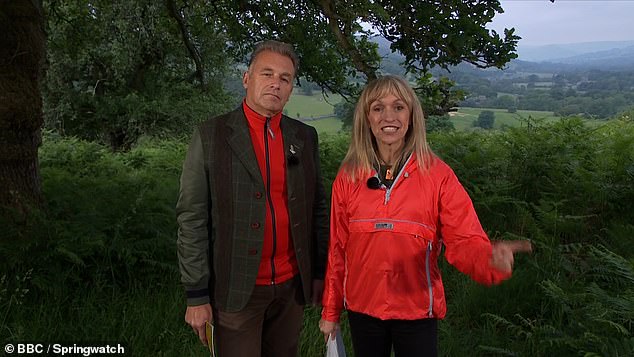
The RSPB has been accused of focusing its time and money on RSPB Arne, the Dorset site where Chris Packham and Michaela Strachan regularly host the acclaimed wildlife show
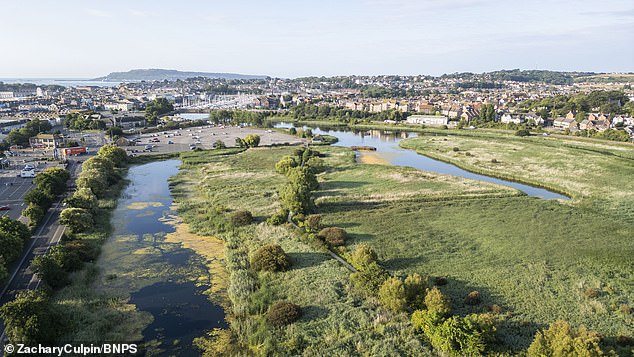
But the RSPB has caused anger after it announced it would cutback on its resources at two nearby wetland locations, Radipole (pictured) and Lodmoor
Dave Taylor, who volunteers at RSPB Radipole, said: ‘We have been down there for over four years and in that time the site has gone downhill.
‘It’s continually strewn with rubbish, including shopping trolleys, traffic cones and bikes.
‘We have invested a lot of time trying to keep Radipole lake litter free.
‘The RSPB don’t seem to care about Radipole and Lodmoor, they just seem to focus on Arne.
‘The attention given to the reserve has visibly decreased over the past few years with the RSPB more focused on Arne.
‘They regularly post on Facebook things that are happening at Arne but they never acknowledge or share the volunteer work at Lodmoor and Radipole.’
Mr Taylor said the decision ‘not to bother cutting back vegetation and keeping the paths is the final straw’.
‘Ten thousand pounds is what they will save a year by not doing that. It is a drop in the ocean compared to the £175million a year they bring in,’ he said.
‘They must get some money from the BBC for all the filming they do at RSPB Arne. You would think that would filter down to other sites, but it doesn’t.’
Mr Taylor said the RSPB should now hand over the running of the sites at Lodmoor and Radipole to the local wildlife trust or Dorset Council.
Volunteer Alan Membury said: ‘As a member and a volunteer I must say I am bitterly disappointed.
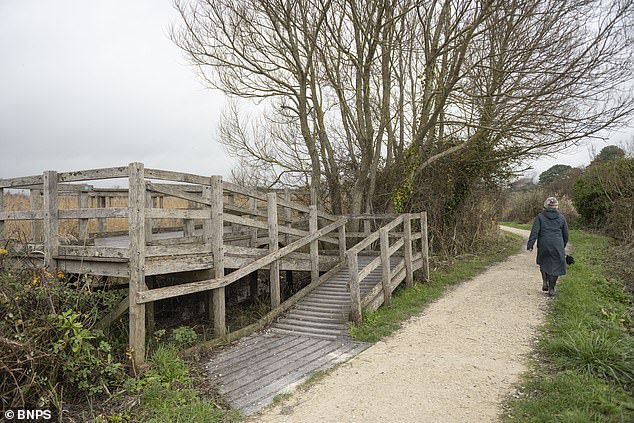
The bird charity is getting rid of eight wooden viewing platforms that ornithologists stand on to get a better view of birds like lapwings and marsh harriers
Work to cut back brambles and vegetation on footpaths around RSPB Lodmoor and RSPB Radipole in Weymouth will also stop, meaning they will soon become impassable to visitors
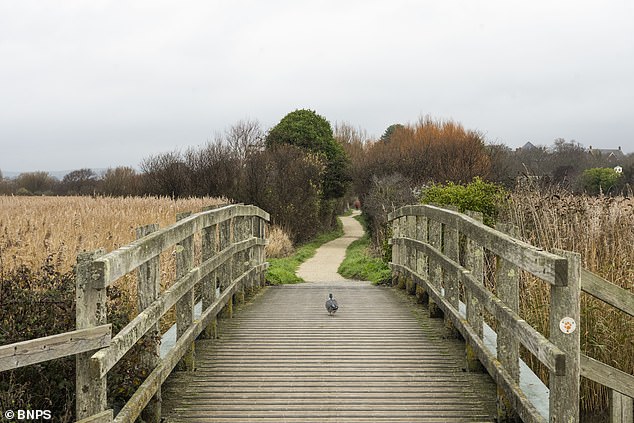
Teams of volunteers who dedicate their time clearing both sites of litter say the news is a kick in the teeth (Pictured here is RSPB Radipole in Weymouth)
‘These sites are the Crown Jewels in an urban area. I cannot see friends groups working without the support of the RSPB or council with potential equipment, health and safety and insurance issues.’
Local resident Judy Neal described the RSPB’s decision as ‘appalling’.
She said: ‘It’s been apparent for some time that the focus and energy of the RSPB has been directed towards Arne.
‘Radipole is a special place in Weymouth for locals and visitors alike, this ‘downgrading’ is appalling.’
Lizzie Miller posted on social media: ‘What’s the point in being a member of the RSPB if they are not going to look after sites local to me?’
A spokesperson for RSPB Arne & Weymouth Wetlands said they had identified ‘improvements and efficiencies’ at Radipole and Lodmoor.
They said: ‘This will include the removal of a set of platforms at Radipole this winter, which have reached the end of their safe working life.
‘While key paths will be maintained, we will no longer be maintaining all the paths and sight lines ourselves, to save on the significant staff and volunteer time needed to cut back the vegetation.
‘However we are looking at how we might support our volunteers or a local ‘Friends of’ group who can take on responsibility for some path maintenance.
‘We are not scaling back or limiting our ambition to fight for nature and wildlife.
‘Our nature reserves are fundamental to who we are and what we do.
‘Our long-term aim is simply to focus on what we do best and where we can do this most effectively, and we’re continuing to grow the area of land that we manage and conserve for nature year on year.’
The charity further told the Mail: ‘We have also invested in the sites over the last 12 months, including replacing the visitor footbridge at Radipole, installing a new water control structure at Lodmoor, carrying out channel clearance at Radipole, reed cutting at both reserves as well as exploring the feasibility of restoring Radipole Lake.
‘Encouragingly, our 2024 full reserve survey recorded record numbers of Cettis Warblers (the second highest for any RSPB reserve) and Bearded Tits across both reserves.’