At 27, newly engaged Bethany Backhouse – a medical researcher from Staffordshire – should be happily lost in wedding plans with her partner, Neil. Instead, she’s worrying about her health and whether she’ll ever have children.
Bethany has polycystic ovary syndrome (PCOS), a condition that affects about four million women in the UK – yet as a new report reveals, it is frequently overlooked and misdiagnosed.
The consequences can be severe, even life-threatening, because the condition can lead to pregnancy complications including pre-eclampsia (high blood pressure), miscarriage and pre-term birth if left untreated – as well as serious health problems such as type 2 diabetes, heart disease and endometrial cancer.
PCOS is also the leading cause of infertility in young women: studies show more than 40 per cent of cases are linked to the condition.
Bethany had first noticed something was wrong four years ago when her periods stopped. Doctors had induced a temporary medical menopause, halting her cycle, to ease the severe period pain caused by endometriosis, which she’d been diagnosed with at 17.
But when the treatment finished, her periods never returned.
‘I was told this was normal, but I knew it wasn’t,’ she says. After two years of asking her GP for help, Bethany was finally referred to a gynaecologist, where an ultrasound scan revealed she had PCOS.
Her diagnosis finally shed light on the unexplained symptoms she’d endured for years, including weight gain, stubborn facial hair and chronic fatigue.
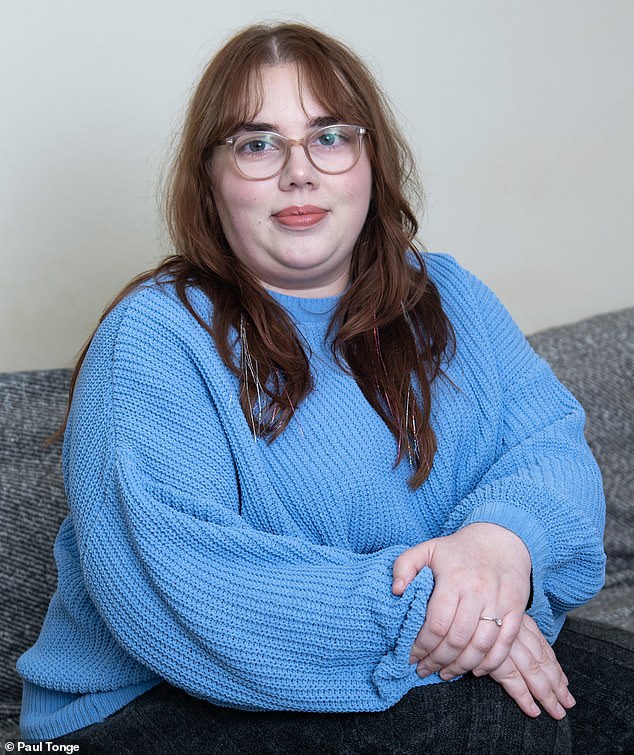
Newly engaged Bethany Backhouse, 27, has polycystic ovary syndrome (PCOS) and says her diagnosis was ‘frustrating, challenging and emotional’
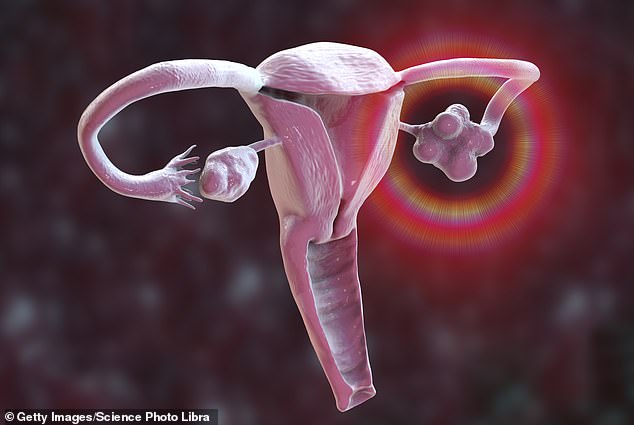
PCOS affects about four million women in the UK but is often overlooked and misdiagnosed
But at the age of 25, it also came as ‘a huge shock’. ‘I knew I wanted children one day,’ Bethany adds.
While getting the right diagnosis had been ‘frustrating, challenging and emotional’, she says what makes it worse is that there’s little help available.
Her experience is far from unique. More than a third of women with PCOS wait more than four years for a diagnosis – and up to 70 per cent remain undiagnosed, according to a recent report from the All-Party Parliamentary Group (APPG) on Polycystic Ovary Syndrome, which lays bare widespread failures in NHS care.
Its first report, produced in conjunction with the PCOS charity Verity, concluded that the condition receives ‘minimal attention in GP and nursing training’.
Part of the problem is that PCOS is ‘a complex hormonal and metabolic disorder’, as Dr Raef Faris, a consultant gynaecologist at the Lister Fertility Clinic in London, puts it.
The exact cause is unclear – one theory is that it’s linked to abnormal hormone levels triggered by the ovaries or by the brain.
And as many as 30 genes may be linked to the condition – and it tends to run in families (a study found that 35 per cent of the mothers and 40 per cent of the sisters of women diagnosed with PCOS are also affected).
Diagnosis is based on having two of the following: high levels of androgens (‘male’ hormones such as testosterone, which can lead to excess hair and acne); irregular or no periods; and multiple follicles (tiny sacs that contain immature eggs) in the ovaries identified on an ultrasound scan.
But even then the picture is not straightforward – for while many women with polycystic ovaries have normal hormone levels and fertility, it’s possible to have PCOS and abnormal hormone levels without polycystic ovaries.
Some women with PCOS are insulin-resistant, which means their cells do not respond to insulin – the hormone that controls blood sugar. This can lead to type 2 diabetes and weight gain. For these women, losing weight is very difficult, says Dr Faris.
Yet other women with PCOS remain slim – about 20 per cent have ‘lean’ PCOS, which means they have high male hormones but no insulin resistance.
Worryingly, ‘there’s a persistent attitude in the medical profession that PCOS is just about fertility – but it’s not’, explains Dr Faris, adding: ‘When we ignore all that, we fail women. There is a lack of coordinated care between gynaecologists, dermatologists, dietitians and psychologists.’
Indeed, current access to treatment depends on where you live, says Dr Itunu Johnson-Sogbetun, a GP with a special interest in women’s health who also has the condition herself.
‘In some areas, women can get an ovarian scan within weeks. In others, it’s six months. And in some areas, women with excess hair can get laser hair removal but, elsewhere, it’s not funded.’
Bethany has faced numerous obstacles in getting the treatment she requires. ‘Thin as a stick’ until she was 18, her weight then ballooned from a size 12 to size 22 in just over two years.
After many failed attempts to lose weight on her own and after her PCOS diagnosis, too, she asked to be referred to a dietitian – but her GP refused.
Studies have found that 74 per cent of women with PCOS become overweight or obese, some three times the rate of those without the condition.
This extra weight increases their risk of health conditions, including type 2 diabetes.
‘I could see a dietitian if I had diabetes,’ says Bethany, ‘but in my area, with PCOS the only option was bariatric surgery.’
She adds: ‘I’ve also been sent to a sleep clinic because my GP didn’t believe my fatigue was related to PCOS. They thought it must be due to sleep apnoea [where you stop breathing temporarily during the night] because of my weight.’
Rachel Morman, chairman of Verity, says the parliamentary findings confirm what women have long described: ‘They’re often dismissed or told their symptoms are normal.’
Treatment depends on the symptoms. Dietary advice is important for those with weight problems, and some women may be prescribed weight-loss jabs (GLP-1 medications, such as Ozempic and Wegovy, which can also improve insulin resistance) or the diabetes drug metformin (which can help regulate periods and reduce symptoms such as acne and excess hair, by targeting insulin resistance), says Dr Faris.
Irregular periods are often treated with the combined contraceptive pill. ‘For excess hair or acne, anti-androgens – such as spironolactone or Dianette – can help alongside laser treatments,’ he adds.
Although women often worry that missing periods means their egg supply is running out, the outlook for fertility is actually encouraging, says Dr Faris.
Women with PCOS have plenty of eggs; the issue is ovulation. This can be successfully stimulated with drugs such as clomifene or injectable follicle-stimulating hormones. ‘The success rate for fertility treatment is high,’ he adds.
Join the debate
Why do you think women’s health issues like PCOS are so often dismissed or misdiagnosed?
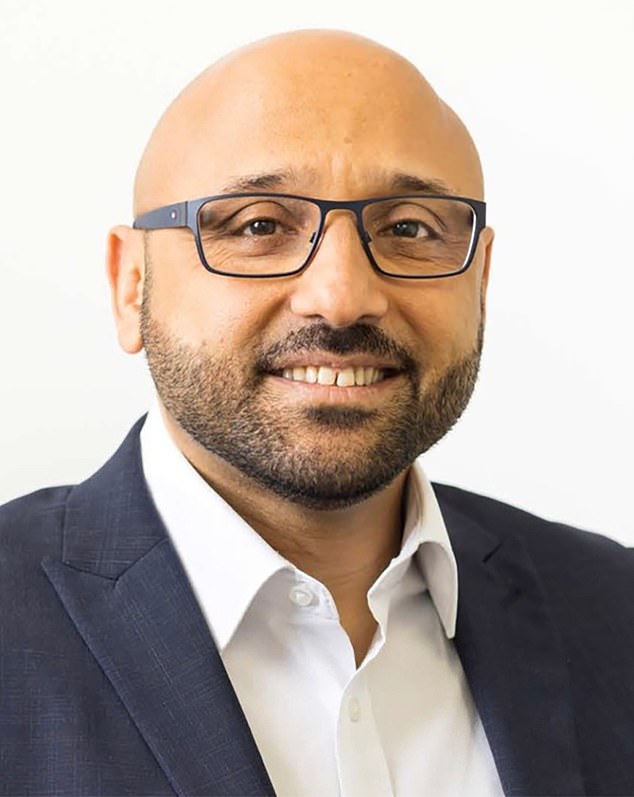
Dr Raef Faris, a consultant gynaecologist at the Lister Fertility Clinic in London, describes PCOS as ‘a complex hormonal and metabolic disorder’
The APPG report also emphasises the serious but often overlooked impact on mental health.
Rates of anxiety and depression are up to three times greater than in women without the condition. However, there is no standard NHS referral for psychological support.
The good news is that the National Institute for Health and Care Excellence (NICE) recently announced it would adopt international PCOS guidelines. This could help reduce the postcode lottery by setting clear expectations for the type of treatment women should receive, says Dr Johnson-Sogbetun.
The guidelines include the option of a blood test for raised levels of anti-mullerian hormone (AMH), which can indicate high numbers of eggs, typical of PCOS, rather than having to wait for an ultrasound scan.
This could speed up diagnosis, especially in areas with long waits for imaging.
After her diagnosis, Bethany was prescribed metformin, but she suffered badly with known side effects – severe nausea and vomiting – and is now also taking anti-sickness medication.
Though she still doesn’t ‘feel 100 per cent’, her periods are becoming more regular, so it seems to be working. She’s been told that if she wants children, she should ‘try sooner rather than later’.
As Bethany puts it: ‘I’m in a committed relationship, so I can at least consider it, but it’s a big decision.’
Meanwhile, she hopes the new guidelines will finally bring better, more joined-up care: ‘Women deserve better than being told this is just how it is.’