Turmeric is often mentioned in the same sentence as garlic or ginger, and for good reason—just like them, it also straddles the worlds of ‘food’ and ‘medicine’ and is just as likely to be found in the wellness aisle as it is in the pantry.
The earliest references to turmeric can be found over 4,000 years ago in ancient Indian texts that reveal that the plant’s root was used as a spice in cooking and also held religious significance.
For just as long, it has been a key ingredient in Ayurvedic medicine, which believes that wellness and longevity can be achieved by balancing body, mind and spirit using herbs and yoga, and Traditional Chinese Medicine (TCM).
Turmeric was traditionally used to combat a plethora of health gripes relating to bone and joint health, digestive issues and skin problems.
Fast forward to 2025, and it still is.
The ‘Golden Spice’ remains highly regarded in both Eastern and Western schools of medicine, with scientific studies proving that its active ingredient, curcumin, really does benefit our health.
The compound gives turmeric its vibrant orange hue (anyone who has struggled to wash out a curry stain will understand why it’s been used to dye fabrics for centuries), and is what makes it so good for us.
Curcumin is anti-inflammatory and is rich in antioxidants—molecules which latch on to the damage-causing rogue oxygen cells in our body known as free radicals which have been linked to scores of diseases from dementia to premature ageing.
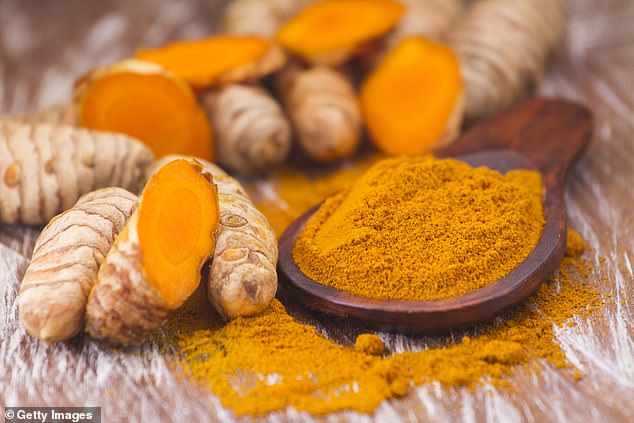
The ‘Golden Spice’ has been used as as food and medicine for 4,000 years
‘Turmeric has been frequently used in medicine across different cultures due to its anti-inflammatory properties, and its ability to stimulate the stomach to produce higher levels of gastric acid to support digestion,’ Ed Tooley, Nutritionist at The Turmeric Co. tells the Daily Mail.
‘A big myth I often see in the nutrition space, especially with turmeric, is that the active ingredient curcumin is all that we need.
‘But the turmeric root possesses more beneficial properties than just curcumin.
‘For example, it also contains some essential oils (turmerones) that possess several beneficial properties such as reducing inflammation and oxidative stress, as well as protecting our nerve cells.’
Today there are numerous ways to eat turmeric; supplement capsules, ground up ready for use in cooking, and in its whole, raw, form ready to be roasted, or blended into in an immunity-boosting juice shot.
In the West, we only really eat the root—technically called the rhizome—but in Eastern cuisine it’s not uncommon for the stems and flowers of the Curcuma Longa plant to be added to salads and stir fries.
What is the best way to eat turmeric?
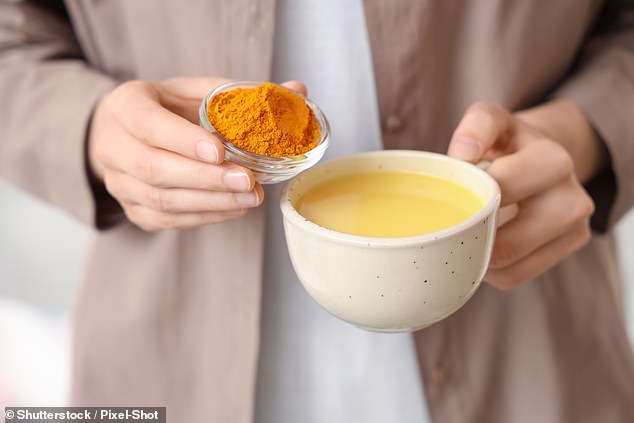
It’s no longer unusual to see turmeric lattes and ‘golden milk’ on the menus at coffee shops
Thanks to modern methods and culinary creativity, it is now easier to reap turmeric’s benefits than ever before.
Not only is it a staple ingredient in a huge array of curries, it is a popular element in herbal teas, is a regular ingredient in vitamin-packed juices, and has also made its mark in trendy coffee shops where it’s added to lattes.
A traditional Indian recipe, haldi doodhi, dubbed ‘golden milk’ has also made its way to the mainstream in the US and UK, and sees ground turmeric simmered with milk and other warming spices, including black pepper.
Turmeric is also at the heart of a booming multi-million dollar supplement industry, with Strategic Market Research estimating that its will grow from USD 1.9 billion in 2024 to USD 2.9 billion by 2030.
Mr Tooley says that regardless of if you choose to dose up on turmeric through diet alone or take it in supplement form, the key factor is how much curcumin you’re getting.
‘The big factor here is bioavailability, which is the proportion of the ingested active compound that can be utilised by the body post digestion,’ he says.
‘The bioavailability of curcumin is typically poor when on its own, however this can be improved when combined with piperine which is a natural compound within black pepper.
‘It has been scientifically proven to increase absorption by up to 2000 per cent.
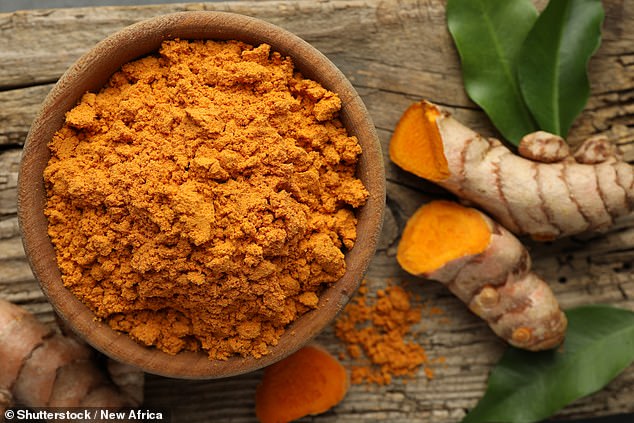
Taking too much turmeric can lead to serious liver problems
‘This is why fresh raw turmeric could outweigh isolated curcumin powders in health outcomes when prepared and delivered correctly.’
He adds that some of the advantages of taking turmeric supplements or a juice shot rather than self-dosing with powders in food, is that the source of the root can be quality checked, the dosage of curcumin can be accurately measured and other ingredients which can improve bioavailability, such as black pepper and ginger, can be added to the formula.
If you’re cooking turmeric from raw at home, be careful not to roast it at a high heat or over boil it. Both methods can reduce the root’ antioxidant potency and remove some of its health-boosting essential oils.
Can you eat too much turmeric?
Doctors have warned that taking super-strong turmeric supplements can cause liver damage because it can trigger an immune reaction in the organ.
A 2022 study found that between 1995 and 2020, the number of people who suffered liver failure due to a supplement had surged eight fold.
There are milder warning signs that you’ve taken too much turmeric, says Mr Tooley.
‘Taking too much turmeric is most likely to cause nausea and stomach distress due to its stimulation of gastric acid production.
‘Most adverse effects would be due to individuals dosing supplements incorrectly.
‘However some individuals may suffer from allergic reactions or adverse reactions if using certain types of medication.’
Who shouldn’t take turmeric?
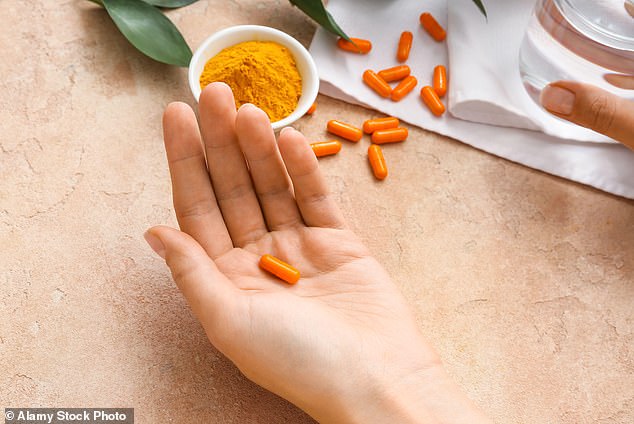
Turmeric supplements are not suitable for people on certain types of medications
Before you add any form of supplement to your daily routine or change your diet, it is strongly recommended to speak to your GP, and this is especially true with turmeric.
‘Some medications do interact with turmeric because it can have a blood-thinning effect, ,’ says Mr Tooley.
‘Anti-coagulant and anti-platelet medication have known interactions, and it’s recommended that people do not supplement with turmeric in the run-up to having surgery.’
Turmeric can increase the risk of bleeding if taken with blood-thinning medications like warfarin, aspirin, or direct oral anticoagulants (DOACs), and because it can lower blood sugar levels, people with diabetes or taking related medication should monitor their levels carefully.
It’s also not recommended for people with gallstones, bile duct obstruction, or liver disease.
Women who are pregnant or breastfeeding are also advised not to take it.
Are there different types of turmeric?
The turmeric plant, also known as Curcuma Longa, is from the ginger family—Zingiberaceae—and needs needs temperatures between 20 and 30°C, plus high annual rainfall to thrive.
It’s native to the Indian subcontinent and Southeast Asia, which is why it is so commonplace in the cuisines from these regions.
There are different species of the Turmeric plant found in different geographical locations, each with slightly different shapes and colours of root, and differing levels of curcumin and essential oils.
‘Varieties must commonly used are the ‘Alleppey’ and ‘Madras’ varieties which are both named after the regions of India they originate from,’ says Mr Tooley.
‘Alleppey is commonly used for flavour and colour. It had a vibrant orange-yellow root and boasts 4 per cent curcumin and 3-5.5 per cent essential oils.
‘Madras is a lighter yellow, and yields around 2 per cent curcumin and essential oils.’
Previous studies have pinpointed that Indian and Sri Lankan turmeric tends to yield the highest curcumin levels, so Mr Tooley advises to try to look out for products from these locations.