A millionaire businessman who installed an electric fence around his £44.5million Notting Hill mansion to stop foxes entering his garden has been forced to tear it down.
David Walsh and his wife Jyotsna Chadha erected the huge barrier around the border of their palatial property.
But after the council and some of their well-heeled neighbours accused the couple of ‘fortifying their home’, the couple have succumbed to external pressure and replaced the fence with metal spikes.
However, neighbours told the Daily Mail the spikes constantly fall off and are no defence against the cunning foxes that roam the leafy street.
One resident said: ‘It’s a serious issue round here, if the woman who lives there is terrified of foxes there’s a good reason to have the fence.
‘The poor woman, because she’s so terrified I reckon they’ll probably move.
‘The foxes come and dig everything, there are paw prints everywhere and poo has been found on my front door, so I do get it.’
Properties on the suburban street sell for millions of pounds, however the couple’s is by far the most expensive on the road.
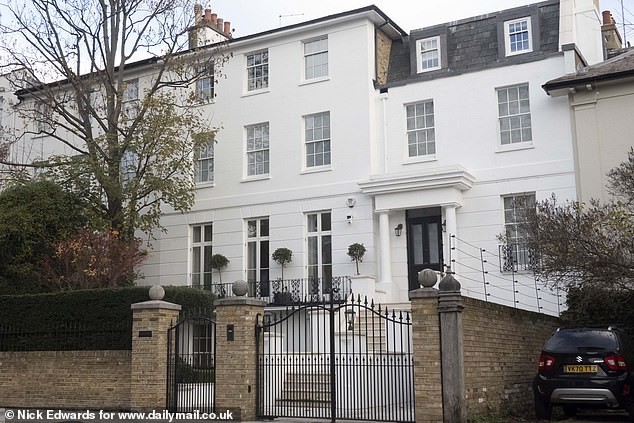
Pictured: The house before the electric fence was torn down from around the £44.5million mansion
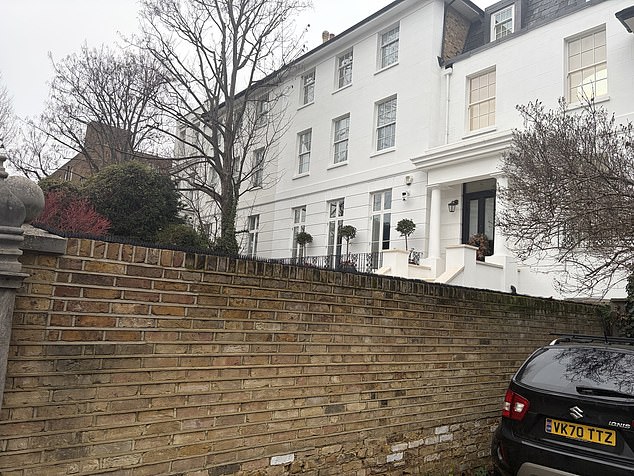
Pictured: The newly erected metal spikes on the bordering walls of the Notting Hill house
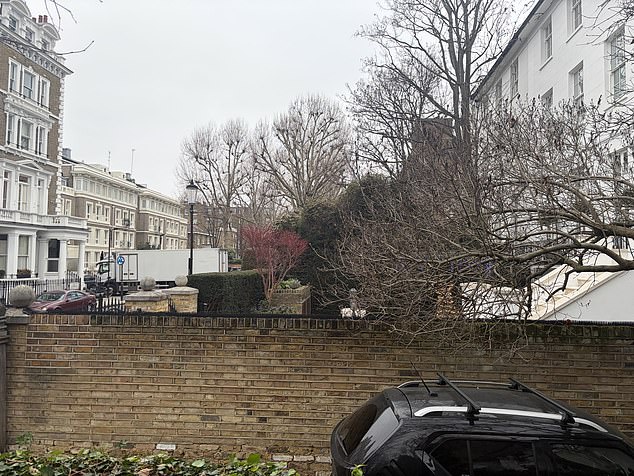
Pictured: The new metal spikes that now line the outside of the palatial property
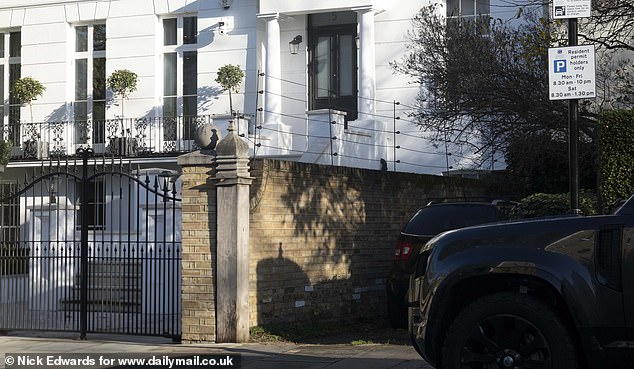
Pictured: The electric fence, which has since been torn down lining the home
In retrospective planning documents, Mr Walsh – who is the founder of underwriting giants CFC, worth an estimated £2.5billion – argued that the inclusion of the fence was ‘intended for fox prevention purposes.’
The drastic measures were the subject of ridicule among locals and online.
One person commented: ‘What a stupid idea. The placement could easily cause a fire with the tree branches so close to the wire. It also looks hideous.’
Another added: ‘Keeps All manner of Vermin away, including Humans! Great idea! Well Done!’
Meanwhile, the fence was part of a serious debate with Mail on Sunday columnist Alexandra Shulman revealing she sympathised with the couple having contracted scabies from a fox that broke into her home.
There were multiple objectors to the fence, including the Ladbroke Association community group – which cited the danger the installation ‘posed to groups of people.’
The large congregations the group is undoubtedly referring to would be the Notting Hill Carnival, which takes place just feet from the conservation area and brings over two million people into the suburb every August.
The controversial event, which regularly sees millionaire residents install make shift barricades in front of their homes is known to be a hotspot for anti-social behaviour.

David Walsh (pictured) and his wife Jyotsna Chadha erected the huge barrier around the border of their palatial property
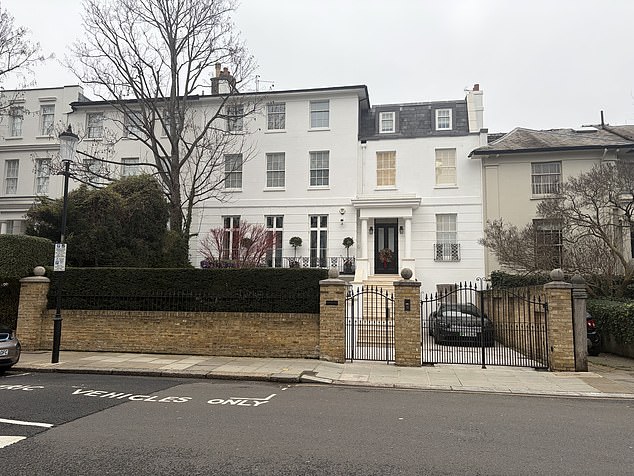
Pictured: The £44.5million Notting Hill mansion without the electric fence around the perimeter
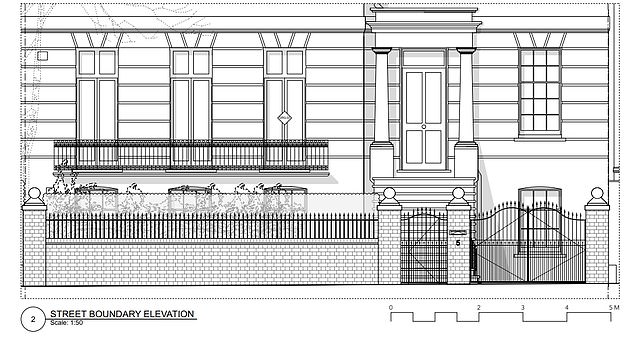
Plans submitted to the council appear markedly different to what has been installed
This year, the Met Police said a total of 423 people were arrested across the two days – up from 349 last year, the highest total since 2019.
When the Mail visited the glamorous street earlier this month, Mr Walsh was defiant.
He said: ‘It’s none of your business. I’ve got a wife who is very, very scared of foxes – you got a problem with that?
‘The council has got very confused, they’ve looked at the wrong photos. We actually have a much better plan that is much more discreet, but they looked at the wrong photos.’
However, his neighbours were less convinced with one telling the Mail: ‘It is a bit silly really, you would expect that sort of fencing for POW camps – it’s hardly going to keep out foxes.’
A warning, which has since been removed, advertised that the equipment is designed to keep pigs, horses, sheep, cows and deer in pens – it did not show any foxes.
Bosses at Kensington and Chelsea council also objected to the fence.
In official enforcement papers, the council said: ‘The proposed electric fencing by reason of its design, height and prominent siting would read as an unwelcome addition, resulting in the fortification of the site and failing to preserve the character and appearance of the building, street scene and wider conservation area.’
Kensington and Chelsea Council spokesperson said: ‘The Council received a retrospective planning application for an electric fence which was refused. The Applicant has the right to appeal the decision. We are considering any necessary enforcement proceedings.’
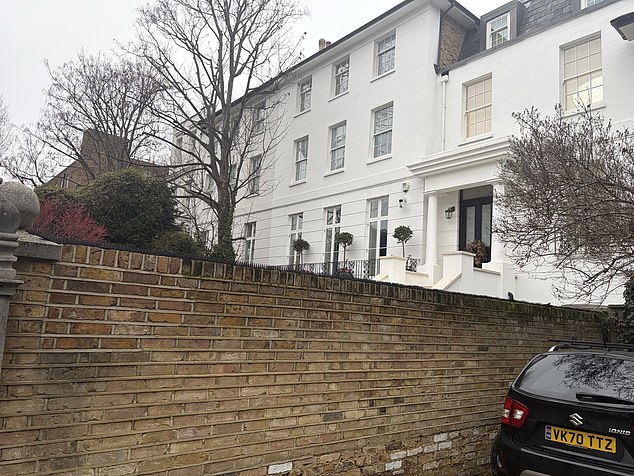
Pictured: The couple have resorted to using metal spikes to keep foxes out of their property

The Mail on Sunday’s Alexandra Shulman (pictured) caught scabies from a fox which crept into her house and curled up on the sofa
A spokesperson for the Ladbroke Association said: ‘In our original objection, we expressed concern about the public safety aspects of this scheme and suggested that there should be conditions requiring a minimum strength of current and adequate public liability insurance. We were surprised that, in the officers’ report, this was considered outside the scope of the planning assessment.
‘Paragraph 102 of the NPPF says that planning policies and decisions should promote public safety by inter alia “anticipating and addressing possible malicious threats and other hazards (whether natural or man-made) especially in locations where large numbers of people are expected to congregate”.
‘We would see “other hazards” as encompassing electric fences with which members of the public could interact, especially in urban areas. We do not see the reference to areas where numbers of people congregate as excluding other areas where there is a threat to the public.
‘We understand that planning officers believe that this paragraph is about large developments, but again there is nothing in the paragraph that indicates that small developments are excluded. We hope, therefore, that this matter can be reconsidered, as we believe that public safety should be seen as a material planning consideration in this case.’