Matt Ridley was right about one thing.
In an essay for the Daily Mail recently, the science and environment commentator argued that terrifying people with tsunamis of eco-gloom, planetary disaster, and endless extinctions due to climate change, has been the environmental movement’s greatest mistake.
The exhaustive ‘Green Doom’ narrative means that, as the decades have passed, fewer people are tuning in to what leading scientists, informed policy makers and business leaders agree on: that the risks associated with climate change are real. And they are accelerating.
On all other points, however, I profoundly disagree with Ridley’s assessment of climate change risk and his seeming inability to recognise the enormous economic opportunities for Britain it brings.
According to the Met Office, 2025 is set to be the UK’s hottest year since records began. It is the sixth new UK annual temperature record – following 2002, 2003, 2006, 2014 and 2022 – this century.
Whether you are a climate change denier or a sceptic, something is clearly going on – and it presents us with a choice.
Let’s move beyond the rabbit hole debates of more ‘green’ taxes, the obsession with near impossible to understand Net Zero issues or scarring the countryside with tens of thousands of acres of solar panels.
Instead, let’s be crystal clear: pocketing all the real benefits from clean energy and building resilience to climate change presents the greatest investment opportunity in history. And the UK can lead a worldwide technological, entrepreneurial and financial revolution to tackle harmful global warming that will boost the economy.
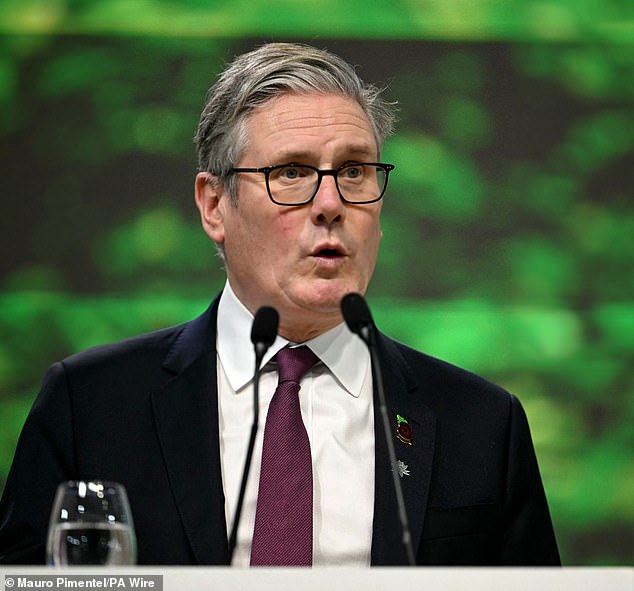
Sir Keir Starmer speaking at the CoP30 summit in Belem Brazil
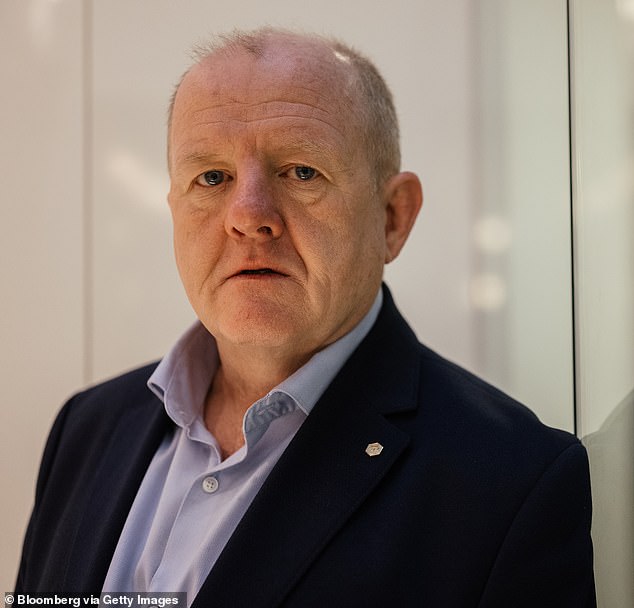
Paul Clements-Hunt is a former United Nations official who coined ESG and ran the organisation’s biggest partnership with global finance
The alternative? We miss out on being a key nation building the global engine of ‘clean capitalism’ and green growth. I fear the Matt Ridleys of the world would prefer to see UK step away from the opportunity to become the feted architect and financier of the world’s future sustainable economy.
Don’t just take my word for it. How does Warren Buffet, dubbed the Sage of Omaha for his investing prowess and worth personally more than $150 billion, see it? He says that climate change is ‘highly likely’ to be a ‘major problem for the planet’. His power company, Berkshire Hathaway Energy, one of the biggest clean energy owners in the USA, is a massive investor in wind, solar, geothermal and hydroelectric.
He and a growing band of investors understand that the relentless power of what I call ‘Pro-nature’ capitalism will deliver both outsize returns – and a planet with such abundant ecosystems to make even David Attenborough sing.
Globally, more than 5,500 investment institutions, managing U$ 121 trillion of funds, now back a 2006 United Nations responsible investment approach that my UN team conceived, developed and delivered. The aim of the Principles for Responsible Investment is to protect pensioners savings and boost their value with smart investments aligned with environmental, social and governance (ESG) realities.
Global investors are exploring new markets based on breathtaking technological breakthroughs. I believe the UK is ideally placed to drive these advances while taking pole position as a recipient of the financial benefits that will flow.
Climate investment hit U$ 1.9 trillion annually in 2023. To avoid the worst impacts of climate change the required investment estimates per year up to 2030 across sectors including clean energy, heavy industry, transport and real estate are as high as $11.7 trillion. That’s the level of investment needed to meet the 2015 Paris CoP21 target to limit the global average temperature increase to 2°C and to try and limit the increase to 1.5°C.
Only private markets can supply this funding, and the UK must claim its share and engineer the way it plays into global green markets
And how? A great example stems from our proud maritime history which delivered a globe-spanning Empire and repelled invaders for close to 1000 years.
As a nation, we know the sea and its power. ‘The UK has the maritime expertise, offshore engineering experience and supply chains to lead the world in harnessing wave energy,’ according to Marine Energy Council Policy Director Richard Arnold.
‘It is critical that the UK Government provides a clear route to market and supports the wave energy industry investing in coastal communities and beyond.’
The same applies to the cutting-edge British scientists, technologists, entrepreneurs, and bold financiers who make up the real UK Inc.
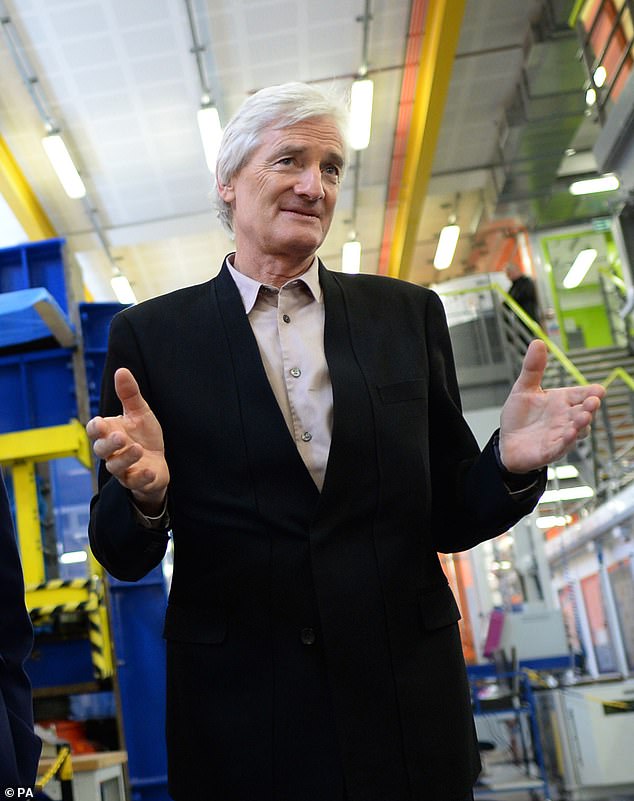
‘There is so much raw potential in our country that can be realised if only we embrace aspiration and inventiveness,’ Sir James Dyson wrote in The Times recently
Sir James Dyson knows that. ‘There is so much raw potential in our country that can be realised if only we embrace aspiration and inventiveness,’ he wrote in The Times recently.
Starmer & Co need to back UK Inc. to unleash its collective imagination and recapture the Victorian spirit that allowed this country to build the best infrastructure the world has ever seen.
Why is infrastructure so important to tackle climate change?
Cities occupy just 2-3% of the earth’s land surface yet consume 78% of global energy and account for 60% of polluting gases. We have the capabilities, track record and experience to reimagine our cities, deliver cleaner industrial and transport energy, and engineer the infrastructure to withstand the impact of climate change.
We’ll also create 400,000 good jobs in the UK.
President Trump may deride windmills and call climate change ‘the greatest con job ever’ but POTUS is wrong and the smart money in the USA knows it.
Red in tooth and claw hedge fund traders in the US are positioning to make their new climate fortunes. They smell opportunities building because of a largely unnoticed development, a decade in the making, at the recent UN climate summit, CoP30.
This gathering of the world’s governments in the Brazilian Amazon was seen by many as a failure. Few world leaders turned up, no plan to reduce fossil fuel use was agreed, and a fire in the main venue brought an almost comedic air to affairs.
However, what CoP insiders call Article 6 moved forward and has lit the blue touch paper on a multi-trillion-dollar carbon and nature trading market.
Use the term ‘Art 6’ in any climate conversation and you’re considered an insider.
Engineered in the years after the world’s main climate change plan was agreed in Paris in December 2015, Art 6 is the recognition that only global private finance, capital markets, and business chutzpah can tackle climate change.
Essentially, Art 6 facilitates national governments, states and provinces, and business to tackle climate change together.
Potentially lucrative and innovative climate solutions are springing up worldwide.
Singapore sees the evolving global climate change-related markets as a huge opportunity for its dynamic investment, banking and insurance companies. It wants its financial sector to be the trading hub for these global carbon markets worth trillions of dollars. The City of London needs to up its game to compete with Singapore – and fast.
In Brazil, all 26 states and the Federal District of Brasilia are exploring how to turn protection of forests into tradable securities on international stock markets. Each state must create a legal reserve of 20% of natural vegetation (or restore it if cut down).
Meanwhile, the Bahamas is seeking to turn its massive underwater seagrass forests – representing 40% of the world’s total – into the ultimate carbon absorbing bank while boosting national finances.
Whatever Mr Ridley says, there is no question that the UK is at the forefront of leading climate action. In November 2025, we delivered 66% of our electricity supply from zero carbon sources. A whopping 37% plus of our electricity came from wind energy. Of the 20 heavy-hitting global economies, the UK is the only one to come in the top ten nations for climate action – now number 6 – and UK emissions are down to just 1% of the global total.
The UK, once the world’s coal-driven giant which gave birth to the industrial revolution, is pioneering global warming action.
Those who bemoan the alleged failures of climate summits, such as CoP30, reveal their misunderstanding of history and the time needed for lasting results in a complex world.
After the horrors of World War II, it took nations 48 years to negotiate global free trade. The World Trade Organisation was created in 1995, saw a fivefold increase in trade to U$30.4 trillion by 2023 – and has delivered poverty-crushing advances.
With our efforts to fix the climate, we’re just thirty years into answering a much more complicated question. How do nations, investors and entrepreneurs hardwire new systems covering economics, energy, industry, transport and infrastructure for a population tipping 10 billion by 2100?
The Earth’s regenerative capacity will amaze us – but only if we make bold investment decisions in the industries of the future. And the UK can show the way.
Paul Clements-Hunt is the former United Nations official who ran the organisation’s biggest partnership with global finance (2000-2012). He created the ESG concept.