To her 800,000 subscribers, Machelle Hobson was the perfect mother to her brood of seven adopted children who starred in the light-hearted videos posted to the family’s YouTube channel—but when the cameras stopped rolling, the beatings and torture began.
In March 2019, fans and followers of Fantastic Adventures were left shellshocked when Hobson, 48, of Maricopa, Arizona, was charged with 24 counts of child abuse, five counts of kidnapping and one count of aggravated assault.
The details were abhorrent: She had taken the children, who were aged between six and 15, out of school so they could create content for YouTube full-time, and was accused of dishing out brutal punishments should they fluff their lines or not perform to her liking.
At its peak, Fantastic Adventures, which had amassed over 350 million channel views when it was eventually deactivated, could have taken in roughly $2.5million (£1.85million) in total ad revenue, according to some estimates, of which YouTube would have typically kept $1.125million (£833k) with the rest going directly to Hobson.
The channel’s clips featured the children appearing to have fun in a variety of different wholesome scenarios, from raiding a cookie jar to playing at being ‘fruit ninjas’—and while they looked united on screen, in reality, the children were not friends and were pitted against one another for safety and survival.
After being rescued by child services following a tip-off by one of Hobson’s five biological children, the adopted youngsters’ hellish existence became a source of public outrage.
To get them to comply with her filming demands and schedule, Hobson was accused of using pepper spray, lighters and a stun gun on their genitals, arms and other body parts, beating and starving them, and locking them in a closet for days without food, water or access to a bathroom.
She was also alleged to have thrashed them with wire clothes hangers and made them take ice baths, as well as withholding food and basic sanitation.
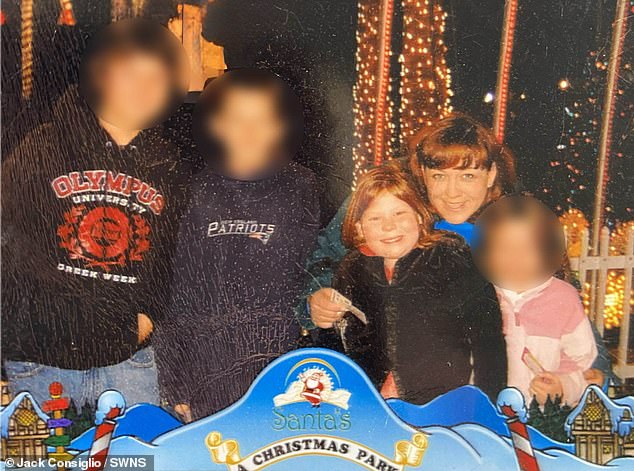
Machelle Hobson pictured with her daughter Jordyn and her siblings
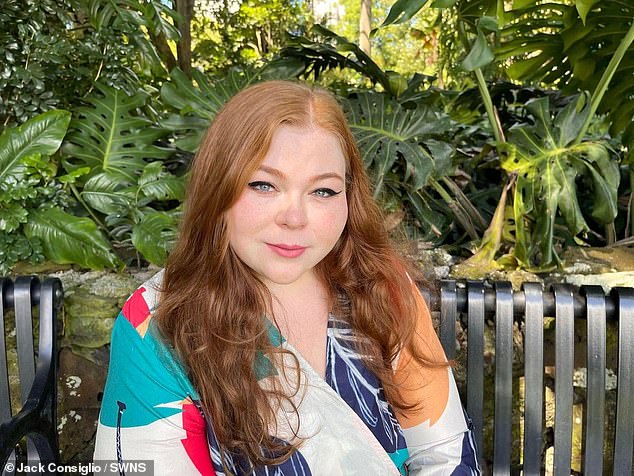
Jordyn, now 29, has opened up about the abuse she and her siblings suffered at a young age at the hands of Machelle Hobson
Hobson—dubbed the ‘YouTube mom’ in true crime circles and the media—pleaded not guilty to all of the charges.
She was in jail and waiting for a trial date when she died of natural causes in November 2019, escaping justice and denying her children, both adopted and biological, any sort of meaningful closure.
One of her biological children, Jordyn Downs, now aged 29, has spoken about her experiences living in the Arizona house of horrors, sharing what it was like to receive death threats from her own mother and how being locked up in an empty room for days on end without food, water or access to a toilet has affected her mental health.
She said: ‘The abuse happened my whole life. We were all puppets long before YouTube was even a thought.
‘Mom would tell us that nobody would believe the abuse we faced – we were told that constantly.
‘We got locked in rooms and threatened to have our food taken away. She would even stand us in the corner of the room and balance books on our heads.’
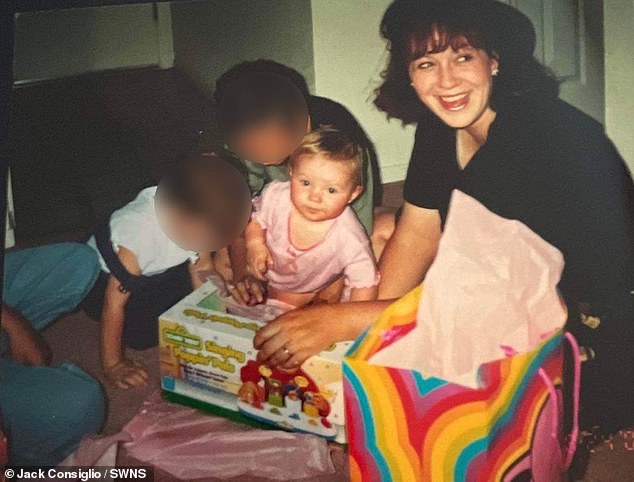
Jordyn believes she and her siblings were failed by the Arizona Department of Children Safety
A leading child psychologist told the Daily Mail that the brutality and neglect that Jordyn and her siblings suffered will have a lasting impact on their lives, and that being locked in a room for extended periods of time is particularly damaging for a developing psyche.
Speaking about the difficulties neglected children go on to face, Angela Cook said: ‘This emotional shock doesn’t simply disappear after the door is opened- literally and figuratively – it gets enclosed in a child’s nervous system.
‘Locking a child in a room for long periods of time is not simply punishment, it’s psychological injury.
‘Children make sense of the world through connection, safety and predictable care giving.
‘Isolation strips all three of these very important child development exercises away and replaces them with overwhelming fear, confusion and a profound sense of abandonment,’ she explains.
‘Research shows that maltreatment of this kind disrupts the stress‑response system which is still developing, it increases the risk of long‑term anxiety, depression, and post‑traumatic stress symptoms.
‘There’s also the heightened risk of hyper-vigilance, emotional dysregulation, and difficulties forming trusting relationships later in life – as children internalise the belief that the world is not only unsafe, but their needs do not matter within it.
‘That belief can stay with them into adulthood, shaping their self‑esteem and worth, their trust in humanity, and their ability to regulate emotions.’
Ms Cook added that whilst in most cases, and with specialised care, positive intervention, and consistent safety, most children can heal from such incidents, we cannot shy away from naming these behaviours for what they really are.
She said: ‘We must name this “locking away” for it is; aggravated child abuse with lifelong psychological consequences.’
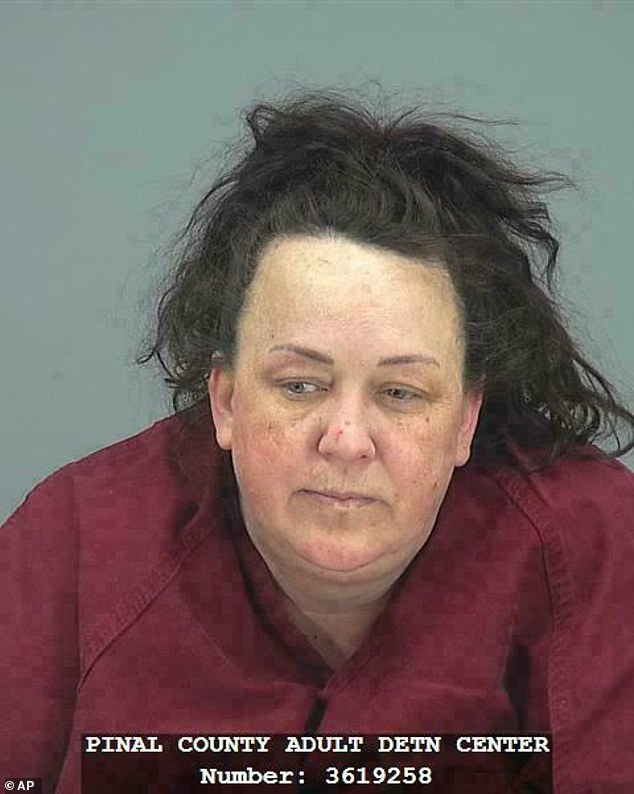
Hobson died from a non-traumatic brain injury under the care of Scottsdale Hospital, Arizona, before she could be sentenced
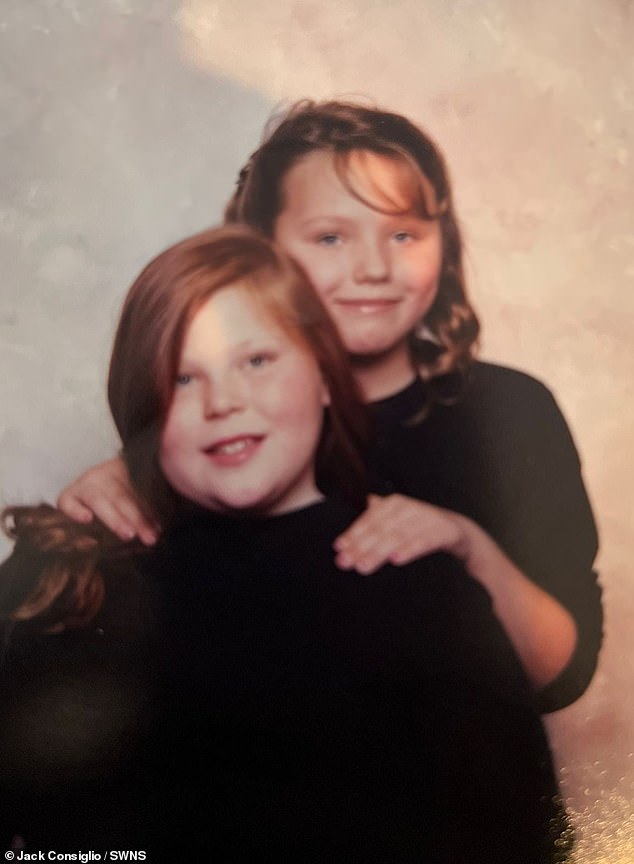
Jordyn, pictured with her sister Megan who tipped off the police about their abusive mother
Tragically, there were several opportunities for Hobson’s reign of abuse to come to an end before her eventual arrest. She was investigated by the Arizona Department of Child Safety (DCS) on nine separate occasions, but no definitive evidence of abuse had been found.
Jordyn claims this is because her mother had been tipped off about the welfare checks and scared the children into silence.
She said: ‘My mom worked for the state and somehow she always knew when an investigation was going to happen. She would sit us down and prepare us, and even threaten us.
‘She wasn’t just threatening to hurt us, she was threatening to kill us if we spoke a word wrong.
‘I was forced to lie when child protective services came into the home.
‘The authorities would ask us if our mum hurt us whilst she was in the room.
‘A couple of minutes before she was threatening to kill us; no child is going to speak up against that.’
‘She would put us against each other, and punish us for someone else’s mistakes – she would make sure we hated each other.
‘We were in survival mode.’
When Hobson wasn’t abusing the children or taking advantage of their acting skills for financial gain, Jordyn claims that she was nowhere to be seen, and that from the age of nine until 16 she was expected to help care for her younger siblings, and any number of the 40 children her mother fostered between 2005 and 2019.
She said: ‘We were stuck in that home to be abused for years. There are dozens of kids who were abused by mom for 18 years.’
Thankfully things changed in March 2019 after the police received word that one of the children had confided in an older sibling, Jordyn’s sister Megan, that she was being abused by their mother.
Upon accessing the home, they reported that the children in Hobson’s care were malnourished, with dark circles under their eyes, pale complexions and extreme thirst and hunger all pointing towards neglect.
When police raided the home, one hungry child was found to be fearful of eating a bag of crisps that police gave her because she did not want Hobson to smell them on her breath.
Jordyn also recalls being starved as a form of punishment and control.
She remembers being so hungry she tried to take more food than she was allowed, despite knowing there would be unimaginable consequences.
‘The next thing I knew, my bed and my clothes were taken away from me,’ she said.
‘I was told the worst things a child could be told about their appearance. She was constantly talking about my weight and telling me I was too fat and shouldn’t eat so much.’
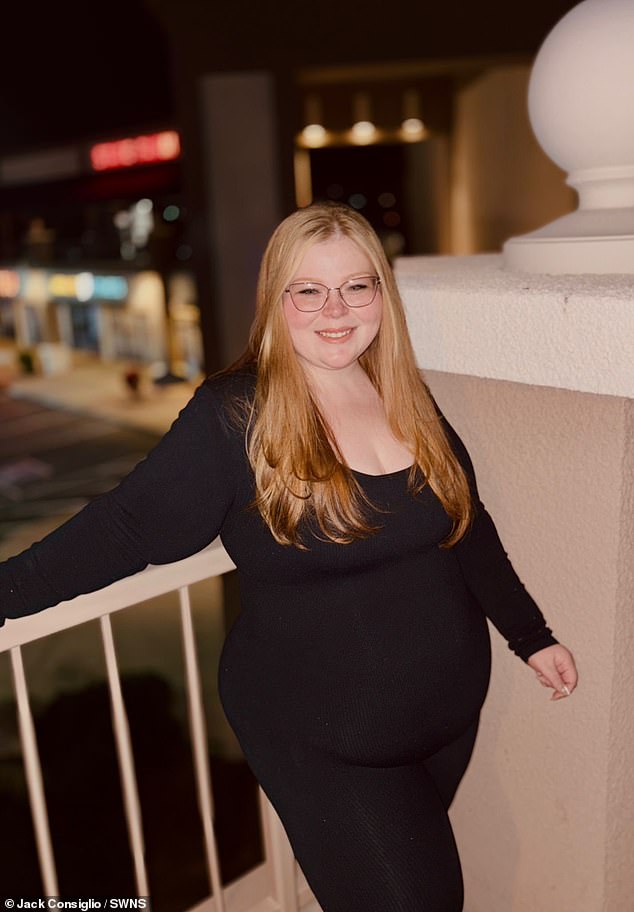
Jordyn recalls being abused from a young age, being ridiculed by her mother for her weight

Jordyn pictured with her brother Ryan
According to the probable cause statement, one child told the police that her mother locked her in a closet for days without food and water, and forced her to wear a pull-up diaper, not allowing her to use the bathroom.
She added that Hobson would spray her and her siblings with pepper spray all over, including their genitalia, hit them and force them to take ice baths.
One of the boys said that his adoptive mother would pinch his genitalia so hard that she drew blood as a way of forcing him to take part in the videos.
Another child was reportedly ‘visibly nervous and shaking, and it appeared she was too scared to answer any questions.’ All seven children were removed from Hobson’s care.
Her two biological sons, Ryan, 31, and Logan, 33, who also featured in the videos, were also arrested for failing to report their mother’s behaviour to the police.
But before Hobson could be tried for the years of abuse she subjected innocent children to, for which she pleaded not guilty, she suffered a non-traumatic brain injury whilst she awaited trial in prison and died just six months later.
Jordyn and her siblings now need to live with the consequences of their evil mother’s actions, and what she regards as a series of catastrophic safeguarding failures by the authorities.
She said: ‘At a very young age, the Arizona Department of Children Safety failed us.
‘There were almost a dozen investigations done on my mom’s home for neglect, and nothing happened. Children lie, but it’s the authorities’ job to look for red flags.’
She added that she was angered by her mother’s death, expressing that she felt her mother got off ‘too easy’ for the years of abuse she inflicted.
‘I had spent my whole life trying to get justice for what she did to me. For her to be arrested and not even get a sentencing, I felt like death was too easy for her.
‘We suffered for years, and she got eight months in jail and not even a full sentence – that is hard for me to accept.’
A spokesperson from the Arizona Department of Child Safety responded: ‘We take great measures to ensure every child is placed in the safest environment possible.
‘We thoroughly investigate every report of abuse or neglect we receive. Each investigation must determine whether there is sufficient evidence to support an allegation.
‘If evidence shows a child is unsafe in their current home, we remove the child to a safe environment.
‘Our staff works tirelessly to ensure every child’s safety and well-being, yet we must acknowledge the difficult reality that those intent on harming children may occasionally slip through even the most thorough and strongest protections.
‘We also want to emphasise that while a very small number of individuals with bad intentions may pass the licensing and court process, the vast majority of Arizona foster parents are compassionate, dedicated people, and we are grateful they open up their homes to Arizona’s most vulnerable children.’