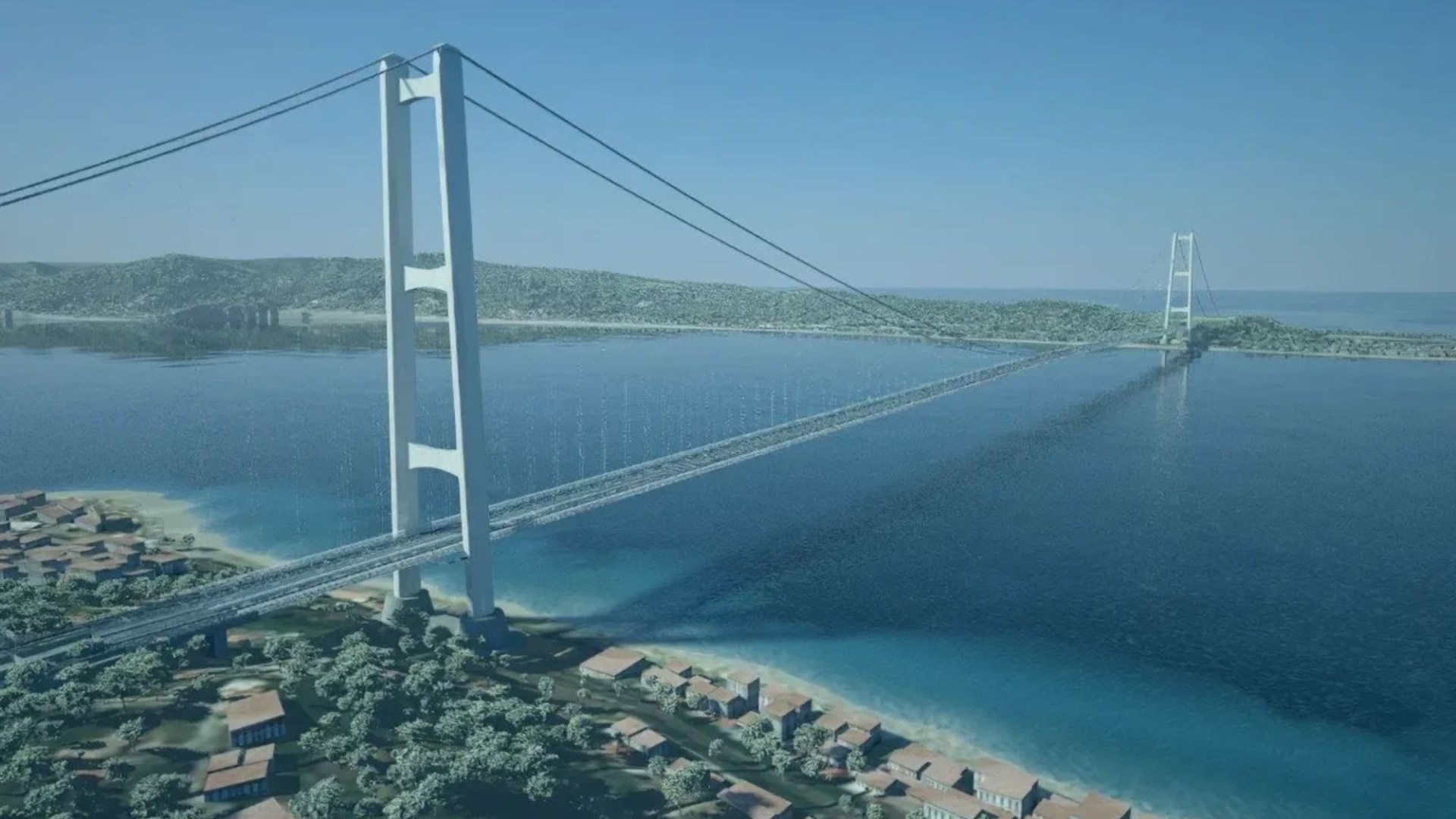
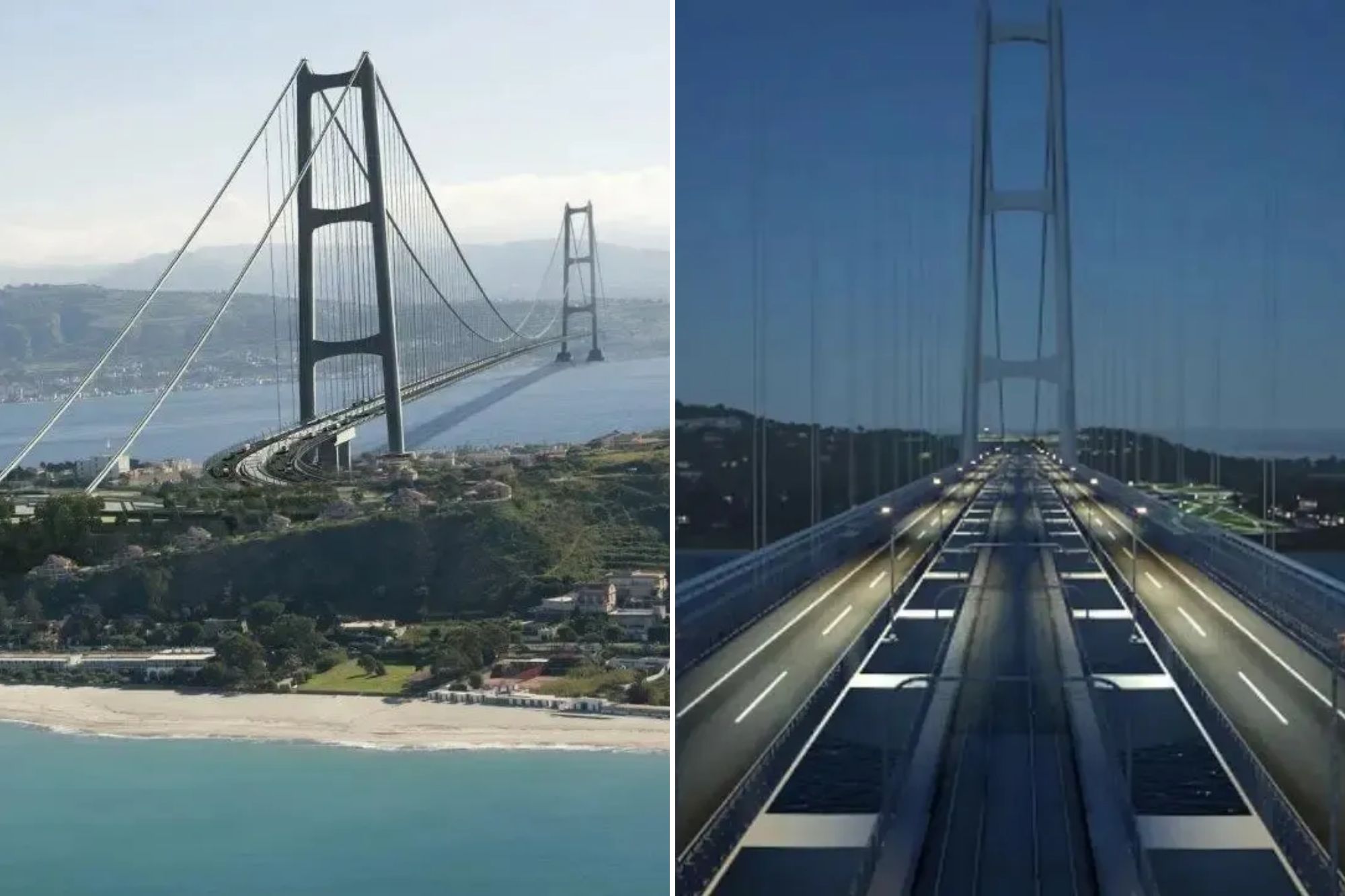
THESE are the incredible plans to build the world’s longest suspension bridge in Italy.
Despite authorities rubber stamping plans to build the structure connecting Sicily to mainland Italy, designers have received another setback.
The Messina Bridge project is set to cost a whopping £12 billion (€13.5 billion), with the European Union agreeing to 50 per cent of executive design costs for rail infrastructure – around 20 million.
Once finished, the bridge will stretch 3.6 kilometres (2.2 miles), eclipsing the current world’s longest bridge in Turkey.
It will be supported by two steel towers – each standing at 1300ft tall – and fit with a road and railway capable of withstanding wind speeds of 292km/h (181mph).
This infrastructure project is particularly appealing to British tourists wishing to make the trip across to Sicily.

It will cut the journey time to just ten minutes, compared to taking the ferry, which can take more than half an hour when factoring in queue times.
Italian Prime Minister, Giorgia Meloni, said: “It is not an easy task but we consider it an investment in Italy’s present and future, and we like difficult challenges when they make sense.”
Transport minister Matteo Salvini said the goal was to have the structure finished between 2032 and 2033.
He claimed it would create 120,000 jobs, bringing huge levels of economic growth to the poor regions of Sicilia and Calabria.
The idea Sicily to the mainland dates back to ancient Rome, when Consul Metellus supposedly connected barrels and boats to transport war elephants across the strait in 252 BCE.
Since then, various attempts have been proposed but stalled, including recent efforts in 2009, which were abandoned in 2013.
It has taken as long as it has to reach this point due to a wide variety of reasons.
Firstly, there were concerns that taxpayers’ money would be siphoned off by the Sicilian and Calabrian gangsters.
Other worries relate to environmental damage, as well as cost and safety.
In response, Salvini said: “The bridge will bring work, wealth, beauty, and will save tons of CO2 in the air, making it one of the greenest bridges in the world.”
There is also the fact the region is one of the most seismically active regions in the Mediterranean.
Back in 1908, the area was the site of a devastating 7.1 magnitude earthquake, which claimed the lives of over 100,000 people.
However, architects have assured that the bridge would be able to withstand earthquakes.
Unfortunately, authorities received another setback when an Italian court ruled the bridge was in violation EU environmental and tender rules.
The Court of Auditors ruling concluded: “The assumptions regarding the various ‘reasons of public interest’ are not validated by technical bodies and are not supported by adequate documentation.”
As well as convincing a number of official bodies, there has also been pushback from the 4,000 residents who live either side of the Messina Strait.
Their homes are at risk of demolition meaning there is the strong possibility of legal challenges.
However, Meloni and the Italian government has vowed to go over the ruling carefully and push ahead with plans to make the bridge a reality.