The SUV (Sports Utility Vehicle to no-one) is the most popular car type in the UK.
A third of new cars entering the road in 2024 were ‘Chelsea Tractors’, snatching the mantle of most popular segment from superminis, which had topped sales charts for decades.
ratedSUVs accounted for one in three registrations in 2024, up from just 12 per cent a decade earlier, according to Britain’s auto trade body.
But how reliable is this very popular type of motor?
Leading consumer champion and car buying platform What Car? has asked owners how they got on with their SUV models in its annual Reliability Survey – where 30,000 car owners share their thoughts.
Here’s the countdown of the 10 SUVs you can depend on – and three that suggest faults could occur and trigger breakdowns as well as high repair bills.
MOST RELIABLE SUVS
10. Audi Q2 (2016-2026) – 98.5%
Most common faults: Engine 5%
Average repair cost: £0
Typical time off road: 50% less than a day, 25% one day to a week, 25% more than a week
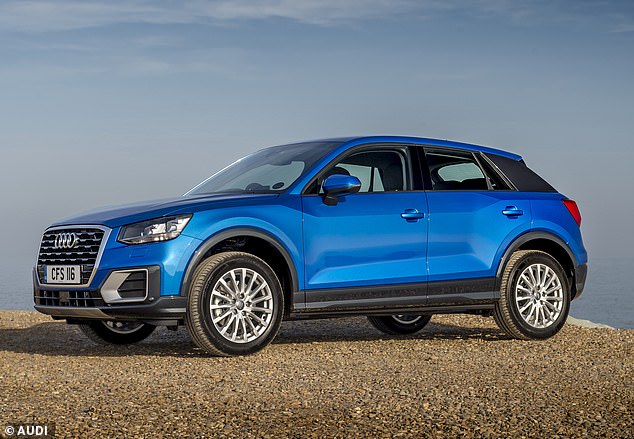
Audi Q2: With a score of 98.5%, the Q2 is Audi’s most affordable SUV and the brand’s most reliable model
The Q2 is the affordable SUV model from Audi, starting at £30,590. But it won’t be around much longer, with the German brand planning to cull it in 2026.
That’s a real shame because the Q2 is the highest scoring models in the brand’s line up when it comes to reliability, and scores much better than larger models.
Only 10 per cent of the Q2s What Car? were told about went wrong, and the only trouble area was the engine.
Audi paid for all repairs even though older examples are outside their three-year new car warranty.
The Q2 was only scored down because a quarter of cars with issues were in the garage for more than a week.
9. Hyundai Kona Hybrid (2019-present) – 98.7%
Most common faults: Bodywork 3%, non-engine electrics 4%
Average repair cost: £0
Typical time off road: 33% one day or less, 33% one day to a week, 33% more than a week
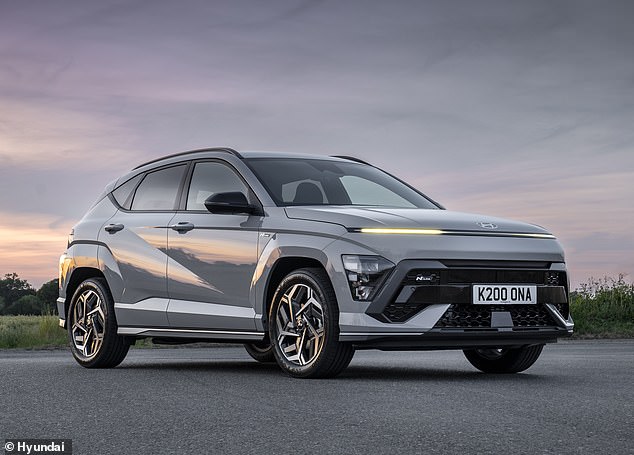
Specifically the Hybrid version of the current Hyundai Kona is listed among the most reliable SUVs with an impressive 98.7% score
The Kona Hybrid might not be the most expensive or premium SUV but it performs well for reliability consistently.
It placed third in the small SUV category in 2024 and has only dropped 0.3 per cent in the last year.
The Hybrid fault rate of eight per cent is lower than the petrol and electric versions, too, making it the most dependable option of all.
The bodywork and non-engine electrics were the only areas of concern for owners, and all defects were rectified by Hyundai at no charge.
A third of the faulty cars were put right in less than a day, while another third took less than a week.
8. Toyota RAV4 Hybrid (2019-2024) – 98.9%
Most common faults: 12-volt battery 4%, electric battery pack 1%
Average repair cost: £0
Typical time off road: 60% one day or less, 40% one day to a week
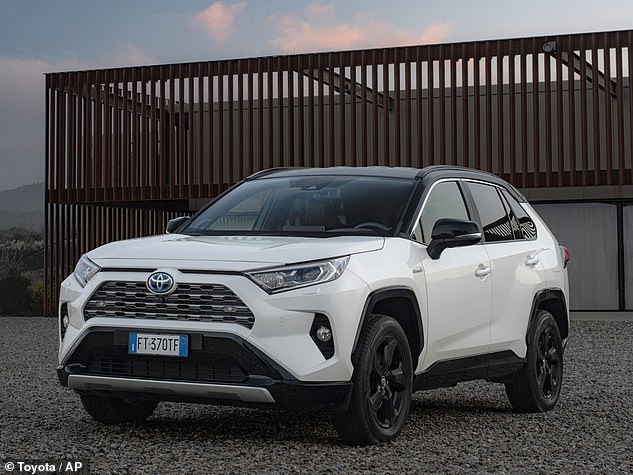
Toyota RAV4 Hybrid: 98.9% reliability and a fault rate of just 5% – but those that went wrong took a while to fix
Toyota’s RAV4 hybrid has been discontinued as of the end of 2024, but used models are still very reliable.
The fault rate for hybrid models is just five per cent, which is lower than that for PHEVs (12 per cent), but cars that did go wrong were slower to fix with two in five spending up to a week in the workshop, according to owners reporting on the last 24 months of ownership.
All faults were fixed at no cost to owners under Toyota’s long new car warranty.
7. Kia Niro PHEV (2022-present) – 99%
Most common faults: 2%, brakes 1%, non-engine electrics 1%
Average repair cost: £0
Typical time off road: 25% one day or less, 25% one day to a week, 25% more than a week

The Kia Niro PHEV is impressively reliable with with only 6% of owners having an issue with their car
The second generation Kia Niro PHEV sold from 2022 is a great practical, efficient, well price SUV.
It’s also impressively reliable with with only six per cent of owners having an issue with their car. Contrastingly, 30 per cent of Niro Electric models had problems.
However, things were slow to put right when they did go wrong, with four out of five cars taking more than a week to fix. But Kia covered the cost of all remedial work.
6. Porsche Macan (2014-present) – 99.0%
Most common faults: gearbox 1%, non-engine electrics 1%
Average repair cost: £0
Typical time off road: 50% a day or less, 25% one day to a week, 25% more than a week
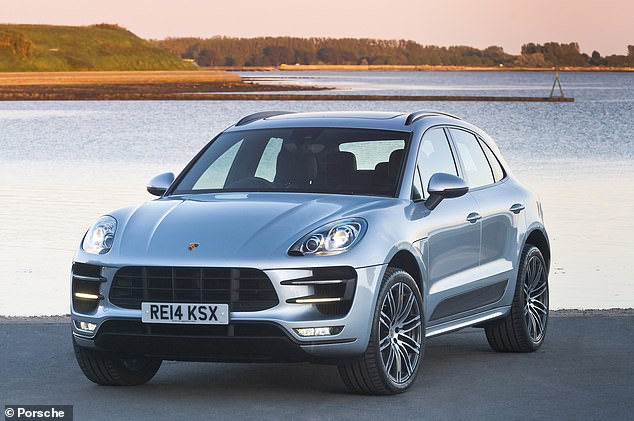
The Porsche Macan has a very strong reliability score of 99% and problems were quick to fix plus Porsche paid for all expenses
What Car? data covers the diesel and petrol Macans, and those up to five years old are proving very reliable.
Only five per cent of Macan owners reported any issues, and the Macan failings were restricted to the non-engine electrical systems and the gearbox.
Most problems were quick to rectify, too; half of the affected cars were fixed in a day or less, one quarter took up to a week to repair and the remaining 25 per cent took more than a week.
Porsche paid for all expenses, though.
5. Volkswagen T-Roc (2018-2025) – 99%
Most common faults: Bodywork 2%, gearbox/clutch 1%, non-engine electrics 1%, sat-nav/infotainment system 1%
Average repair cost: £0
Typical time off road: 33% a day or less, 67% one day to a week
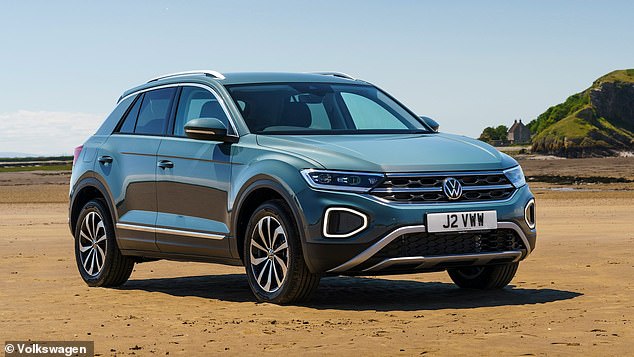
The Volkswagen T-Roc only went wrong for 4% of owners surveyed by What Car?. And VW paid for all work
The T-Roc had been on sale since 2018 before being discontinued in recent weeks, so its 99 per cent reliability score is particularly impressive.
Many of the cars reported on to What Car? were four or five years old and outside their new car warranty period.
Four per cent of cars went wrong, with bodywork issues the most common.
Volkswagen paid for all work and a third of cars were sorted in a day or less. All affected cars could still be driven.
4. Toyota RAV4 PHEV (2019-present) – 99.2%
Most common faults: sat-nav/infotainment system 6%, 12-volt battery 3%
Average repair cost: £0
Typical time off road: 67% one day or less, 33% one day to a week
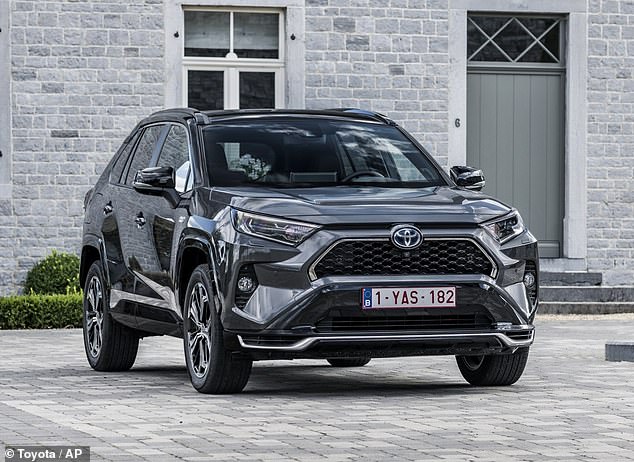
Faults were very minor and two-thirds of RAV4 PHEVs were put right in a day or less. Toyota covered the cost in all cases so no owners were out of pocket
The RAV4 PHEV has held its own in the reliability rankings for years.
Only the 12-volt battery and infotainment system were areas of worry for owners this year. Just 12 per cent reported reliability issues with their cars.
Faults were very minor and two-thirds of RAV4 PHEVs were put right in a day or less.
Toyota covered the cost in all cases so no owners were out of pocket.
3. Vauxhall Grandland (2024-present) – 99.6%
Most common faults: non-engine electrics 4%
Average repair cost: £0
Typical time off road: 100% one day or less

The latest and second generation of the Grandland has only experienced faults 4% of the time. And Vauxhall took care of all repairs
The second generation Grandland is outdoing its predecessor, with a minimal fault rate of just four percent. The first generation – 2018 to 2024 model – had a 19 per cent fault rate.
Unspecified non-engine electrical faults were the only issues reported by owners.
But still all cars were driveable and all problems dealt with in a day or less. Again, this is better than the old Grandland. Even better Vauxhall took care of all repair bills.
=1. Kia EV3 (2024-present) – 100%
Most common faults: None
Average repair cost: n/a
Typical time off road: n/a
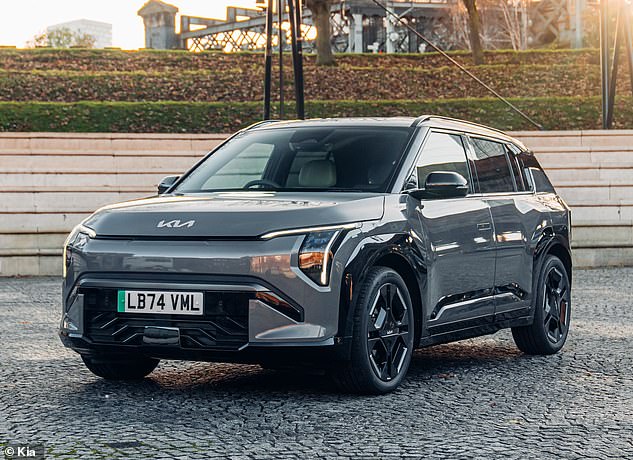
Bulletproof: The Kia EV3 has had a clear health record for the year, with no faults reported by owners
There’s nothing like owning a car that you can 100 per cent rely on – and that’s just the case for EV3 owners.
The small electric SUV didn’t suffer a single fault according to owners – the first Kia model to achieve a perfect score. That said, the model has only been on sale for 12 months, so owners are reporting on what is effectively a brand new motor.
That said, the affordable car outperformed much more expensive new models including the £75k BMW iX.
The EV3 also outscores its direct rival, the Hyundai Kona Electric, whose 24 per cent fault rate puts it in joint first place in this class. However, given they are mechanically similar, the Hyundai’s performance might be a better representation of dependability owners can expect in the future.
=1. Hyundai Santa Fe (2018-2024) – 100%
Most common faults: none
Average repair cost: n/a
Typical time off road: n/a
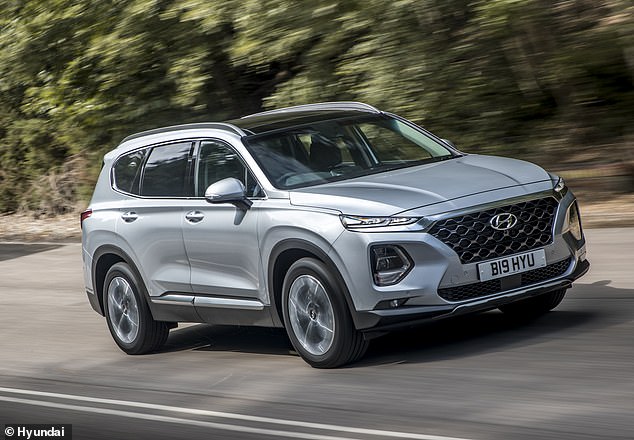
The previous-generation Hyundai Santa Fe also has a complete record of clean health – particularly impressive for a seven-seater SUV that was on sale from 2018
Coming joint first is the Hyundai Santa Fe – the only other SUV model to achieve a glittering 100 per cent score.
And this is an even more impressive achievement, given owners were reporting on cars up to five years old. This is why we’ve positioned it ahead of the new Kia EV3 above.
The seven-seater stands out amongst its three-row rivals which have had poor reliability over the past year.
It’s not the only Hyundai to achieve a 100 per cent either; the cheap i10 city car also got 100.
No owners had any issues or breakdowns in their cars in the previous 24 months, so none had to deal with unwanted repair bills.
An all-new Santa Fe is now on sale in the UK, and we think it’s the best seven-seat option on the market currently.
LEAST RELIABLE SUVS
3. Kia Sportage (2016-2021) –72.9%
Most common faults: Engine 21%, gearbox/clutch 21%, non-engine electrics 17%, brakes 13%
Average repair cost: 90% £0, 5% £101-£200, 5% £1500 or more
Typical time off road: 18% a day or less, 50% more than a week
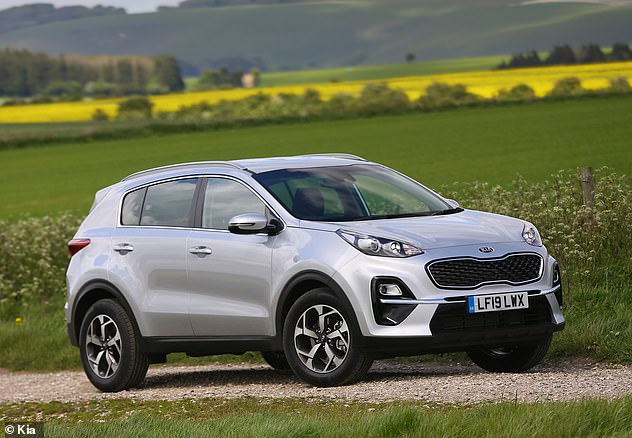
Best of a unreliable bunch: The Kia Sportage up until 2021 has a low reliability of 72.9%. 56% of their diesel Sportages went wrong, compared with only 20% of petrol models
The Kia Sportage is a big seller for the Korean brand, and the SUV is now on its fifth generation.
But it’s the fourth generation that has sold well thanks to its good styling, practicality and affordability.
However it has proven to be not all that reliable for owners – if they bought the diesel version particularly.
These suffered a high proportion of engine faults and repairs were slow.
Diesel Sportage owners told What Car? that 56 per cent of their diesel Sportages went wrong, compared with only 20 per cent of petrol models. Half of faulty cars were in the garage for more than a week, and five per cent of bills exceeded £1500.
However 90 per cent of cars were fixed for free. And Kia has a seven-year warranty which may still cover many cars.
2. Volkswagen Tiguan (2024-present)- 64.2%
Most common faults: sat-nav/infotainment system 31%, brakes 19%, non-engine electrics 19%, bodywork 13%
Average repair cost: £0
Typical time off road: 28% less than a day, 41% more than a week
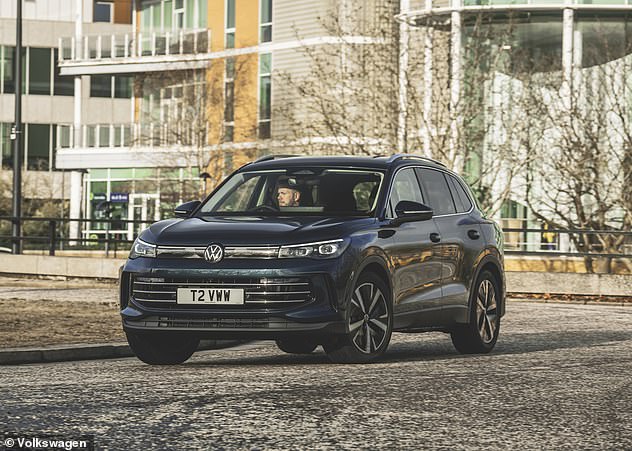
Four in five owners of the latest VW Tiguan – which only went on sale in 2024 – reported to What Car? that their SUV has issues, which is the highest fault rate of any car up to 5 years old
The latest generation of the Tiguan hasn’t fared so well in the reliability records. And that’s not a good look for VW, given the car only went on sale in 2024, so owners all have cars that were almost new when they provided feedback to What Car?.
It has the highest fault rate of any car in the latest reliability survey; four in five had some sort of problem.
Thirty-one per cent of issues were related to the infotainment system, and the braking system and non-engine electrics each accounted for another 19 per cent.
It took a while to fix the cars too: 41 per cent of problematic models were off the road for more than a week. Only 28 per cent were fixed the same day.
Volkswagen did cover the cost of all repair – as it should an almost new car.
1. Nissan Juke petrol (2019-present) – 55.2%
Most common faults: 12-volt battery 12%, engine 12%, fuel system 6%, non-engine electrics 6%, air-con 2%, bodywork 2%, brakes 2%, exhaust 2%, gearbox/clutch 2%
Average repair cost: 30% £0, 60% more than £1500
Typical time off road: 27% one day to a week, 64% more than a week
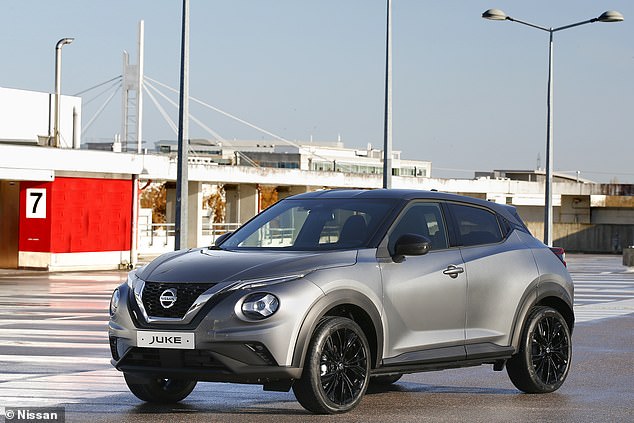
The Juke’s reliability score, 55.2%, is the lowest all all cars in What Car’s survey in any category
The Nissan Juke’s fault count is long and distinguished, What Car’s survey of owners found.
The engine and 12-volt battery were the biggest headaches, followed by fuel system and non-engine electrical glitches. But there is a catalogue of problems drivers said they experienced.
Slow repairs and some huge repair bills – 60 per cent of problematic Juke’s ended up costing owners a whopping £1,500 – dragged the petrol Juke down to the bottom of the chart for SUVs.
Only 24 per cent of petrol Juke owners said their car had gone wrong, but 64 per cent of those said their cars were out of action for more than a week.
On top of this only 30 per cent of problems were fixed for free. Ouch.