The former Head of the British Army has called on the government to spend more on defence, warning that ‘there’s no point having a great welfare budget if we are under the domination of the Russians’.
Lord Richard Dannatt said the Government needed to urgently change its attitude about the threat being posed to the UK and to its allies and increase defence spending.
‘The mindset has to be changed through leadership. It comes from the top,’ said Lord Dannatt, who has previously warned that ‘the world is more dangerous today that at any time since the cold war’.
‘If the government is really serious about getting the population of this country to understand we are facing serious security challenges then this government from the Prime Minister down has got to be much clearer that there is a problem out there and that there is a security threat and resources have got to be found to address it.
‘It is one thing to have a great welfare budget but if we are under the domination of the Russians – forget it!’
His candid comments to the BBC came as he broadly welcomed a new MOD paid gap year scheme as a ‘good idea’ but suggested it was ‘fiddling around the margins’ if it was intended to be a serious attempt to boost forces recruitment.
The scheme launches next year to offer an initial 150 school leavers under the age of 25 a paid year in the armed services, eventually rising to 1000.
It was a recommendation of the government’s strategic defence review in June inspired by a similar scheme by the Australian Defence Force, and part of several proposals to boost the number of people with military experience.
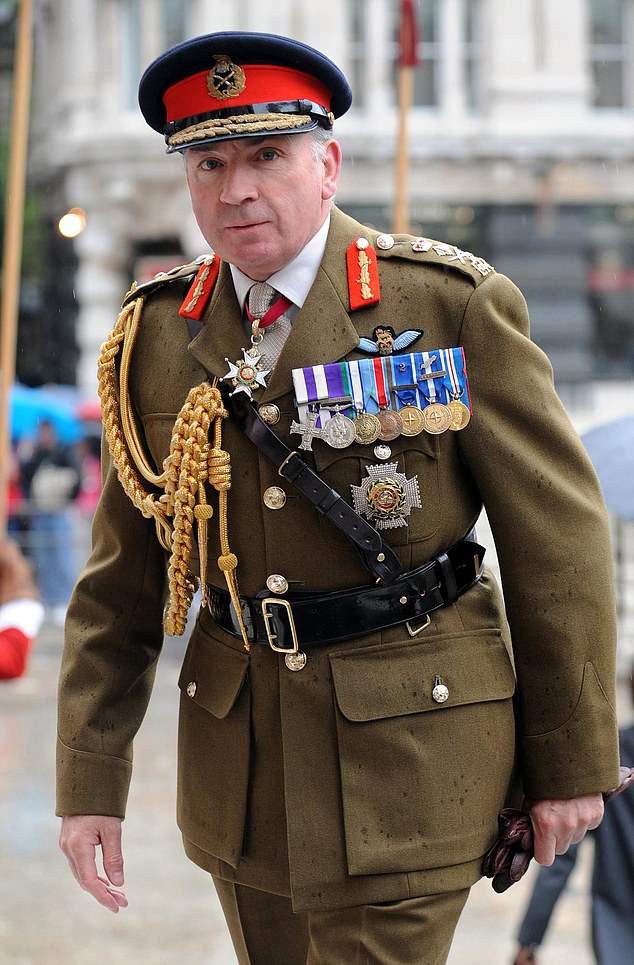
Lord Richard Dannatt (Pictured on January 15, 2009) has urged the UK government to increase its defence spending
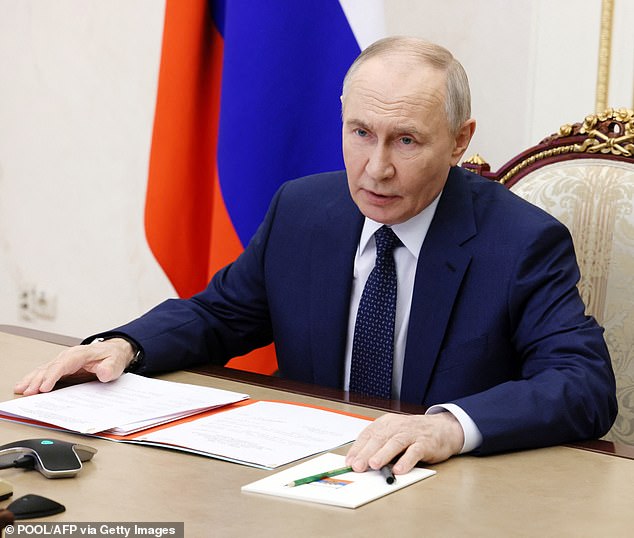
‘It is one thing to have a great welfare budget but if we are under the domination of the Russians – forget it,’ the former Army chief said (Pictured: Vladimir Putin)
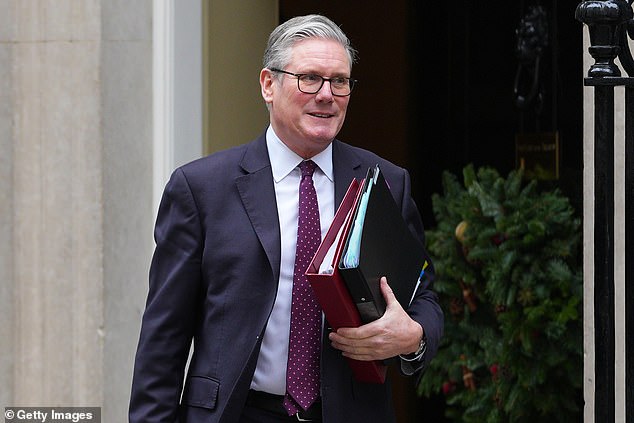
Prime Minister Sir Keir Starmer leaves Downing Street for PMQs on December 17, 2025
The MOD has said that those who join the programme will learn leadership, teamwork and problem solving skills to set them up ‘for life’ whether they pursue a career in the armed forces or not.
Lord Dannatt, who headed the army between 2006 and 2009, agreed, commenting: ‘It gives a number of people who may go on to choose a different career path in life some experience of the armed forces and some exposure to the armed forces and to the discipline and problem solving skills and other benefits that the armed forces can bring.
‘Whether any or many stay on in the army, navy or air force is one matter but it means that those young people have some exposure to and some experience of the benefits that some time in the armed forces can bring and many civilian employers actually recognise that ex servicepeople make extraordinarily good employees.’
But he told Radio 4’s Today programme that while the scheme was important in its own right, the government must do more to recognise the threat Russia posed and increase defence spending.
‘The issue of the threat posed to us and our NATO allies is considerable and one we will only address when this government and the other European governments find the necessary resources and the necessary money to increase the percentage we are spending on defence and the capability of our armed forces so that we can properly deter further expansionism and further opportunities that Vladimir Putin is tempted to embark on.’
The government has currently pledged to increase defence spending to 2.5% of GDP by 2027, and 3% by the end of the parliament but critics including Lord Dannatt have slammed the slow pace of delivery.
He has called for the government to go ‘further and faster to meet the challenges we face’, commenting: ‘Britain’s military capabilities must be strengthened to deter aggression, safeguard our interests and maintain a credible global presence.’
Meanwhile Defence Secretary John Healey said the new gap year scheme would offer young people ‘incredible skills and training’.
Criticising the low numbers involved in the scheme, shadow defence secretary James Cartlidge said: ‘As ever with Labour, the reality does not match the spin.
‘A scheme involving just 150 participants is barely a pilot, let alone the ‘whole-of-society’ response they claim to be delivering.’