A study has laid bare the shocking true cost of climate change as heatwaves, wildfires, droughts and storms cause havoc around the world.
The 10 most costly climate disasters alone cost the world more than $120 billion (£88.78 billion) in 2025, according to a report from Christian Aid.
Each was made significantly more likely and more devastating by the effects of human-caused climate change.
And scientists warn that these calculations only reflect insured losses, with the true cost of climate-influenced disasters likely to have been even higher.
America took the brunt of the damage this year as the Palisades and Eaton wildfires swept through Los Angeles in January.
This devastating fire alone caused more than $60 billion (£44.4 billion) in damages and killed 40 people.
This was followed by the cyclones which struck Southeast Asia, causing $25 billion (£18.5) in damage and killing more than 1,750 people across Thailand, Indonesia, Sri Lanka, Viet Nam and Malaysia.
The researchers also highlighted 10 less costly but equally shocking climate disasters, including the destructive wildfires which struck the UK this summer.
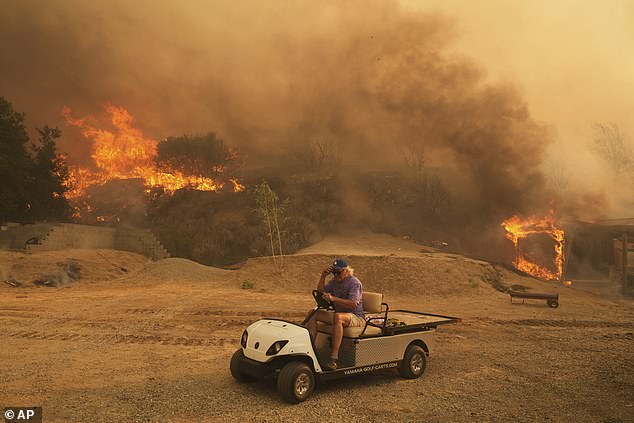
The 10 most costly climate disasters cost the world more than $120 billion (£88.78 billion) in 2025. The most damaging were January’s Los Angeles Wildfires, which caused more than $60 billion (£44.4 billion) in damages and killed 40 people
Scientists have gathered a vast amount of evidence showing a clear, incontrovertible connection between a warming climate and more intense climate disasters.
It is not that human-caused climate change creates extreme weather events, but it does make them more likely to occur and more intense when they do.
Dr Davide Faranda, Research Director in Climate Physics in the Laboratoire de Science du Climat et de l’Environnement (LSCE), who was not involved in the report, says: ‘The events documented in this report are not isolated disasters or acts of nature.
‘They are the predictable outcome of a warmer atmosphere and hotter oceans, driven by decades of fossil fuel emissions.’
In this report, researchers have tallied the total costs of the biggest disasters that have been intensified by the changing climate.
Even though extreme weather events in rich countries where property prices are higher typically incur greater costs, the worst-affected countries have been poorer.
Of the six most costly climate disasters in 2025, four hit Asia for a combined cost of $48 billion (£35.5 billion).
That includes devastating floods which struck China in June and August, killing more than 30 people and creating $11.7 billion (£8.6 billion) of damage.

Four of the six most costly climate disasters were in Asia, including cyclones that struck Southeast Asia, causing $25 billion (£18.5) in damage and killing more than 1,750 people. Pictured: People flee flood waters in Hat Yai, Southern Thailand
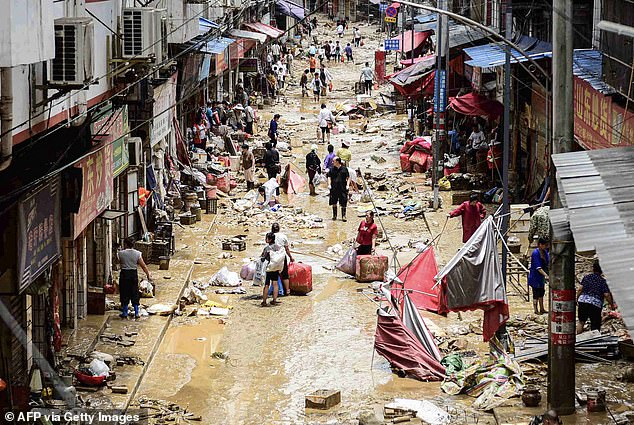
China experienced some of the most severe flooding in recent history, as rising waters killed more than 30 people and created $11.7 billion (£8.6 billion) of damage. Pictured: Flood-affected areas in Congjiang, southwestern China
Throughout 2025, China was hit by devastating floods in regions where such weather was previously unheard of, as unusually high rainfall followed months of drought.
This year also saw the Caribbean face the ‘storm of the century’ as Hurricane Melissa made landfall over Jamaica, Cuba, and the Bahamas, costing at least $8 billion (£5.9 billion).
Since hurricanes are driven by warm ocean waters, humans’ continued creation of planet-warming greenhouse gases directly contributes towards making these storms more frequent and more powerful.
In a cooler world without climate change, a Melissa–type hurricane would have made landfall once every 8,000 years, according to research.
But in today’s climate, with 1.3°C warming, it has become four times more likely – with such an event now expected once every 1,700 years.
Professor Joanna Haigh, an atmospheric physicist from Imperial College London, who was not involved in the report, says: ‘These disasters are not “natural” – they are the inevitable result of continued fossil fuel expansion and political delay.
‘The world is paying an ever-higher price for a crisis we already know how to solve. While the costs run into the billions, the heaviest burden falls on communities with the least resources to recover.’
However, no inhabited continent on Earth was unaffected by climate disasters this year.
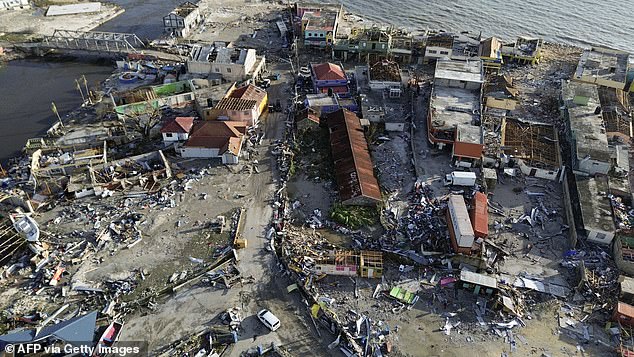
Jamaica was hit by the ‘storm of the century’ as Hurricane Melissa made landfall, costing at least $8 billion (£5.9 billion). Pictured: Destroyed houses in St. Elizabeth, Jamaica
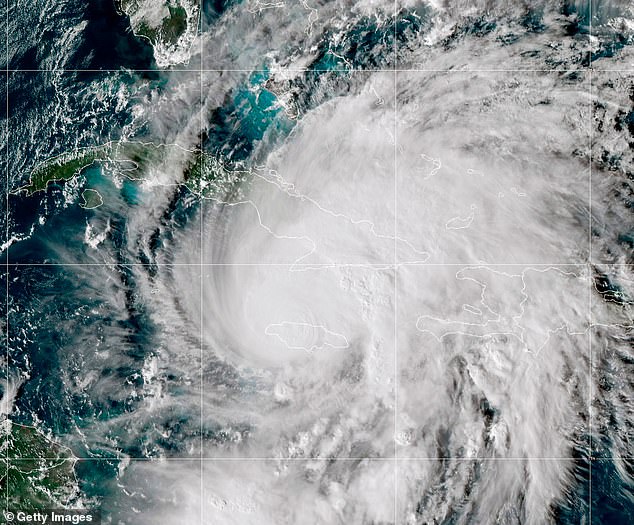
Scientists say that climate change warmed the waters over which Hurricane Melissa (pictured) formed, making the deadly storm four times as likely
Besides the 10 most destructive events, Christian Aid also analysed 10 other extreme weather incidents that have lower financial cost but are equally concerning.
Chief among these are the enormous wildfires that burned through large parts of the UK in late summer this year.
Across England, Scotland, Wales, and Northern Ireland, fire crews responded to the highest number of wildfire incidents on record, with over 1,000 separate outbreaks by early September.
Early estimates suggest that more than 47,000 hectares (184 square miles) of forest, moorland, and heath were burned – the largest annual area since records began.
In June, the Carrbridge and Dava Moor blaze consumed 11,000 hectares (42.5 square miles) of land to become the UK’s first recorded ‘mega fire‘.
According to climate and wildfire researchers, the increased intensity and frequency of these blazes were a direct product of climate change.
An exceptionally wet winter followed by one of the hottest, driest springs on record led to an unusually large amount of dead, dry plant matter that fuelled the fires.
Likewise, the report points to the Iberian Wildfires, which were caused by record-breaking extreme temperatures.

Outside of the 10 most expensive events, the report also tracked a number of notable climate incidents. These included the record-breaking wildfires, which destroyed 47,000 hectares (184 square miles) of forest, moorland, and heath in the UK. Pictured: Wildfires rage in the Isle of Arran, Scotland

Spain and Portugal were also hit by the Iberian Wildfires, which were caused by record-breaking extreme temperatures. Pictured: Fires burning in Vesu, Portugal
Weeks of extreme heatwaves, with temperatures exceeding 40°C (104°F), combined with low humidity, created explosive fire conditions.
These fires consumed 383,000 hectares (1,480 square miles) in Spain and 260,000 hectares (1,000 square miles) in Portugal – about three per cent of the country’s land.
Preliminary estimates suggest that these fires caused direct economic losses of $810 million (£600 million).
Scientists estimate that climate change made this event around 40 times more likely and increased the intensity of fire conditions by about 30 per cent.
The report also analysed Japan’s year of extreme weather, after the country was battered by back-to-back snowstorms and heatwaves.
Unusually heavy snowstorms and winds killed 12 people and destroyed several houses at the start of the year, followed by the hottest summer ever recorded, with average temperatures 2.36°C (4.25°F) above the average.
Scientists call this phenomenon ‘climate whiplash’, and research shows that it is likely to become more common as climate change alters global weather patterns.