After finding lumps in my breast, they were diagnosed as breast cysts. The GP said they were harmless, but I’m worried – am I more likely to get cancer?
Any new lump should always be checked out by a doctor – particularly in the breast as it can be a sign of cancer.
But breast cysts do not increase your risk of getting breast cancer. They are harmless pockets of fluid. Some women get them regularly, others may start to develop them more between their 30s and 50s, before the menopause.
In most cases, cysts are not a cause for concern and typically don’t hurt. But in some cases, they can be uncomfortable. They can also cause anxiety for those worried about the risk of cancer.
In these situations, the NHS may agree to drain the cyst. This is done with a fine needle, often guided by an ultrasound scan.
It’s a quick procedure, but breast cysts can reform, and sadly there is not much that can be done to prevent this. But there is research that shows staying at a healthy weight, eating a balanced diet and limiting alcohol consumption may help.
Other studies suggest reducing caffeine may lower the risk of cysts returning for some women.
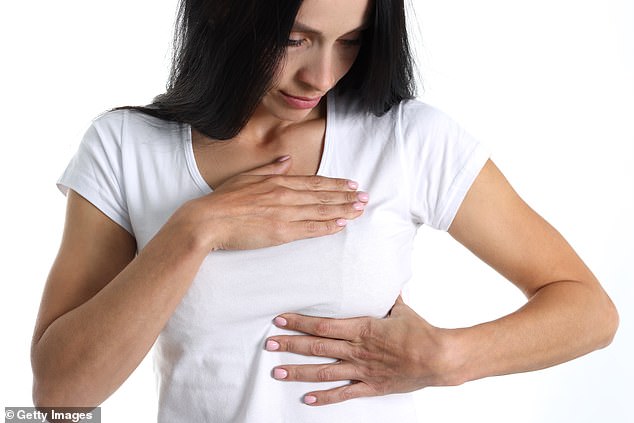
Breast cysts do not increase your risk of getting breast cancer… in most cases they are not a cause for concern and typically don’t hurt, writes Dr Ellie Cannon
For the past 18 months I’ve been suffering sudden bouts of nausea two or three times a day. At night sometimes it wakes me up. My GP has run tests but hasn’t found any issues, such as a stomach bug. What should I do?
It could be a symptom of irritable bowel syndrome (IBS), which is thought to be due to an oversensitive gut that causes eating or drinking to trigger nausea, bloating and diarrhoea.
These symptoms can wax and wane. Crucially, IBS does not show up on scans or blood tests, meaning many patients go undiagnosed for some time.
There are no specific medicines to treat it, but a balanced diet, drinking plenty of water and exercising regularly can help.
So too does avoiding fatty, spicy or processed foods, and not eating too quickly.
Other causes of nausea include acid reflux, caused by stomach acid rising into the oesophagus – the tube that links the stomach and the throat. It is normally associated with uncomfortable chest symptoms too. However, in some cases, patients can experience nausea without the classic heartburn symptom.

Unexplained feelings of nausea could be a symptom of irritable bowel syndrome
As with IBS, reflux is best treated with lifestyle changes, such as reducing alcohol and fatty food and quitting smoking.
In some cases, nausea may be caused by anxiety, so consider seeing a mental health expert.
Long-term medicines, like iron supplements, antidepressants, anti-inflammatories and the diabetes drug metformin can all trigger bouts of nausea.
However, anyone who gets these sudden symptoms must always speak to a doctor. This is because new nausea can be a sign of certain cancers.
I can’t fully turn my neck to the right. This is affecting my driving as I can’t properly see in that direction. Are there any exercises I can do to help?
Anybody with impaired vision must tell the Driver and Vehicle Licensing Agency, which will send them for a free visual field test, usually at a High Street optician, to check whether it is safe to drive.
Often a severely stiff neck is due to osteoarthritis. This is a common, painful wear-and-tear condition that often occurs in later life.
There are drugs for it, but regular exercises can relieve some symptoms.
Neck exercises can also be found on the Arthritis UK website, and usually need to be repeated daily. Or you could visit a physiotherapist.
Some patients find that applying anti-inflammatory creams, such as ibuprofen gel, can help to ease a stiff neck.