This was the year the old world order ended. The order that had defeated Nazi Germany, the greatest evil the modern world has known, then went on to see off Soviet communism – the other great evil of the age.
The order that rebuilt – from the carnage, ruins and dictatorships of the Second World War – prosperous Western European democracies. Then embraced the new democracies of Eastern Europe as they threw off their communist yoke.
The order that, for all its many lapses in living up to its principles, placed liberal democracy, human rights and the prosperity of the people at the core of its purpose, leading to the greatest rise in global living standards these past eight decades the world has ever known.
The order in which Britain played a pivotal and honourable role, which we’ve now forgotten as we wallow behind our veil of woes. But in which America was always the essential ally for all involved.
I dwell on such matters to emphasise not just the significance of the historical watershed we’re now living through but the scale of our loss.
The old order was no doubt in need of a reboot, a recalibration, a refocusing for the 21st century. Instead, it is being swept away, for no good reason, by an American president with no knowledge of history, little grasp of geopolitics and scant regard for the principles of democracy and freedom which made the world a safer place the more they were adopted across the globe.
A president who thinks it is no part of US foreign policy to make the world a better place, whose only concern is furthering the narrow, short-term interest of an isolationist America and what he regards as its surrounding satrapies.
If that means supping with tyrants and dictators with the shortest of spoons, while turning on loyal, democratic allies of long standing, then so be it. If it also facilitates lining the pockets of Washington’s ruling family, then so much the better.
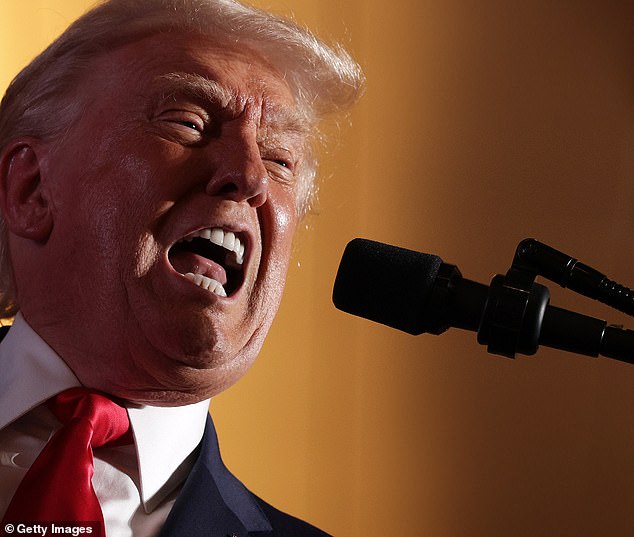
Andrew Neil describes Donald Trump as ‘a president who thinks it is no part of US foreign policy to make the world a better place’
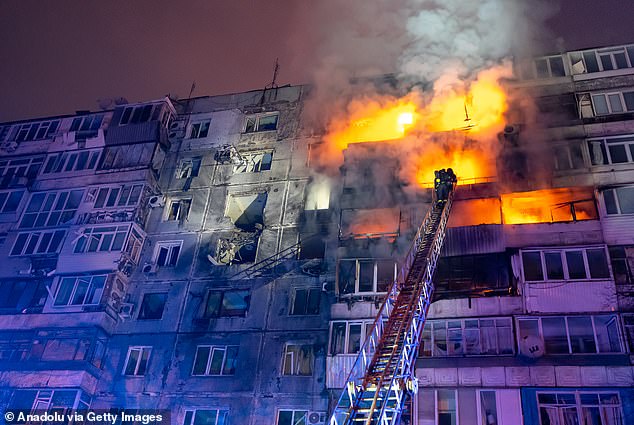
Units of the State Emergency Service of Ukraine extinguish a blaze after a Russian airstrike in Zaporizhzhia earlier this month
It is the ruthless, unprincipled application to foreign policy of the ways of the amoral New York property developer in which everything is reduced to a ‘deal’ and nothing matters but power, money, success and self-interest – attitudes that mark the death knell of an old world order which has served us well.
To be replaced by what? We do not yet know for sure. No doubt the coming year will improve our comprehension of what is in store. Those contours that we can already discern are not encouraging.
Next year will hasten America’s retreat from Europe, which will increasingly be left to its own devices, as President Trump focuses his attention and American power on the Western Hemisphere – where he has imperial ambitions.
That is why, as 2025 draws to an end, he has assembled a massive armada off the coast of Venezuela. The pretext is a crackdown on drug-smugglers speeding towards America in high-powered boats. The real goal, of course, is to topple Venezuelan dictator Nicolas Maduro, whose regime has impoverished the country, even though it sits on the biggest oil reserves in the world.
The US Navy is now seizing tankers carrying Venezuelan crude oil exports, which account for 90 per cent of Maduro’s revenues. The loss of these funds would be catastrophic for the man in Caracas. Trump reckons a few more turns of the screw will bring down early next year his corrupt, cruel, repressive regime hated by the Venezuelan people.
But there is a further, so far unspoken, purpose to Trump’s Caribbean military adventure: his aim is also to bring down the flailing communist regime in Cuba, which is just as much an economic basket case as Venezuela.
Almost 3 million Cubans – mainly young, educated, ambitious and accounting for a quarter of the country’s population – have fled Cuba in this century alone. What was, until only recently, regularly lauded by the British Left as something of a communist paradise is, in fact, a hellhole in which 90 per cent of the people struggle to survive in extreme poverty.
About 70 per cent go for days without a proper meal; water shortages mean there isn’t even enough to flush the loo or wash the dishes; daily power blackouts force people to sleep outside in sub-tropical heat while schools and hospitals are closed; and basic medicines are now a luxury few can afford. No wonder eight out of ten Cubans want to leave.
The country is in the grip of its worst crisis since Fidel Castro seized power in 1959, worse even than its troubles after the collapse of the Soviet Union in 1991, which had been its biggest benefactor.
Since then, Cuba has been kept on life support by cheap Venezuelan oil – at one stage as much as 100,000 barrels a day. That’s already fallen to 30,000 as Venezuela’s inefficient nationalised oil industry struggles to keep up production.
The US naval blockade is designed to cut off even that to hasten the collapse of the Cuban regime. The Cuban gerontocracy and Maduro are joined at the hip. Venezuelan oil is essential to the survival of the government in Havana. Brutal Cuban intelligence teams help Maduro identify and crack down on any dissent that threatens his government.
If Trump could bring down both regimes early in 2026 he would regard it as vindication of his new emphasis on increasing US power in its own backyard. His aim is to surround America with governments that will do its bidding. He’s already achieved that in Panama.
There is no plan to deploy US boots on the ground in Cuba or Venezuela. The American people – including his own isolationist MAGA movement – have no appetite for that.
He thinks his blockade will do the job. And who could object to seeing the back of Maduro and his henchmen or the Cuban communist plutocrats who’ve ruined a beautiful country?
The problem is that the US record when it comes to regime change does not engender confidence. From South Vietnam to Iraq to Afghanistan to Libya and countless countries in between over the years, the US record on regime change is one of failure, on an often catastrophic scale.
What reason is there to think Venezuela or Cuba will be any different, especially since some of America’s largest previous regime-change failures have been in Latin America?
Even so, it is at the top of Trump’s to-do list in 2026, and if there is even just a scintilla of success it will embolden him to exert further US sway over more of the Western Hemisphere. Trump has indicated Colombia could be next if Venezuela falls.
Argentina is already in hock to Washington, with $20 billion of US support for its currency. Canada will remain under pressure to fall in line with whatever is Trump’s latest whim. Even Greenland is still in his sights. He’s just appointed a new envoy who has described his job as ‘a volunteer position to make Greenland a part of the US’. The Danes, under whose control Greenland falls, are increasingly nervous.
The more Trump concentrates on his own backyard, the more the US retreat from Europe will gather pace. I find it astonishing that European leaders have still to grasp the immensity of the geopolitical shift that is now under way.
It isn’t just that the European leg of Nato can no longer count on US military when the chips are down – the fact is that Trump’s America is no longer even on our side, a harsh reality that will become apparent as next year unfolds.
Yet European Nato still bases its defence planning on massive US assistance, even as Trump pushes a version of a peace plan for Ukraine originally drafted by the Kremlin.
The coming year will see the effective end of US financial and military aid to Ukraine. It already started to dry up this year.
If Europe means what it says about standing by Ukraine then, in 2026, it will have to become Europe’s war, without American back-up. Despite all the supportive rhetoric it is by no means clear Europe’s leaders are up for this.
Germany is at last taking rearmament seriously. Chancellor Merz has freed up Berlin’s tight fiscal rules to pump an extra €150 billion into defence, taking military spending by the start of the next decade to at least 3 per cent of GDP.
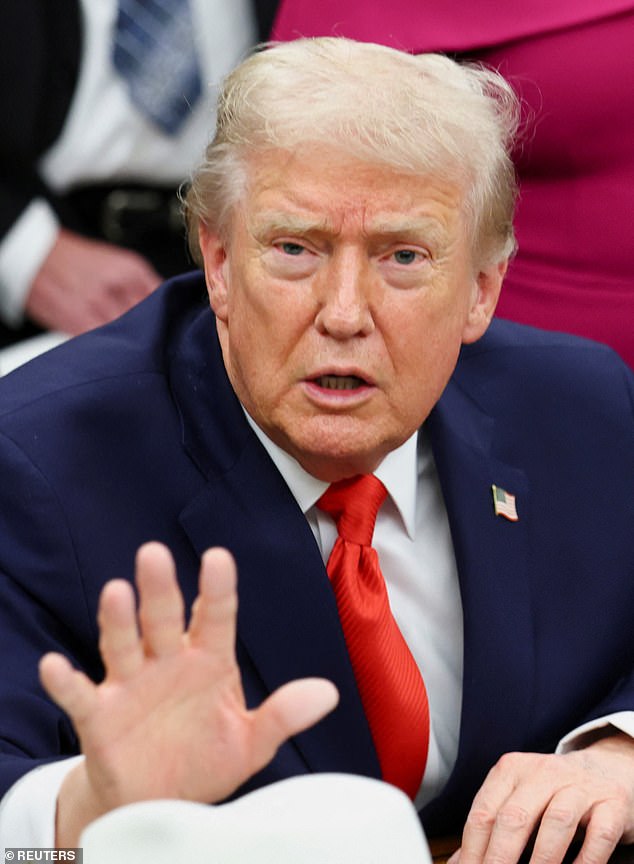
The President has ‘no knowledge of history, little grasp of geopolitics and scant regard for the principles of democracy and freedom which made the world a safer place’, writes Andrew Neil
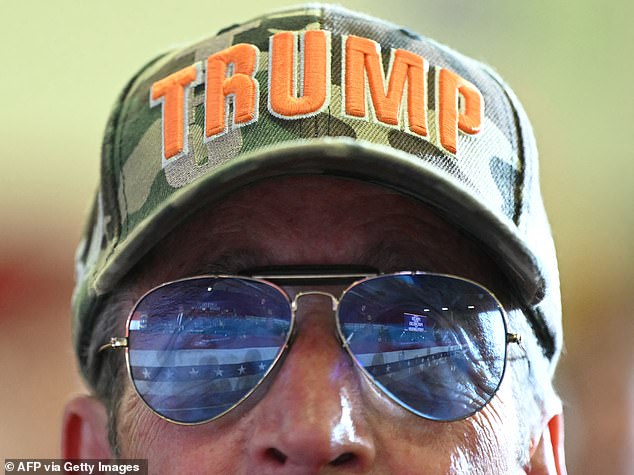
Trump’s MAGA movement is now gripped by ‘low-intensity civil war’, Andrew Neil adds
It’s still too little, too late – and it’s not being spent on the armaments needed for 21st-century war.
Germany’s combined air, sea and land forces, the Bundeswehr, has a mere 600 drones at its disposal. It’s planning to increase that to 10,000 in 2026. In 2025, Ukraine made 5 million drones, because they are the essential weapon in the 21st-century battlefield. It will make 10 million next year.
British defence spending is a bit more forward-looking but still wholly inadequate to the task at hand. Despite frankly embarrassing talk from Chancellor Rachel Reeves about making Britain a ‘defence industrial superpower’, military spending is scheduled (according to the latest Commons Library briefing) to rise from £60 billion in 2024-25 to a mere £62 billion in 2025-26 – a pathetic increase which, after inflation, equals almost no increase at all.
Despite bold statements about spending 3.5 per cent of GDP on defence by early in the next decade, there’s not even the outline of an official road map to get us there, to the shame of Starmer’s Government.
I have little hope of peace breaking out in Ukraine. No Ukrainian leader could accept what President Putin wants: to consolidate his grip on the east; place severe limits on the size of free Ukraine’s military; replace President Zelensky with a leader more disposed to the Kremlin – then wait for the rest of Ukraine to fall into his lap. Patience has always been a key ingredient of Russian strategy.
Although Putin is the real roadblock to peace, the Russian dictator knows Trump will blame Ukraine (and its European backers) for the lack of progress. He expects Trump to throw his toys out of the pram in frustration some time in the first half of 2026 and depart the scene, saying it’s now on Europe to handle the conflict while he doubles down on the Western Hemisphere.
This will hand the advantage to Putin, which is why 2026 is so dangerous. It is not that, bereft of US protection, Russian tanks will start rolling west. But a Ukraine under the cosh would be grim news for the Baltic states (where mass evacuations are already being rehearsed in case of Russian incursions), Poland and Finland.
Russian cyber attacks and sabotage in Europe, which increased this year, will become endemic next year.
Russian drones have recently flown over Poland, Germany and Denmark, causing civilian airports to shut.
These ‘grey-zone’ provocations will intensify next year, designed to intimidate Europe into loosening its commitment to Ukraine. In the next 12 months we will discover if Europe has the backbone to resist them.
Yet there is an opportunity – if only Europe had the leadership to grasp it. Energy prices – especially oil and gas – are likely to tumble in 2026 because of global gluts of both.
This could act as a trillion-dollar economic stimulus for Europe’s energy-hungry economies, including Britain. Add in European rearmament at the required scale and further interest rate cuts as inflation falls below 2 per cent – helped by a surge in cheap imports from China (everything from solar panels to electric vehicles) – and you have the makings of a return to European growth which could bring the continent renewed confidence when it comes to defence and security.
We shall see. Europe’s recent default position has been to miss every opportunity presented to it. The one thing it can be sure of is not counting on President Trump.
Of course, we could be past peak Trump. His presidency is now being rocked by a cost-of-living crisis. His MAGA movement is now gripped by low-intensity civil war.
The bookies reckon there’s an 80 per cent chance the Republicans will lose the House come the November mid-term elections. That would limit his scope for mischief. But the modern US imperial presidency has plenty of room for manoeuvre, especially in foreign policy.
I expect Trump to be as active as ever on that front in 2026. There is talk in the White House of bringing the Kremlin in from the economic cold with a spate of US-Russian energy deals, perhaps even a joint carve-up of Ukrainian resources. No doubt there will be rich pickings for the Trump family, too.
I’ve even heard top aides muse about a new world order in Trump’s image. America dominant and unchallenged in the Western Hemisphere. But calling the shots in the rest of the world through a new alliance of America, Russia, China, India and perhaps even Japan (now with a Trump-style leader).
Europe, of course, is nowhere in any of these plans. If, in 2026, it doesn’t at last dawn on Europe (including Britain) that we’re on our own then I doubt it ever will – at least not before it’s too late.