A WOMAN was left asking the internet for help after her husband ruined an entire load of laundry.
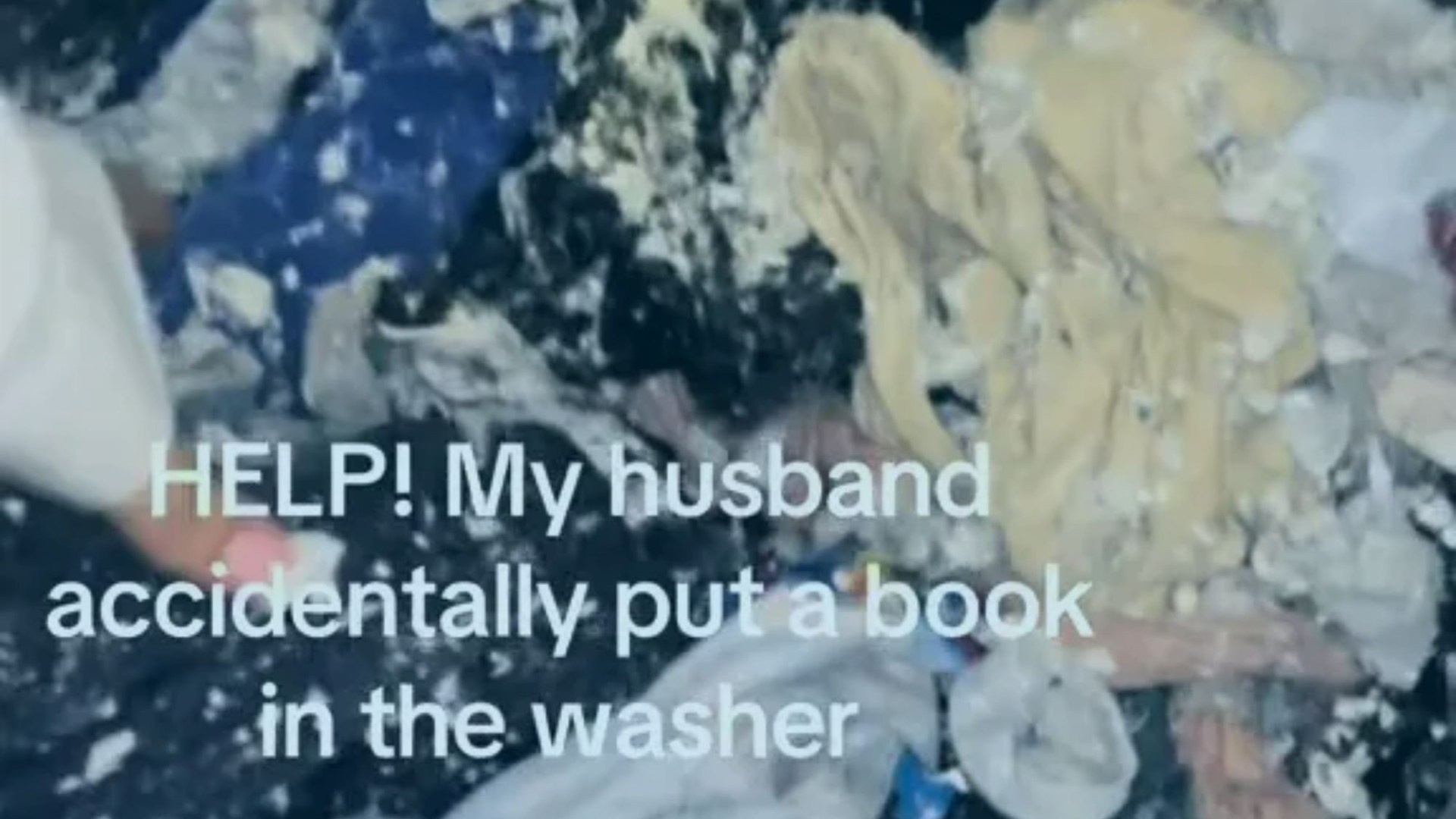
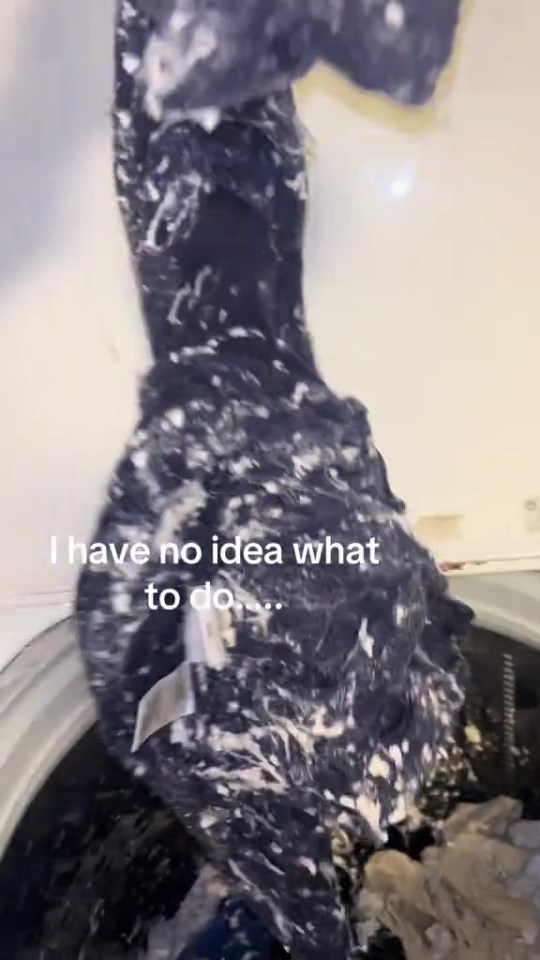
Despite his best efforts to help, the man had accidentally scooped up a book with the washing which ended up disintegrating when it got wet.
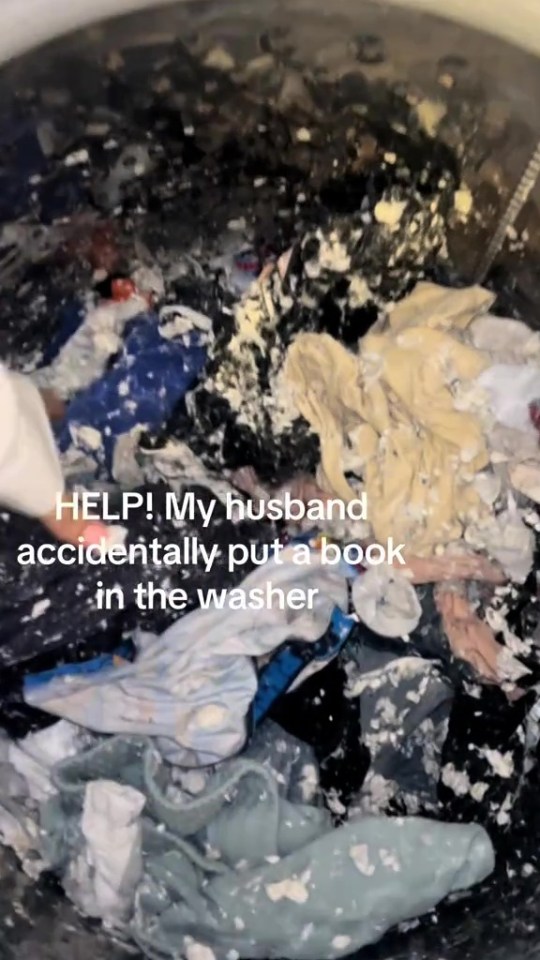
The woman shared the aftermath of the event, with the laundry destroyed by the mishap.
Taking to her @arianas777 TikTok account, the shocked wife wrote: “Help! My husband accidentally put a book in the washer.
“I have nooo idea how to fix this.”
Holding up what appeared to be a pair of jeans, she showed how it was covered in disintegrated paper.
Her video has racked up over 500,000 likes and people rushed to the comments to give their views.
One person joked: “Accidentally buy an entire new wardrobe on his card.”
Another added: “My husband is a tech and he would say that it’s not just in the clothes. It’s going to be in the motor and everything in-between.”
And a third commented: “This is why I don’t read.”
Meanwhile, one person pointed out: “Let him figure it out lol.”
But how should you remove paper or tissue from washing if it has accidentally been left in?
According to DIY Danielle, you should first remove any large chucks of paper that you can grab.
She added: “Hold each piece of clothing over the washing machine and shake out as much paper as you can.
“Honestly it’s wet so it’s going to be really hard to shake it off. You can always shake it outside too.”
You should then move your clothing into the dryer, making sure your lint trap is clean.
She continued: “Turn heat on low or medium. WATCH CLOSELY. You want to check the lint trap every five-ten minutes and clean it out. It builds up really fast otherwise and you don’t want to start a fire.”
To clean your machine, you should use a paper towel or wet cloth to wipe it down, before putting it on a clean cycle.
Laundry tips
Catherine Green, sustainable cleaning expert at smol shared her laundry tips.
How often should you be remaking your bed?
When it comes to your bed, maintaining a hygienic sleep setup can actually improve your sleep quality, helping you start every day better.
Most people shed 500 million skin cells per day and a lot of that ends up in bed for dust mites to feed on. And those with asthma or allergies might see symptoms worsen by sleeping on dirty sheets!
You want to be washing your sheets once a week – or every 10 days if you don’t suffer from allergies and wear nightclothes. Bedding builds up with sweat, skin cells and oils quickly, even if it doesn’t look dirty.
Using an effective detergent like smol’s will still give you a great clean on a 20°C cycle – that’s better for the planet and your energy bills!
What temperature do smol recommend then?
For your regular weekly washes I recommend washing most loads at 20°C for 30 minutes. It’s gentler on fabrics, slashes energy use, and still delivers excellent stain removal with the right detergent. A colder wash can actually be more effective if you opt for a bio detergent as its enzymes need cooler water; too hot and they lose their ability to digest stains. A wash at 60°c (unless you have silk sheets) every now and again can help kill off dust mites and other nasties.
What’s the difference between bio and non-bio detergent?
Bio detergents contain enzymes, which are especially good at breaking down tough stains like food, grass, or sweat. It’s best used in mid to low temperature washes (ideally between 20-40°C) as anything hotter can cause them not to work effectively.
Non-bio skips the enzymes, which in turn makes it more suitable for those with sensitive skin or allergies. Although non-bio doesn’t contain enzymes, it’s still great at removing stains and keeping your clothes clean, you just may need to use a slightly higher temperature setting to aid with the cleaning process.