IT’S the most, wonderful time of the year… with treats aplenty and festive indulgence in full flow.
And while you might feel a niggling guilt at letting yourself enjoy a few too many treats over Christmas, we have good news! It turns out, many of your favourite festive foods can do more than just feed the soul. They might actually slash your risk of dementia and slow down ageing.
A study last month, published in the journal Neurology, suggested that eating cheese lowered the risk of dementia in people in Japan.
The findings were intriguing, but scientists said we should take them with a ‘big pinch of salt’, because of the way it was conducted.
But it did back up previous stories that link dairy in the diet to protective effects on the brain.
Meanwhile, a different study by King’s College London, claimed a chemical found in dark chocolate could potentially help to decelerate the ageing process.

What connects these foods? As well as coffee, bread and beer, these are some of life’s indulgences but they are also, fermented foods.
Fermented foods have been linked to several health benefits, mainly better gut health – that is, the environment inside your bowels, digestive system, stomach and more.
But it may also lower inflammation, boost immune cells and metabolism.
That’s because the gut microbiome is more than just your plumping system, filtering out waste.
It’s home to microbes (living organisms, like bacteria) that influence many areas of your physical and mental health.
A healthy microbiome means having a high diversity of beneficial microbes, outnumbering any harmful ones.
Microbes are fed by the food we eat, and fermented foods contain live and active cultures, known to support gut health.
Professor Tim Spector, an epidemiologist and medical doctor, tells Sun Health: “Fermentation simply means the chemical transformation of any food or drink, with the help of yeast, bacteria or other microbes, often producing bubbles or heat.”
In his latest book, Ferment: The Life-Changing Power of Microbes, Tim, who’s the Scientific Co-Founder of ZOE, reveals why we should all be indulging in fermented food, from warding off heart disease, type 2 diabetes and even, possibly, cancer.
He says: “Inflammation is now linked to increased risks of all types of cancer, and the likely mechanism is that if the immune system is constantly fire- fighting and dealing with low- level inflammation, it has less time and fewer resources to deal with early detection of rogue cells that, if ignored, turn into cancer cells.
Many people don’t realise that coffee is a fermented food.
Tim Spector,
“Although possible, there is no solid evidence yet that they prevent cancers, but it seems a good insurance policy along with other anti- cancer drugs.
“There is increasing interest in using diet and ferments in the treatment of cancer.”
Fermentation typically involves microorganisms – bacteria, yeast or mould – breaking down carbohydrates (like sugars and starches) into other products, such as lactic acid, gases, or alcohol.
“At the very top of the premier league, you have your kimchis and kombuchas and your kefir’s with multiple different microbes, huge squads of microbes,” says Tim.
“At the other end you have ones with single yoghurts with just a single strain.
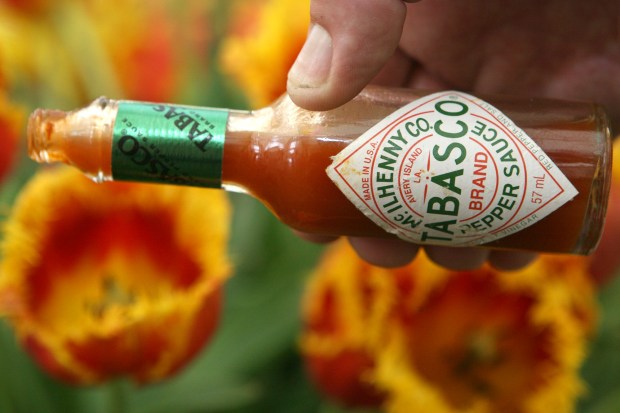
“In the division below them, you’ve got some ferments like Tabasco and Marmite which have microbes, but they are pretty much dead.
“They may still have an effect but nothing like the power of the top guys.
“[But] I was recently blown away by research showing that even some dead microbes in our foods can still be beneficial.
“This means that some beers with dregs of dead yeast in them could have some health benefits, which might partly help to compensate for the negative impacts of alcohol.”
Some of these foods may already be in your cupboard already, or even part of your daily diet.
Tim says: “Many people don’t realise that coffee is a fermented food: coffee beans are fermented before they are roasted, which increases their nutritional value and strengthens their flavour.
“Just as fermentation turns grapes into wine, fermenting is part of the process that turns coffee beans into your delicious cup of coffee.
“Of all the ways to prepare food, fermenting is surely the most mysterious, miraculous and misunderstood.
“Yet humans have been finding ways to ferment plants, dairy and meat for thousands of years as a means of preservation and enhancing flavour.”
WHY IS FERMENTED FOOD SO GOOD FOR YOU?
A major impact of fermented foods is clearly on the gut.
The most simple way to define ‘gut health’ is a ‘healthy gut microbiome’, says Tim – one which has a good level of beneficial microbes that balance out any bad.
Tim says: “‘Gut health’ is difficult to define. From a metabolic viewpoint, a healthy gut means ensuring that the intake and absorption of food and corresponding hormonal hunger signals are well balanced for the body’s needs, preventing obesity and diabetes.
“From an immunity viewpoint, the gut lining is another crucial player in a healthy gut. “A thin layer of cells and a thicker wall of sticky mucus separates the billions of microbes in the gut from the blood vessels that supply our gut and enter our circulation.
“Fermented foods and fibre play an important role in maintaining this barrier.
“When we lose the mucus layer, the tight structure breaks down and the system leaks, causing inflammation.
“This may be a reason fermented foods are helpful to many people suffering with colitis or IBS, with many people writing to tell me they were able to reduce or stop their medication.
“And finally, from the viewpoint of our nervous system, a healthy gut means normal intestinal muscular contractions and regular soft stools and trips to the toilet, avoiding bloating and cramps and IBS.”
Increasing your intake to improve health should be done slowly – but expect to reap potential benefits after just a fortnight.
“Some studies report initial bloating when starting to eat fermented foods for the first time, but most show a reduction in gut symptoms over time,” says Tim.
“Our own ZOE Ferment study showed that on average, after two weeks, 42 per cent of people had fewer gut health issues, such as bloating and constipation, but 24 per cent reported more bloating symptoms.”
Here’s how to eat your favourite foods, the fermented way…
GO FOR BLUE
WHEN you add bacteria to milk, it eats the natural sugars (lactose) and acid is produced in a souring process.
Voila, you get cheese – a fermented food that goes back centuries.
Tim says: “Traditionally made cheese, such as artisan or farmhouse cheese, contains live microbes and is likely to be healthy for most people, despite what we’ve been led to believe due to its high saturated fat content.”
Saturated fat is, in large quantities, poor for health, as it raises cholesterol.
But in small doses, it’s part of a healthy balanced diet.
“Blue cheese is another good option as it is made with a live fungus,” says Tim. “It is also a rich source of protein, calcium and vitamin D.
“You can even easily make your own cheese from yogurt or kefir.”
But while we are celebrating cheese, we’re not talking about the processed kind.
“Most cheese used in cheeseburgers, frozen pizzas and some cheese snacks is ultra-processed and confers none of the health benefits of the real thing,” says Tim.
ENERGY HIT
YOU thought it was your bad little addiction – or perhaps you’ve been led to believe so. But the evidence shows that coffee is good for you.
Tim says: “There is good evidence to show that coffee is beneficial for our gut health and linked to a reduced risk of illnesses such as heart disease and type 2 diabetes.”
I now see coffee as a health food.
Tim Spector,
Heart disease, which includes heart attack and stroke, is one of the biggest killers in the UK, accounting for a quarter of deaths.
And cases of type 2 diabetes are at an all-time high, with 5.8million people living with the chronic condition.
“In our ZOE Predict study, we found that coffee drinkers tended to have a better microbiome profile [gut health], likely because it contains large numbers of different polyphenols and soluble fibre, which act as nutrients for our gut bacteria.
“Two cups of black coffee contain more fibre than a banana.”
Caffeine intake is considered safe when under 400mg a day, which is around four cups of coffee.
At very high levels, caffeine can cause anxiety, sleeplessness, agitation, palpitations, diarrhoea and restlessness.
But Tim says: “There is good evidence that drinking up to five cups of coffee a day improves our gut microbiome, and I now see coffee as a health food.
“There’s nothing wrong with instant coffee or decaf from a health point of view.”
However, he says go for black coffee over white, “as adding milk will reduce your absorption of beneficial polyphenols by around 30 per cent”.
DARK MATTERS
LIKE coffee, “fermentation is a key part of what turns a cacao pod into your favourite chocolate bar”, says Tim.
“Chocolate is also packed with beneficial polyphenols.”
These are compounds found in plant-based foods that have antioxidant properties.
Examples include flavanoids that give vegetables their bright colours, and stilbenes, found in grapes and red wine.
Tim says: “But do the benefits of the polyphenols and fermentation process offset the negative effect of the sugar content?
“Observational studies have shown a reduced risk of heart disease, strokes and diabetes from regular chocolate eating.
“But there is a big difference between high-quality dark chocolate and the average milk chocolate bar, which are usually full of added chemicals and have a high sugar content.
“Look for dark chocolate with at least 70 per cent cocoa, and I would advocate only small daily amounts.
“But dark chocolate is more filling than milk chocolate, and once you switch you may find that you don’t need to eat as much.”
SOURDOUGH BREAD
IF you ever needed an excuse to eat more bread, let it be this!
We’re not talking about the soft white brands, but sourdough.
Tim says: “Sourdough bread uses fermentation rather than added yeast to make the dough rise – the same process used in traditionally made naan bread.
“Even after the bread is baked, the dead microbes from the fermentation still carry health benefits.”
You can buy sourdough bread in the supermarket.
“But there is no legal definition of what constitutes sourdough, so you need to look carefully on the label to find the good stuff,” says Tim.
“Real sourdough contains very few ingredients: just flour, salt and water, with no yeast or baking powder.
“As it takes longer to make it tends to be more expensive.”
But you can make your own too – it can be a bit of a time-consuming hobby, but rewarding, too.
“I love bread, but have found I have to stick to sourdough made with rye to avoid my blood sugar levels spiking too much. This is likely to be the healthiest option for most people,” says Tim.
Ferment: The Life-Changing Power of Microbes by Tim Spector (Jonathan Cape, £25) is out now
Other ideas of ferments that you might have in your cupboard or fridge include:
- Soy sauce
- Tabasco
- Marmite
- Traditional beers
- Cream Cheese