As people prepare to carve into their Christmas Day turkeys, some may wonder why the birds’ eggs never make it onto the holiday menu.
Turkey eggs are almost never found on grocery shelves or holiday plates.
The reasons lie in biology, economics and practicality, experts said.
Unlike chickens, which reliably lay about one egg every 24 hours, turkeys produce only one or two per week.
Kimmon Williams, of the National Turkey Federation, told ModernFarmer: ‘Turkeys have a longer life cycle, so they need to get to about seven months before they are able to produce laying eggs.’
Chickens, on the other hand, only have to reach about five months before they lay eggs.
Raising turkeys is also more expensive, as they require significantly more feed and larger housing, both of which drive up production costs.
As a result, farmers would need to charge at least £2.22 per turkey egg, meaning a dozen would cost around £26.64.
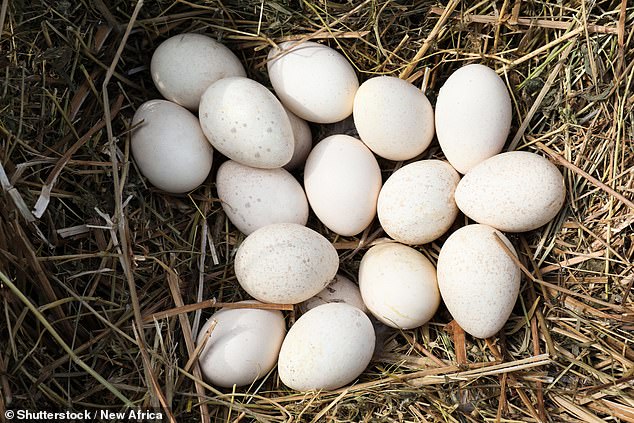
Unlike chickens, which reliably lay about one egg every 24 hours, turkeys produce only one or two per week
Some cooking professionals have said that turkey eggs are better for sauces because their yolks are creamier and richer, Slate reported.
But the recommendations are not enough to get them on menus.
Turkeys are indigenous to North America, making them a staple among Native American tribes, while chickens arrived in the UK during the Iron Age.
Native Americans introduced turkeys to early European settlers in the 1600s.
The large, wild birds were exotic animals to Europeans who became instant fans.
Early Spanish explorers to the New World even returned home with turkeys, but rumours quickly spread that the eggs were linked to outbreaks of leprosy.
The suspicions were largely among the French, who were wary about the birds’ foreign origins.
In medieval Europe, diseases like leprosy were often seen as divine punishment or the result of moral failings.
And new foods from a land deemed dangerous did not align with the established norms of the time.
Technological advancements allowed farmers to specialize in chickens for egg production or meat, making chicken eggs more cost-efficient and readily available.
Today, turkey eggs are a rarity, sought mainly by food enthusiasts or farmers looking to meet England’s demand for Christmas.