This article is taken from the December-January 2026 issue of The Critic. To get the full magazine why not subscribe? Get five issues for just £25.
A glance at any passing clutch (or would bevy be a better word?) of critics, pasty, dead-eyed, Salvation Army teeth and hair, is enough to assure you that we are not a well or happy breed — but then how could we be, selflessly sitting there night after night in harm’s way, intercepting the very worst the dreaded “creative class” of curators and directors can throw at us — so that you don’t have to?
In such circumstances one must take one’s pleasures where one may. A happy standby in recent years has been the spectacle of audiences in revolt when they perceive they are being patronised, swindled, or at any rate not getting what they paid for.
Sometimes it’s perfectly justified, a laudable reaction against weaselly directors who seek to remove all the comfort and pleasure from an artform largely created for just those ends.
You know the form: there you are sitting through some harmless bit of old fluff, and fidgety alarm begins to rustle through the bridge-and-tunnel crowd. Things don’t seem to be turning out quite as expected: we’re only ten minutes in and already everyone on stage is stripped to their underwear, being beaten with hosepipes and doused in shit — and this is L’elisir d’amore, for heaven’s sake, not Die Soldaten.
We’ve had top examples at Welsh National — an old Calixto Bieito production of Die Fledermaus featured a sodomitical conga-line at one point — and ENO, whose memorable recent Orpheus in the Underworld gave us a lecture on sex trafficking in place of Offenbach’s fizzy Second-Empire romp.
It’s this operetta end of the market — generally patronised by the blameless wedding-anniversary crowd — that often cops the worst from our teen-activist directors, though for some reason G&S seem to have escaped the treatment (so far).
British audiences being generally pretty mousy, the reaction hardly ever rises above low-level peeving in the interval (at Peter Grimes: “But there aren’t any boats!”) though certain sectors can whip up something a bit more lively. I mean, naturally, the Wagner gang, who can get very exercised over the wrong kind of dragon or magic hat, and love to scream abuse at directors during curtain calls.
A few years ago, this pre-school wing of the Wagner Society put on just such a show after Covent Garden’s Tristan und Isolde, staged in a not notably stupid way by Christof Loy (featuring Nina Stemme), though to be fair he again showed a peculiar aversion to things nautical, having literally zero sailors on stage (but perhaps they’d all been used up in David McVicar productions).
For those hardcore old opera buffers still holding out, there are still a few places of refuge (beyond the endless touring companies from Scythia and Tartary who ply their amusing Carmens around our less fashionable provinces): opera houses keeping some prehistoric old staging up their sleeve to roll out for those canny anniversary and Christmas gangs.
Until recently there were still some at Covent Garden — John Copley’s old staging of La Bohème, for example, with a set of such opulent poverty-chic you suspected the existence of entire shabby suites of rooms out of sight in the wings, and the bakers at Café Momus babyishly fooling around with real dough.
We forget how much opera of those days fetishised décor — the opening night reviews in 1980 spoke of little else — and it was the same with the even more eye-watering Tales of Hoffmann, directed by John Schlesinger, with four gigantic sets by William Dudley; and Schlesinger’s Rosenkavalier, the one that was created for Kiri to drift around wringing her hands and looking anguished, singing something or other in a mysterious language.
These could be marvellous warm-bath experiences, but really they were also pretty dreadful, basically anaesthetic rather than aesthetic experiences, with roughly half of that Bohème (operatic horseplay and high jinks amongst portly old lags pretending to be 20) technically unwatchable.
But those directors knew when to leave the singers alone to do their thing, which is all that really matters: when that happened, even amidst the avalanche of ham and cheese that constituted the theatrical experience, they created a magic that new-skool opera has mostly striven in vain to replicate.
They’re all gone now, of course; well, nearly … Covent Garden (these old monsters don’t really happen anywhere else) still rolls out a couple every year, both what you might call a proper evening out, with two intervals, the quality wholly dependent on the singers.
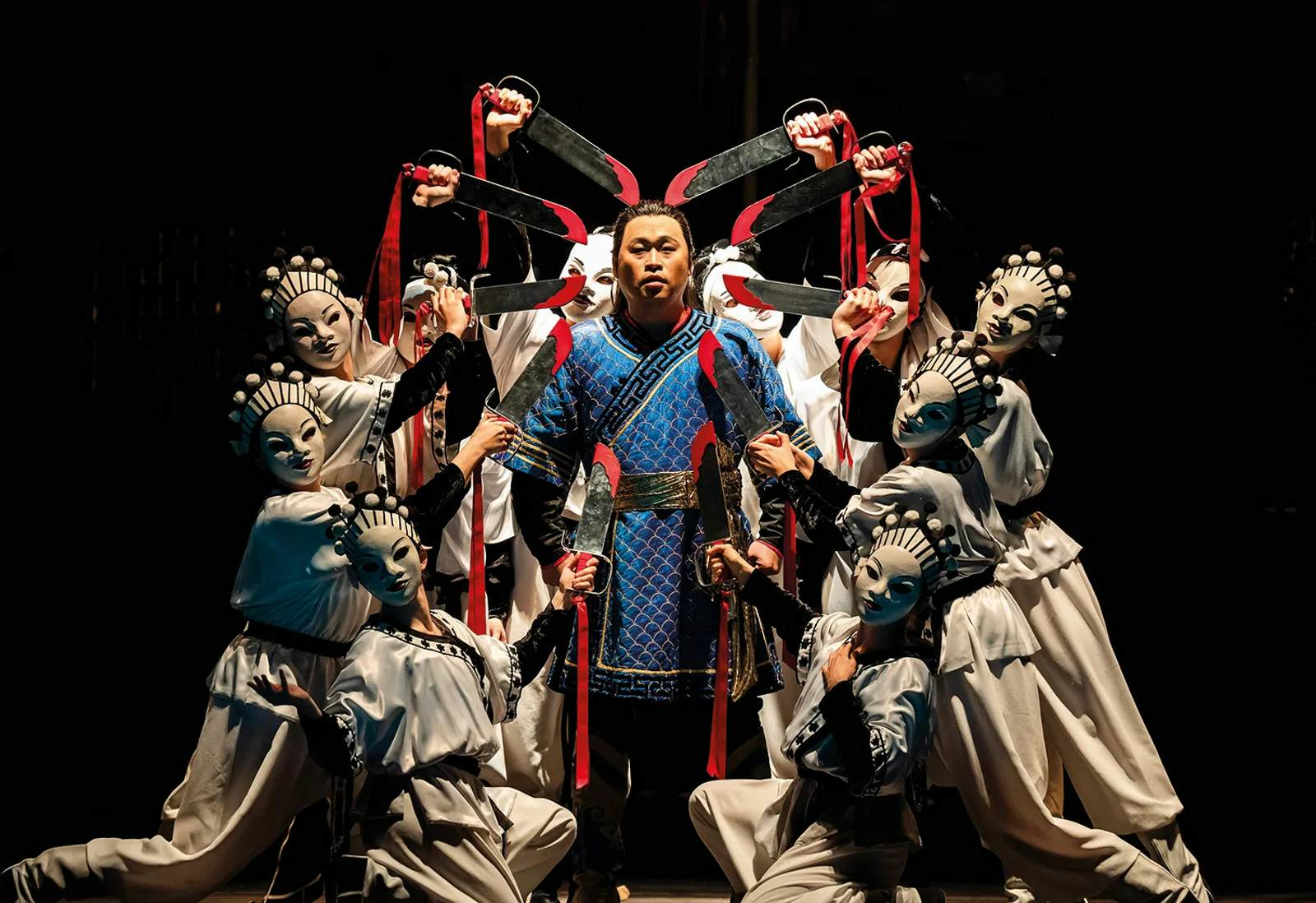
This time, Puccini’s Turandot — the entertainingly mad end of Italian verismo — has the fab Anna Netrebko and her ex, Yusif Eyvazov, which should bring an edge to the blood-sport love-affair on stage.
Directed in 1984 by Andrei Serban, it can still be a heck of a thing, full of expensive thrills and glints of the black glamour of the fascism Puccini’s opera adumbrates (he died, the opera still unfinished, a couple of years after Mussolini became prime minister).
The other is Richard Eyre’s old staging of La Traviata, also a fun vehicle for high-performing singers, though those party scenes are pretty mortifying. The thing is, nearly everyone still thinks of this stuff as “proper opera” — which doesn’t really say much for the semi-skimmed iconoclastic stuff they’ve been bombarding us with for the past few decades, does it?
At Covent Garden: Turandot from 15 December, La Traviata from 8 January